Image note
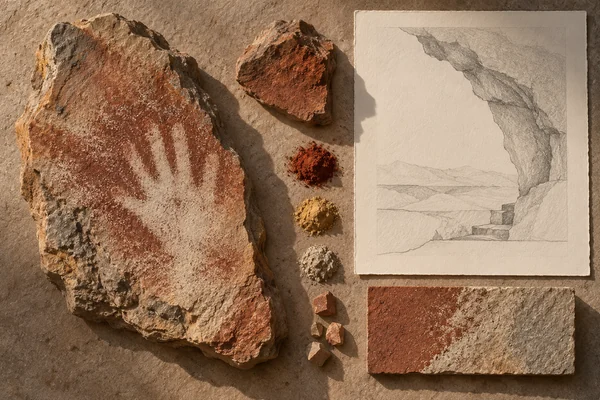
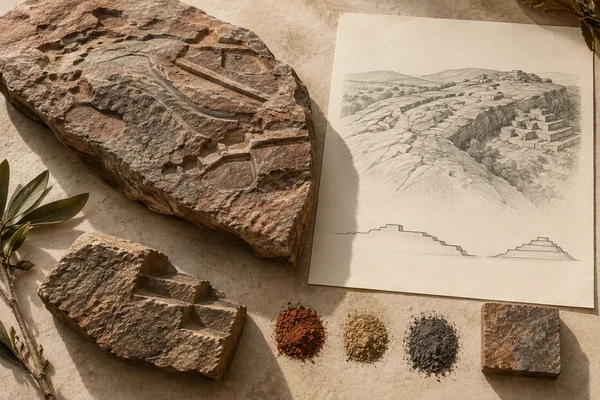
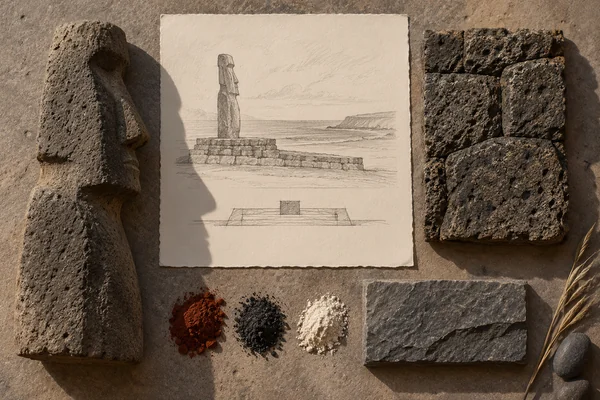
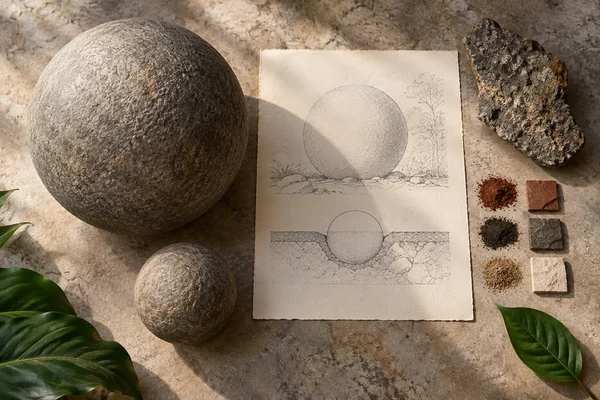
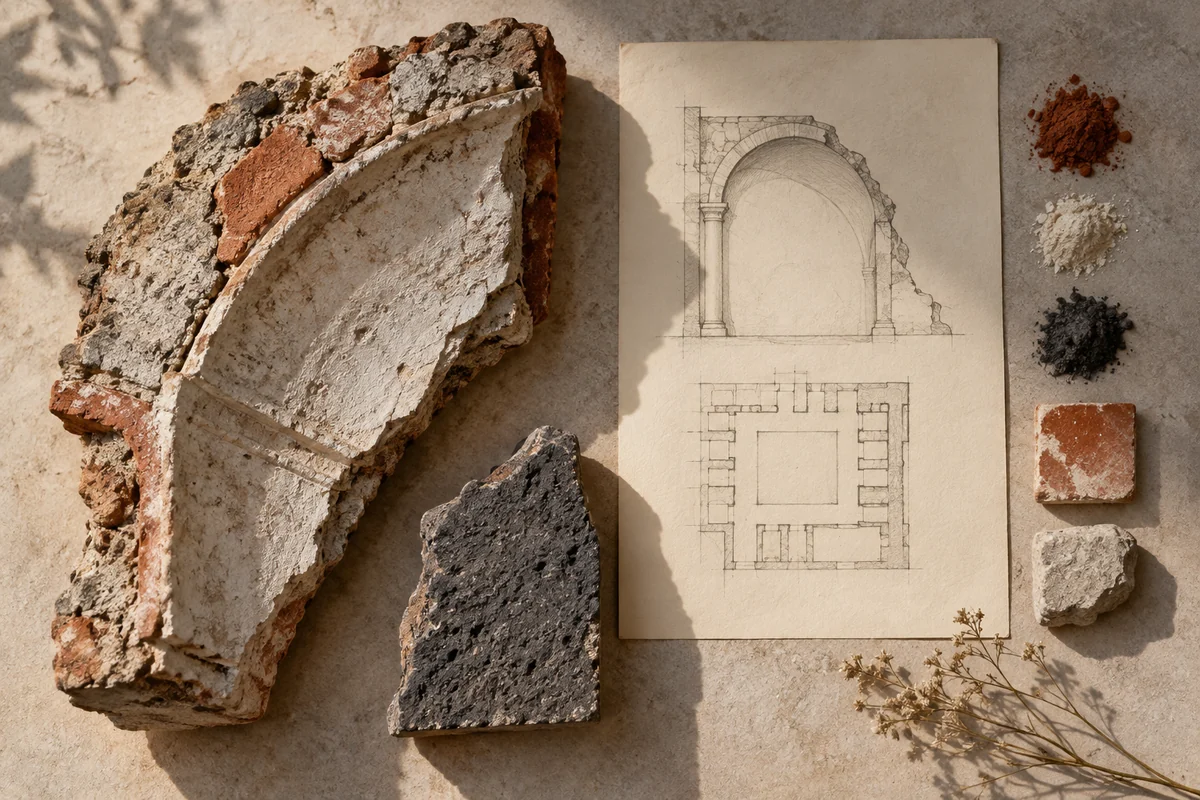
Three original interpretations of courtyard ruins & earthquake memory, informed by Antigua Guatemala. These images explore material and spatial ideas; they are not documentary views or measured reconstructions of the reference. The palette is drawn from the material portrait.
Publication credit: The Chromologium.
Image credits and reuseThe colour strip is the entry’s study palette. Artwork sources and image credits and reuse terms are recorded in the archive.
Artwork recordThree views of one material idea.
Antigua Guatemala’s planned streets and surviving monuments record a colonial city repeatedly affected by earthquakes. Ruined buildings make both architectural ambition and structural vulnerability visible.
Read the material study01 / Reading the material
A broken room, a persistent plan
Antigua Guatemala’s surviving street grid and interrupted monuments offer two different kinds of continuity. A route can remain legible while the building beside it exposes a broken section. The ruin makes thickness and assembly visible in ways a finished facade may conceal.
02 / From surface to space
Read the whole.
Then the edge.
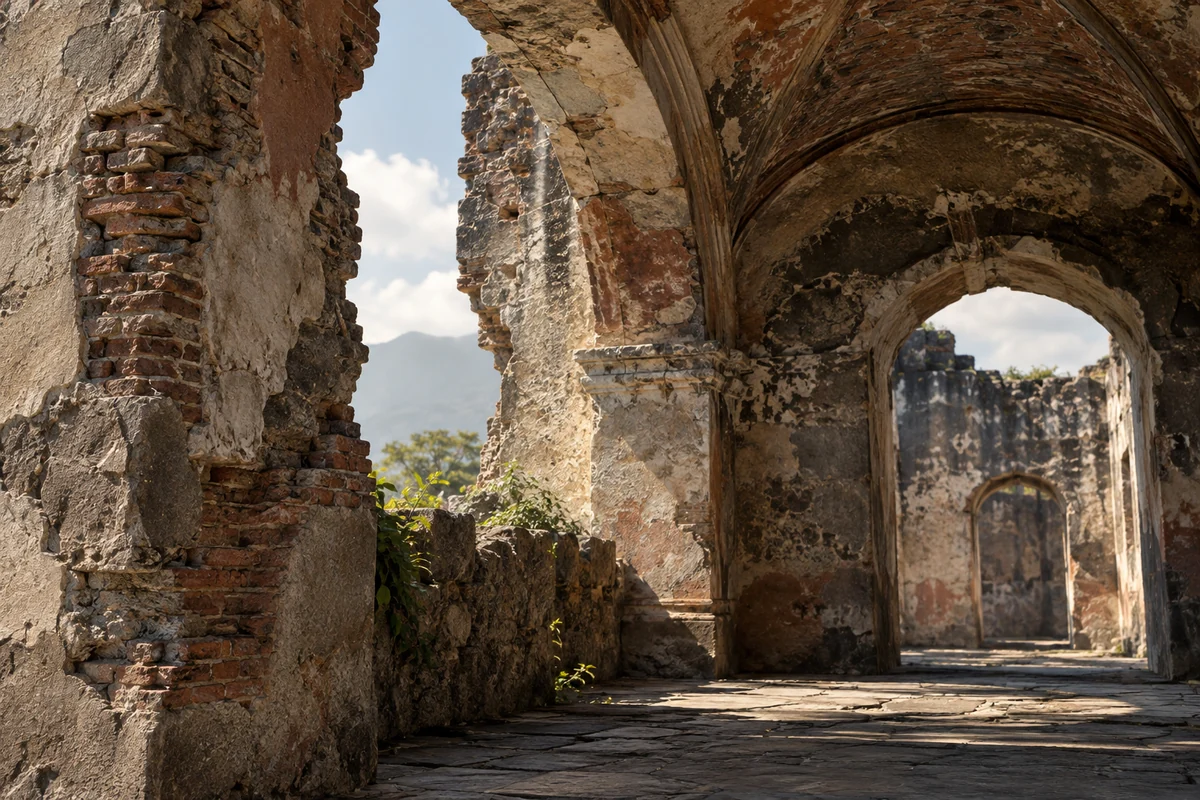
Compare the clear geometry of a court or street with the irregular edge of a damaged wall. Both belong to the same urban reading. A close study should preserve the distinction between an intended architectural boundary and the evidence of later disruption.
Study a broken vault or wall as a section through construction. Compare the surviving street grid with the interrupted enclosure of a ruined room.
03 / Colour in context
A palette you can work with.
Five tones drawn from the material portrait. Select a colour, compare it on paper and ink, or copy its value into your own study.
Surface
#846749
Colour values & paper / ink comparison
oklch(0.535 0.057 67.049) · primary
The colour stays fixed as its surroundings change.
Try the bench exercise
04 / At the bench
Make the observation tangible.
Make a plan with a continuous route beside a partially open enclosure. Show the broken edge explicitly. Use the contrast to study persistence and vulnerability without inventing a complete reconstruction of the missing fabric.
Keep a view of the whole beside a close detail. Note the material, lighting and the one variable you changed.
Source & orientation
Keep the reference close.
UNESCO World Heritage Centre. (n.d.). Antigua Guatemala. Retrieved October 10, 2026.
The material readings and bench exercise are editorial studies of this particular reference. The artwork explores its material ideas; the linked source documents the place.
Artwork & cartographic records
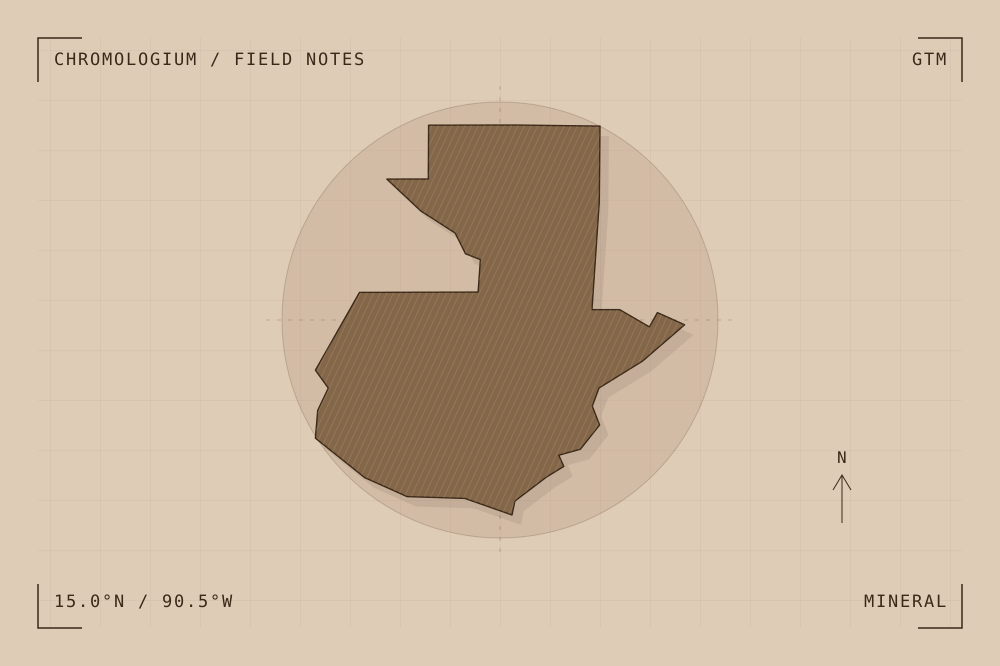
Artwork record · Geographic plate record. Map geometry: Natural Earth, public domain. The archive follows its map’s place names, including territories and disputed areas.
A closer look
Questions about this study
What does this study of Guatemala focus on?
Antigua Guatemala’s planned streets and surviving monuments record a colonial city repeatedly affected by earthquakes. Ruined buildings make both architectural ambition and structural vulnerability visible.
Where can I find the original reference?
Antigua Guatemala, published by UNESCO World Heritage Centre. The artwork explores the reference’s material ideas; the linked source documents the place.
What could I try at the bench?
Make a plan with a continuous route beside a partially open enclosure. Show the broken edge explicitly. Use the contrast to study persistence and vulnerability without inventing a complete reconstruction of the missing fabric.
Continue by material