Diegetic Interface Architecture
A control belongs when its action and state can be understood
Attachment is useful when it clarifies the relationship between a control, its target and its truthful state; resemblance alone cannot do that work.
Read the abstract
A control can sit beside an object without belonging to a fictional world, and a richly styled interface can remain difficult to operate. This essay distinguishes diegesis from spatial proximity and uses the reading-lamp study to examine an object/control relationship. Its claim is a design proposal, not a measured cognitive advantage.
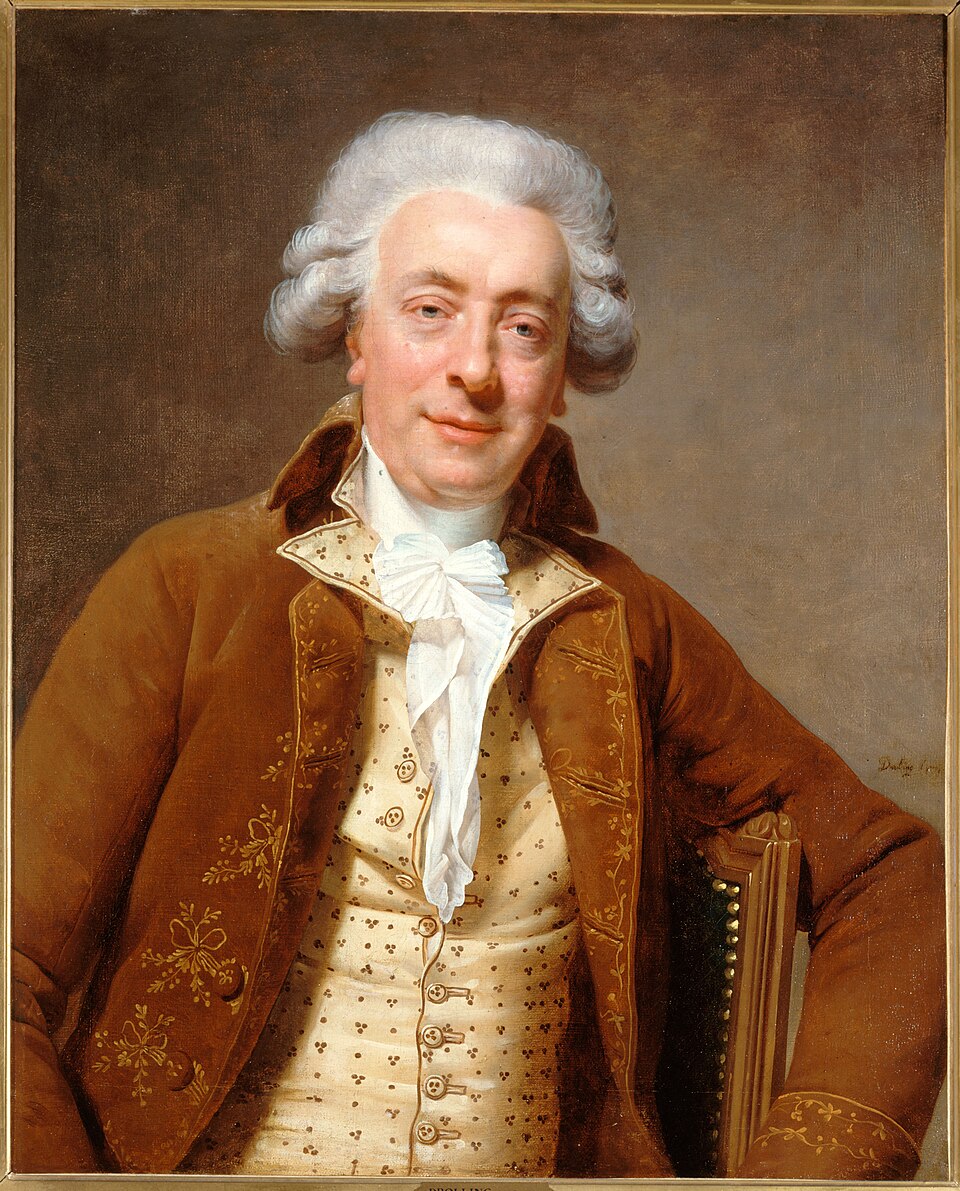
Inspect the archival plate
Editorial essay; not externally peer reviewed. Estimated at 200 words per minute for the abstract and main prose; references and interactive studies take additional time. Publication details revised 10 October 2026.
Revised 2026-10-11. Complete design essay with declared examples and study-specific limits. Unsupported universal effects, measurements and historical-art attribution withdrawn.
A lamp with two possible switches
The reader sees one drawn lamp and can switch its appearance through a detached control or a control placed on the object. The operation is deliberately small: a button changes the illustration’s illuminated state. It does not power a physical lamp, measure task performance or compare people’s cognitive load. Its usefulness lies in holding the operation steady while changing where the control appears.
I am interested in the relation between the action and the thing acted upon. A playback button beside its recording can make that relation evident. A global command bar can also make it evident when the selected target is clearly named. Placement is one resource for explanation, rather than a universal rule that every control must disappear into its object.
Diegesis asks another question
Fagerholt and Lorentzon’s 2009 thesis considers interface representation within first-person game fiction and distinguishes it from spatial presentation. A representation can occupy the game’s three-dimensional space while remaining outside its fictional world. A game-world instrument can also display information belonging to the fiction. These dimensions should not collapse into a synonym for ornament.
The lamp study has no declared game character or fictional world that could see and operate its switch. It therefore demonstrates proximity and object state, rather than proving diegesis under the thesis’s game-oriented definition. Extending the term to ordinary software can be a useful analogy if the extension is named. It cannot inherit a claim about player immersion or a general nervous-system benefit automatically.
Where does the switch belong?
Switch on the same reading lamp through a detached control and a control on the object. Which relationship feels clearer?
Reading lamp / off / one action, two locations
Keep the same operation legible
The two study positions retain a named button and a visible on/off result. An accessible implementation also needs the control’s role, current state and keyboard behavior. WCAG 2.2 supplies relevant requirements for those functions. Painting a convincing physical switch over an unnamed clickable region would sacrifice information that resemblance cannot reliably recover.
Consider a constructed recording player with three states: paused, playing and playback unavailable. A button labeled Play should refer to the recording, not to the entire page. After activation, the state should reflect actual playback. If playback is unavailable, the control should communicate that result instead of lighting up merely because a click occurred. This proposed workflow is broader than the lamp sketch, which has no media dependency.
A complication that changes the recommendation
An object can move, shrink or leave the viewport. Attaching its only control to it may then make the operation harder to find. A stable toolbar or an additional named command can be appropriate. The design should preserve the target relationship through those changes, rather than treating physical attachment as the goal in itself.
A meaningful comparison would define the task, the target population and the failure being measured: wrong-object activation, time to locate the control, state misunderstanding or inability to operate it. The study supplies none of those measurements. A reader’s preference between its two drawings is a response to this sketch, not an archive-wide usability finding.
Let the object explain, without pretending
The earlier draft described detached controls as imposing immense cognitive costs and implied that a material appearance could eliminate them. Those claims lacked evidence and are withdrawn. I retain the design judgment that an object can help explain its own controls when the relationship remains explicit and operable.
The strongest version of this interface is neither invisible nor theatrical by necessity. It gives the reader a clear answer to three questions: what will this action affect, what state is that thing in, and what happened when I acted? The lamp offers a small way to inspect the first two. A real application has to earn the third.
Put the argument to work.
Place a playback control beside the recording it operates. Let the object display its own state, and keep its name available to assistive technology.
A useful boundary. Physical resemblance is a design choice, not a substitute for labels, keyboard access, or a predictable interaction.
Continue in the laboratorySources & further reading.
The books and papers behind the argument, with curatorial notes and references formatted in APA 7th edition. The citation style identifies the source; it does not claim external peer review.
Fagerholt, E., & Lorentzon, M. (2009). Beyond the HUD: User interfaces for increased player immersion in FPS games [Master’s thesis, Chalmers University of Technology]. Chalmers University of Technology. https://publications.lib.chalmers.se/records/fulltext/111921.pdf
Why it belongs here Sections 7.1–7.2 distinguish fiction and spatial presentation; the thesis does not establish a universal productivity benefit for ordinary software.
World Wide Web Consortium. (2024). Web Content Accessibility Guidelines (WCAG) 2.2 (W3C Recommendation, December 12, 2024). World Wide Web Consortium. https://www.w3.org/TR/2024/REC-WCAG22-20241212/
Why it belongs here Keyboard operation, names/roles/values and status messages remain relevant when controls are visually attached to an object. A single study is not a site-wide conformance audit.
Archival Cross-References
Related Lexicon Definitions
Diegetic Interface
A user interface entity that exists physically and spatially within the world of the artifact rather than supe...
Inspect Definition →Game Feel (Juice)
The somatic tactile satisfaction derived from real-time interactive control, generated through the precise cal...
Inspect Definition →Cognitive Ludology
The scientific study of intrinsic motivation, tactile agency, and spatial discovery loops when game design pri...
Inspect Definition →Related Design Atlas Cartography
Archival Inquiries: Diegetic Interface Architecture
Bespoke recursive search tree answering core questions on Diegetic Interface Architecture.