The Borgesian Library
Six records, several entrances and the cost of a classification
A collection becomes useful through accountable selections and navigable relationships; completeness alone does not supply an entrance.
Read the abstract
An archive’s arrangement determines which relationships a reader can follow without determining every valid relation among its records. The Library of Babel supplies a literary prompt; a six-record study supplies a concrete design example. Hierarchy, sequence and network are different entrances, each with obligations to reading order and meaning.
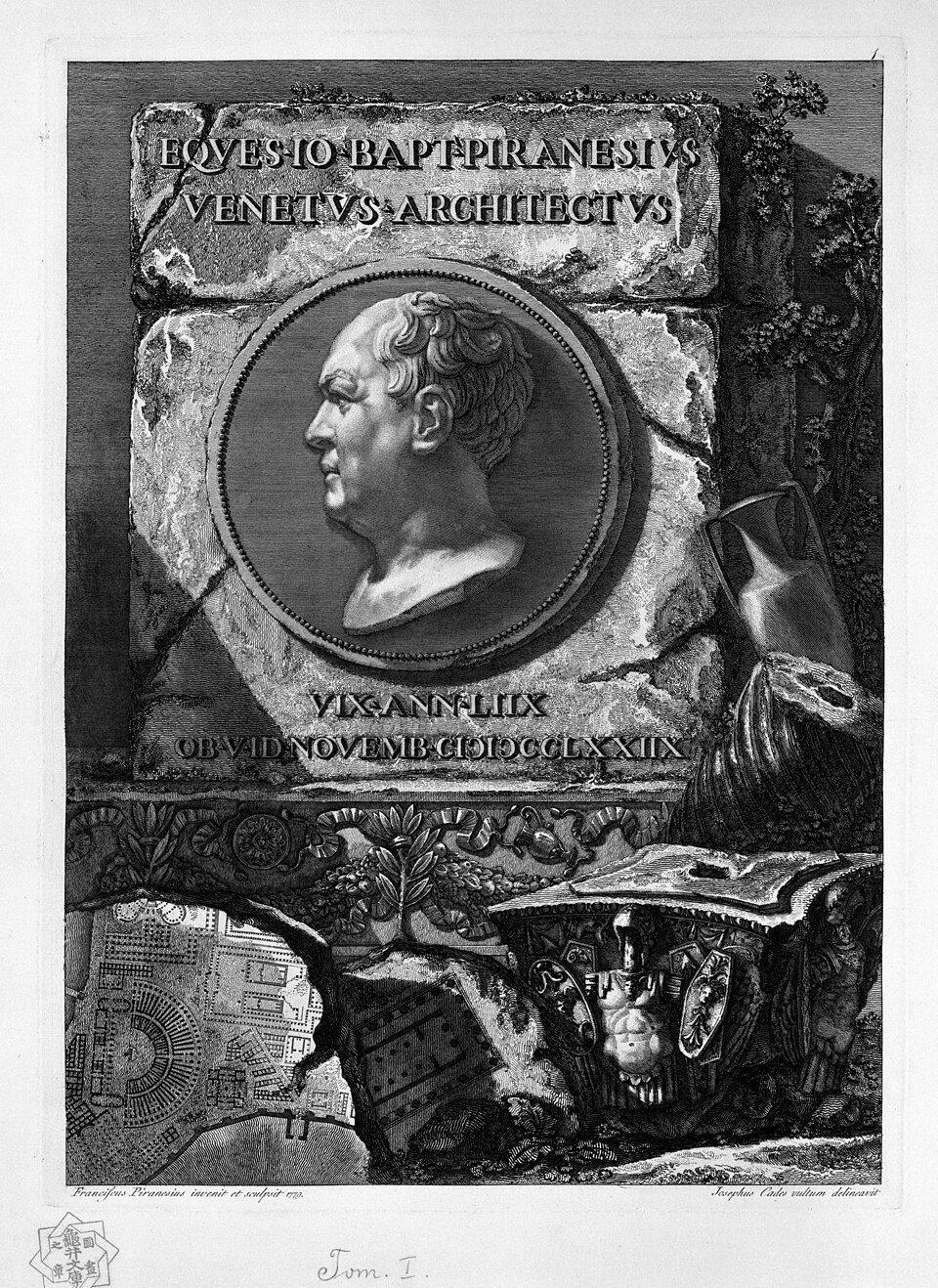
Inspect the archival plate
Editorial essay; not externally peer reviewed. Estimated at 200 words per minute for the abstract and main prose; references and interactive studies take additional time. Publication details revised 10 October 2026.
Revised 2026-10-11. Complete design essay with declared examples and study-specific limits. Unsupported universal effects, measurements and historical-art attribution withdrawn.
An abundance without an entrance
The opening of Borges’s The Library of Babel gives its narrator a universe organized through repeated galleries. The physical order of the setting does not settle the reader’s access to meaningful books. That literary distinction is the prompt I take from the passage: an arrangement can be regular while the problem of finding something remains severe.
The cited publisher record identifies Andrew Hurley’s translation in the 1999 paperback of Collected Fictions. The opening was consulted in the separately identified online reproduction. This is a limited literary reference, not a full-book interpretation or an empirical finding about libraries. The design exercise below is this archive’s construction.
Keep the collection constant
The study contains six labels: Stone, Marble, Slate, Fibre, Linen and Wool. In Hierarchy, Stone and Fibre occupy the two parent positions, each linked to two other labels. In Sequence, the same six labels appear in their declared list order. In Network, they move to a connected arrangement with additional cross-links. These are drawings of relationships, not six newly sourced collection dossiers.
A task makes their differences concrete. “Find the labels grouped under Fibre” fits the hierarchy. “Read the labels in the supplied order” fits the sequence. “Inspect the connection drawn between unlike groups” fits the network. None proves that the arrangement is fastest for a population of readers; each gives a different relationship greater visual prominence.
The sequence is not a documented accession chronology. The network links do not carry a measured similarity score or evidence of historical influence. Calling them accession order or cultural lineage would invent facts the labels do not contain. Their purposes should be declared before the appearance invites a stronger interpretation.
One collection. Three ways in.
Rearrange the same six records as a hierarchy, a sequence, or a network. Notice which relationships become easiest to read.
Records 01–06 / Stone · Marble · Slate · Fibre · Linen · Wool
An edge needs a name
In a practical archive, a relation might mean broader subject, made from, follows in accession order, or shares a curator’s selected feature. Those relations are not interchangeable. A line drawn between two records should lead to an explanation of what it asserts and why. An undifferentiated network can make every connection look equally established.
The hierarchy is also a selection. Grouping Marble under Stone can be useful for a particular material inquiry, while another task could group records by location, process or period. A primary hierarchy need not deny those other entrances. It should say which job it serves and provide a route back when the reader reaches the wrong branch.
The diagram must leave a reading path
A visual arrangement needs an explicit text order and meaningful link labels when it becomes an operable collection. The study lists all six records alongside its diagram. A production graph would also need keyboard navigation, understandable focus movement and a way to inspect a relation without hover. Its SVG geometry would not establish those behaviors by itself.
A constructed failure clarifies the obligation: suppose a reader follows a cross-link from Marble to Linen and forgets which subject branch they entered from. A visible collection link and a preserved breadcrumb can repair that journey. A beautiful layout with no return path asks the reader to maintain context that the archive could have supplied.
Choose an entrance and disclose its cost
The earlier essay treated tokens as grammar and interfaces as literature with a certainty that outgrew its evidence. Those analogies can stimulate design, but they do not demonstrate that a component system behaves like a language in every relevant sense. This revision gives the analogy a concrete boundary: arranged records expose some relationships and obscure others.
I would give this collection a stable subject entrance, retain the supplied sequence where it is useful, and offer the network as an optional comparison. That is an editorial choice for these tasks. Borges remains a prompt to ask what access means; the six records are where the proposal becomes inspectable.
Put the argument to work.
Give an archive a dependable subject index and an optional trail of related records. Preserve a clear route back to the collection.
A useful boundary. A spatial arrangement can suggest relationships, but it cannot replace an explicit reading order or meaningful link labels.
Continue in the laboratorySources & further reading.
The books and papers behind the argument, with curatorial notes and references formatted in APA 7th edition. The citation style identifies the source; it does not claim external peer review.
Borges, J. L. (1999). Collected fictions (A. Hurley, Trans.). Penguin Books. https://www.penguinrandomhouse.com/books/330909/collected-fictions-by-jorge-luis-borges-translated-by-andrew-hurley/
Why it belongs here Publisher identifies the 1999 paperback and translator. The opening of The Library of Babel was consulted through the separate online text linked in the prose; no full-book review is claimed.
Borges, J. L. (n.d.). The library of Babel (A. Hurley, Trans.) [Online reproduction]. Library of Babel. https://libraryofbabel.info/borges.html
Why it belongs here Identified literary text reproduction. Its fictional organization is a critical prompt, not a tested interface model.
World Wide Web Consortium. (2024). Web Content Accessibility Guidelines (WCAG) 2.2 (W3C Recommendation, December 12, 2024). World Wide Web Consortium. https://www.w3.org/TR/2024/REC-WCAG22-20241212/
Why it belongs here Keyboard operation, names/roles/values and status messages remain relevant when controls are visually attached to an object. A single study is not a site-wide conformance audit.
Archival Cross-References
Related Lexicon Definitions
Borgesian Taxonomy
An archival categorization system that embraces recursive combinatorial geometry, where a finite set of modula...
Inspect Definition →Manicule (☞)
A typographic mark in the shape of a pointing hand, historically drawn in the margins of manuscripts to direct...
Inspect Definition →Rubrication
The deliberate application of high-chroma red or gold pigment to initial letterforms and chapter heads within ...
Inspect Definition →Archival Inquiries: The Borgesian Library
Bespoke recursive search tree answering core questions on The Borgesian Library.