Image note
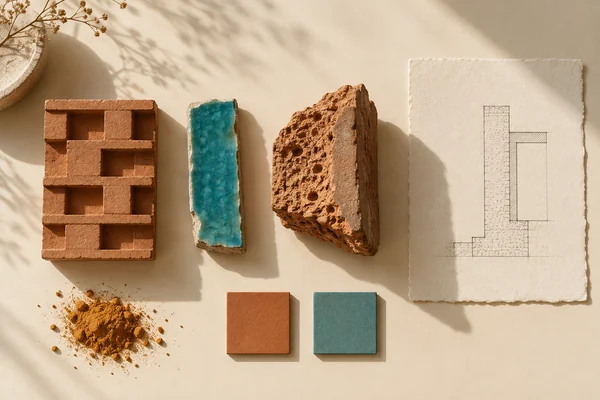
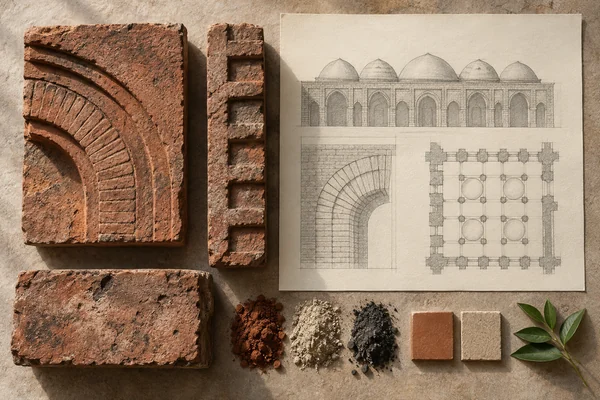
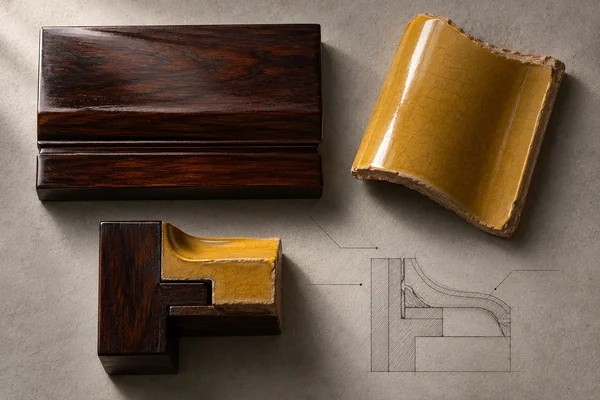
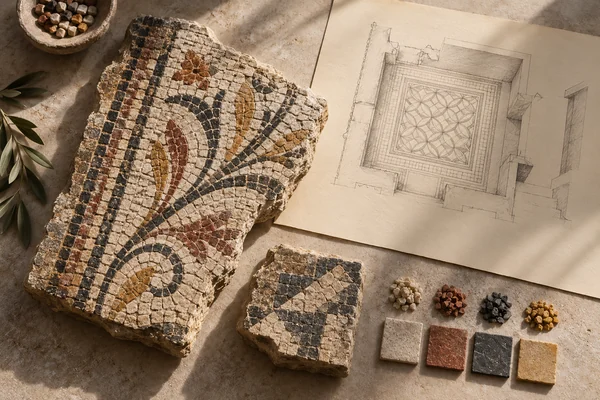
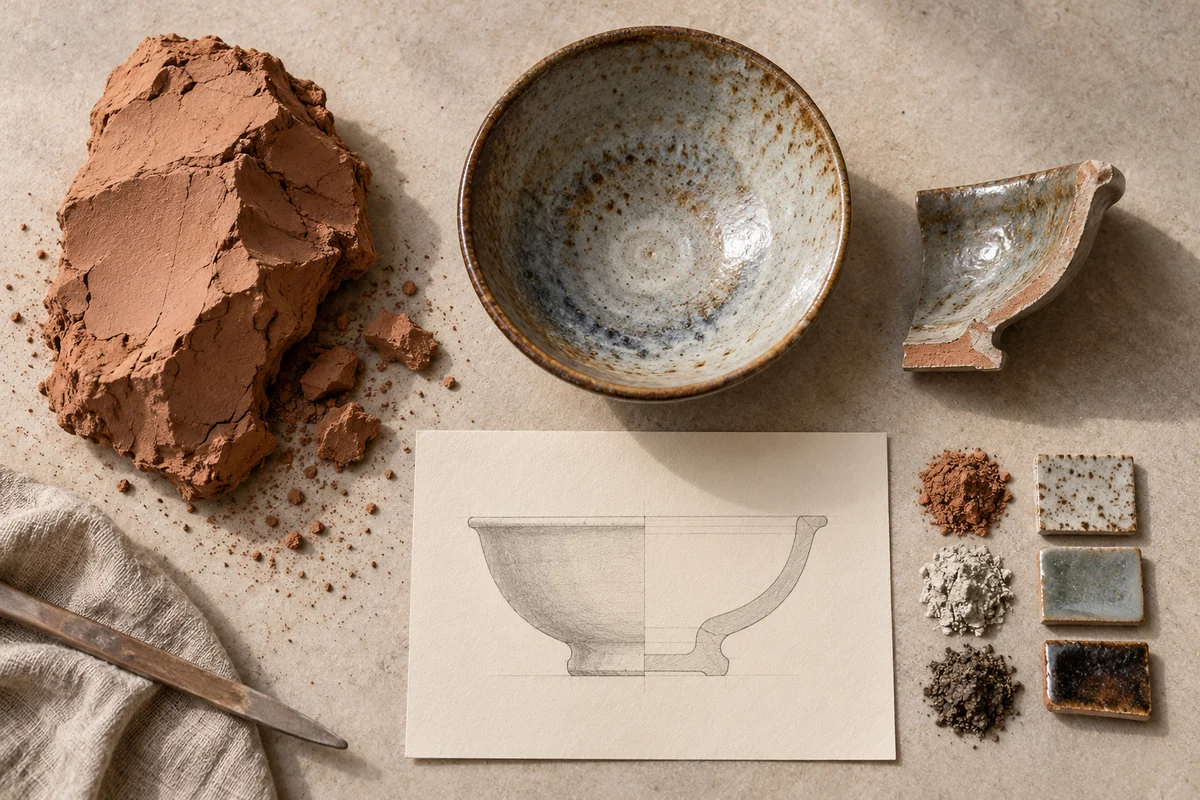
Three original interpretations of yingge clay & ceramic production, informed by Pottery Town. These images explore material and spatial ideas; they are not documentary views or measured reconstructions of the reference. The palette is drawn from the material portrait.
Publication credit: The Chromologium.
Image credits and reuseThe colour strip is the entry’s study palette. Artwork sources and image credits and reuse terms are recorded in the archive.
Artwork recordThree views of one material idea.
The Yingge Ceramics Museum documents Taiwan’s pottery techniques and the development of Yingge as a ceramics town. Kilns, factory communities and finished objects offer different scales for reading the same material practice.
Read the material study01 / Reading the material
The rim reveals the making
Yingge’s ceramics offer a direct comparison between a clay body and its finished glazed surface. A rim, foot or cut edge can reveal thickness and the relationship between inside and outside. The silhouette is therefore the result of material decisions, not just an outline drawn around a colour.
02 / From surface to space
Read the whole.
Then the edge.
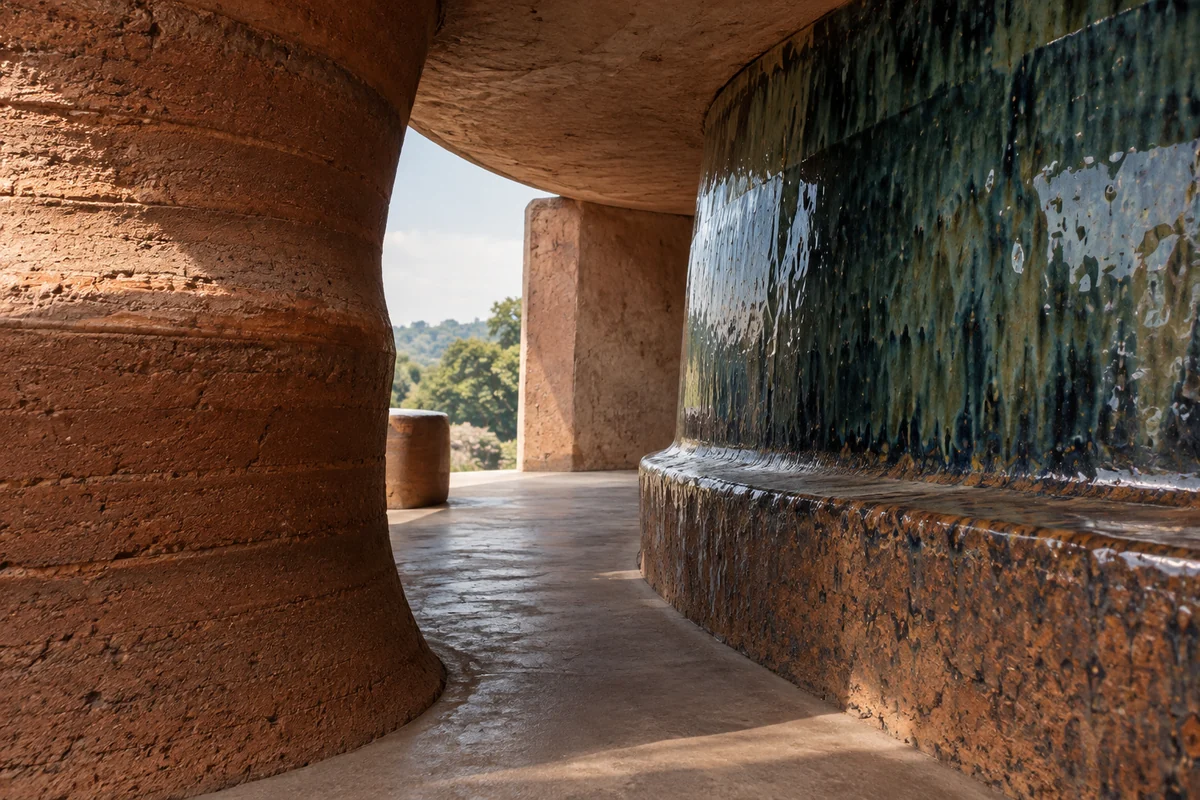
Move from one vessel to the workshop and town context documented by the museum. Kilns, production spaces and communities connect the finished object to a larger practice. A close studio image becomes more useful when it does not erase that setting.
Compare the raw clay body with the finished glazed surface. Follow a vessel’s rim, foot and thickness to understand the decisions behind its silhouette.
03 / Colour in context
A palette you can work with.
Five tones drawn from the material portrait. Select a colour, compare it on paper and ink, or copy its value into your own study.
Surface
#75543a
Colour values & paper / ink comparison
oklch(0.475 0.059 58.970) · primary
The colour stays fixed as its surroundings change.
Try the bench exercise
04 / At the bench
Make the observation tangible.
Make a simple original vessel study with a visible unglazed edge and a restrained glazed area. Compare the same curve from inside and outside. Keep any firing temperatures or glaze chemistry tied to a documented recipe rather than the image.
Keep a view of the whole beside a close detail. Note the material, lighting and the one variable you changed.
Source & orientation
Keep the reference close.
New Taipei City Yingge Ceramics Museum. (n.d.). Pottery Town. Retrieved October 10, 2026.
The material readings and bench exercise are editorial studies of this particular reference. The artwork explores its material ideas; the linked source documents the place.
Artwork & cartographic records
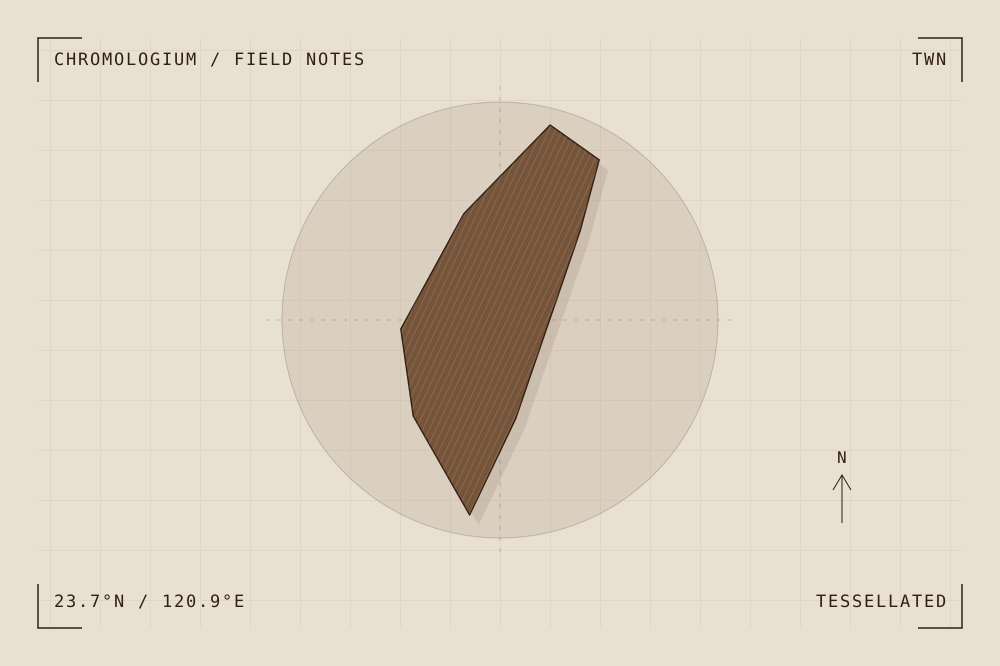
Artwork record · Geographic plate record. Map geometry: Natural Earth, public domain. The archive follows its map’s place names, including territories and disputed areas.
A closer look
Questions about this study
What does this study of Taiwan focus on?
The Yingge Ceramics Museum documents Taiwan’s pottery techniques and the development of Yingge as a ceramics town. Kilns, factory communities and finished objects offer different scales for reading the same material practice.
Where can I find the original reference?
Pottery Town, published by New Taipei City Yingge Ceramics Museum. The artwork explores the reference’s material ideas; the linked source documents the place.
What could I try at the bench?
Make a simple original vessel study with a visible unglazed edge and a restrained glazed area. Compare the same curve from inside and outside. Keep any firing temperatures or glaze chemistry tied to a documented recipe rather than the image.
Continue by material