VEN / Stone & substance
Venezuela
Earthen walls & layered building traditions
Develop a system from this study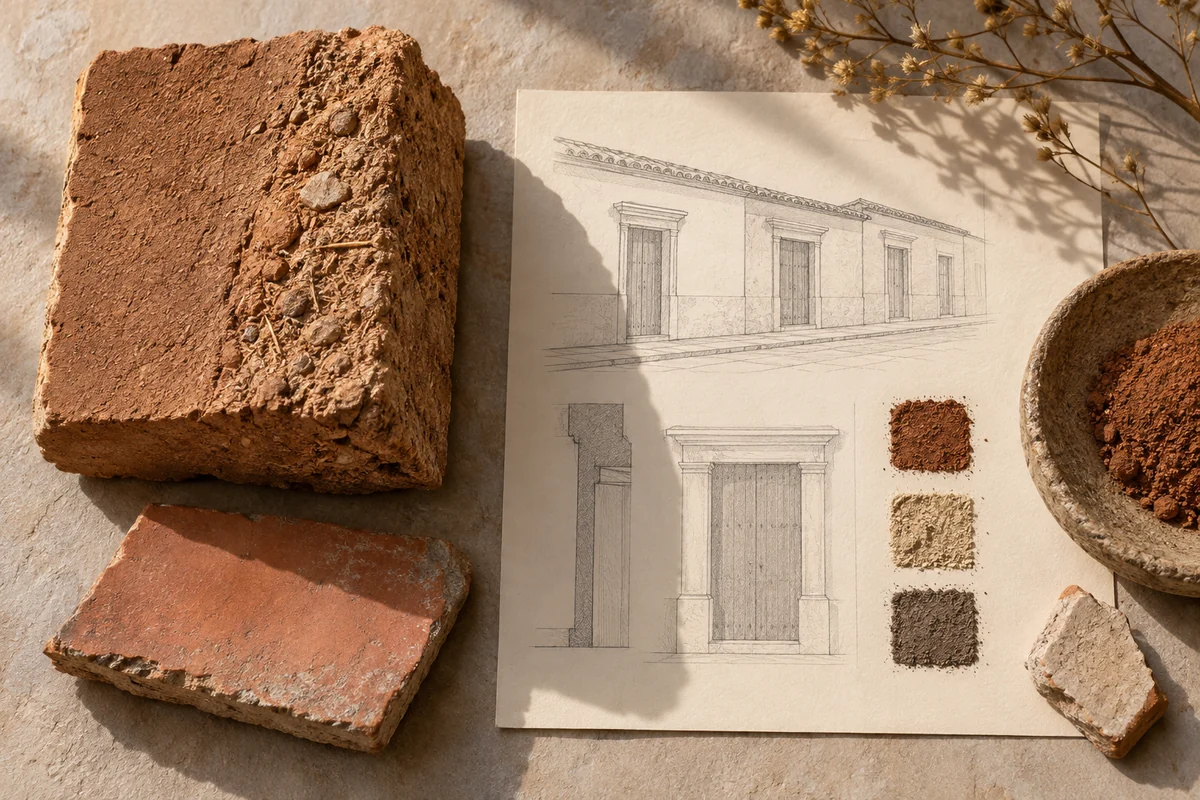
Image note
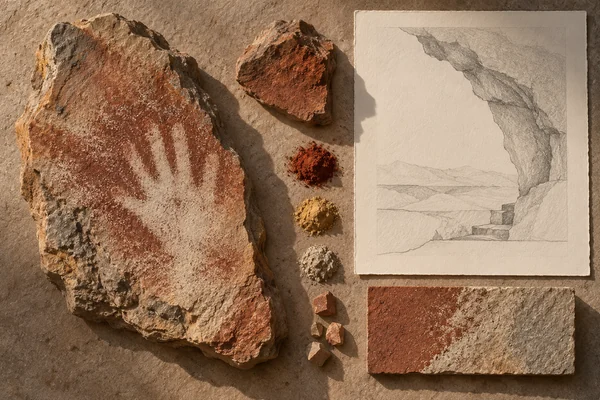
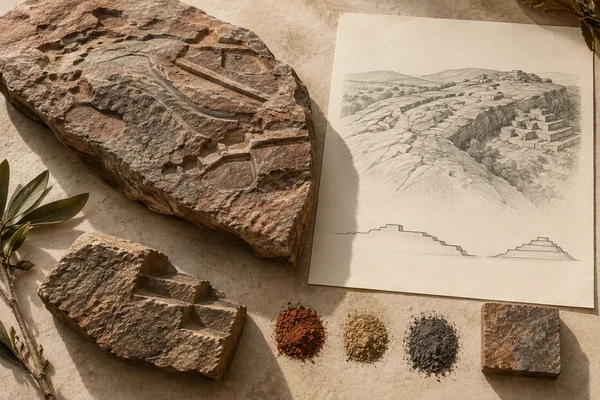
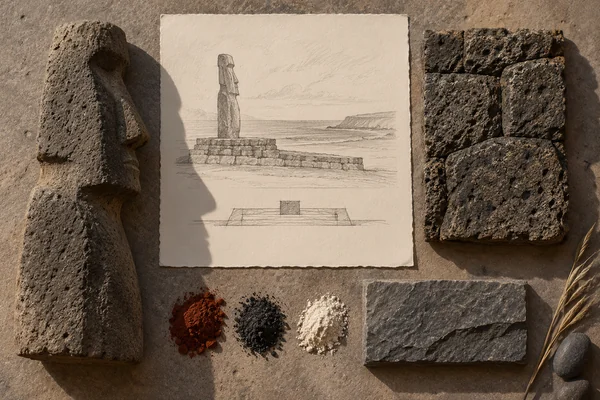
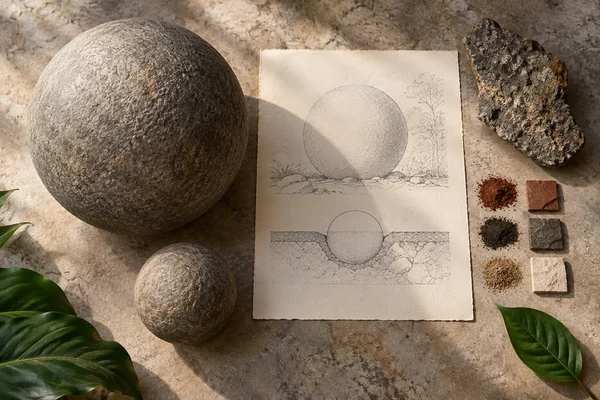
Three original interpretations of earthen walls & layered building traditions, informed by Coro and its Port. These images explore material and spatial ideas; they are not documentary views or measured reconstructions of the reference. The palette is drawn from the material portrait.
Publication credit: The Chromologium.
Image credits and reuseThe colour strip is the entry’s study palette. Artwork sources and image credits and reuse terms are recorded in the archive.
Artwork recordThree views of one material idea.
Coro’s earthen buildings bring local construction practices together with Spanish Mudéjar and Dutch influences. Their material continuity helps connect individual houses into a coherent historic townscape.
Read the material study01 / Reading the material
Continuity in an earthen street
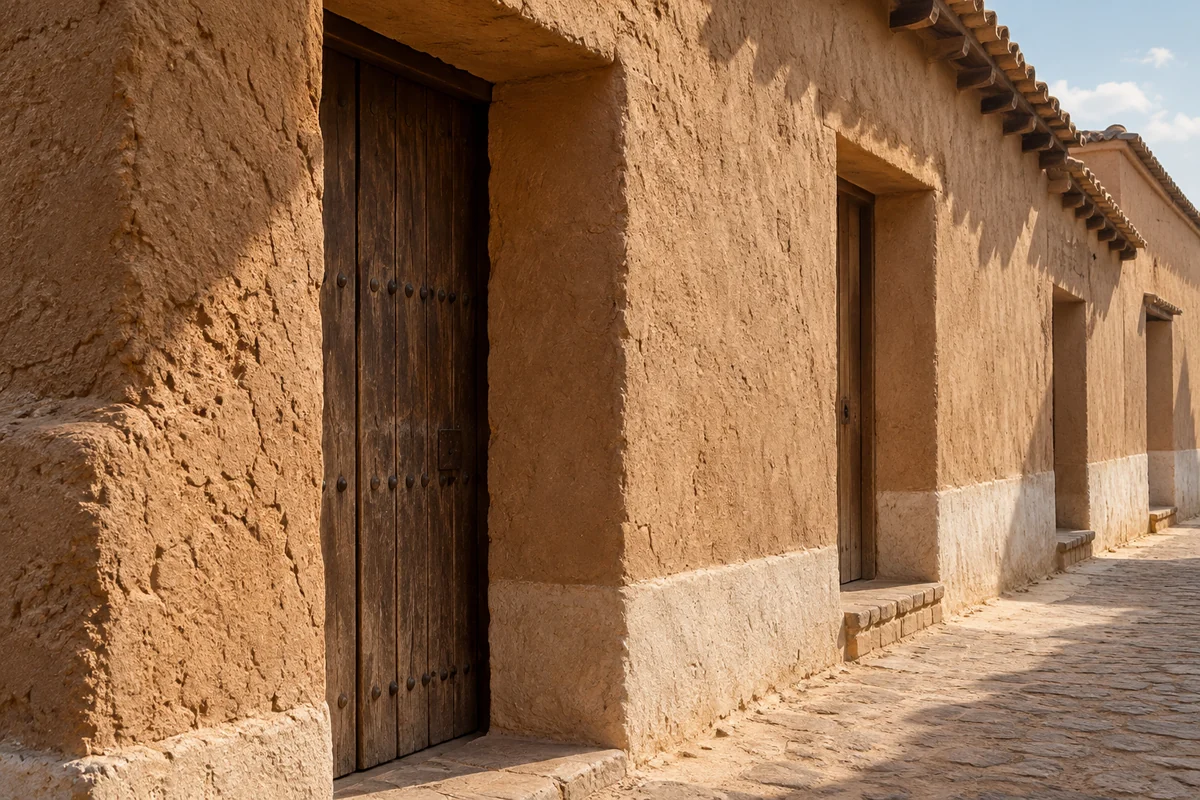
Coro’s earthen construction gives a material connection to buildings shaped by several traditions. Wall thickness and doorway proportions can vary while the street remains coherent. The ensemble’s identity emerges from that relationship between recurring material and individual form.
02 / From surface to space
Read the whole.
Then the edge.
Compare the front edge of several houses before isolating one opening. A deep doorway reveals the wall’s thickness and offers a different scale of attention from the continuous street line. Local construction practices remain central to the reading.
Compare the thickness of an earthen wall with the proportions of a doorway. Look for variation within a repeated street frontage.
03 / Colour in context
A palette you can work with.
Five tones drawn from the material portrait. Select a colour, compare it on paper and ink, or copy its value into your own study.
Surface
#643b17
Colour values & paper / ink comparison
oklch(0.395 0.076 58.823) · primary
The colour stays fixed as its surroundings change.
Try the bench exercise
04 / At the bench
Make the observation tangible.
Arrange a few original earthen-coloured fronts with varied deep openings and a shared alignment. Let light describe their thickness. Preserve the distinct local, Mudéjar and Dutch influences in the historical account rather than merging them into a generic label.
Keep a view of the whole beside a close detail. Note the material, lighting and the one variable you changed.
Source & orientation
Keep the reference close.
UNESCO World Heritage Centre. (n.d.). Coro and its Port. Retrieved October 10, 2026.
The material readings and bench exercise are editorial studies of this particular reference. The artwork explores its material ideas; the linked source documents the place.
Artwork & cartographic records
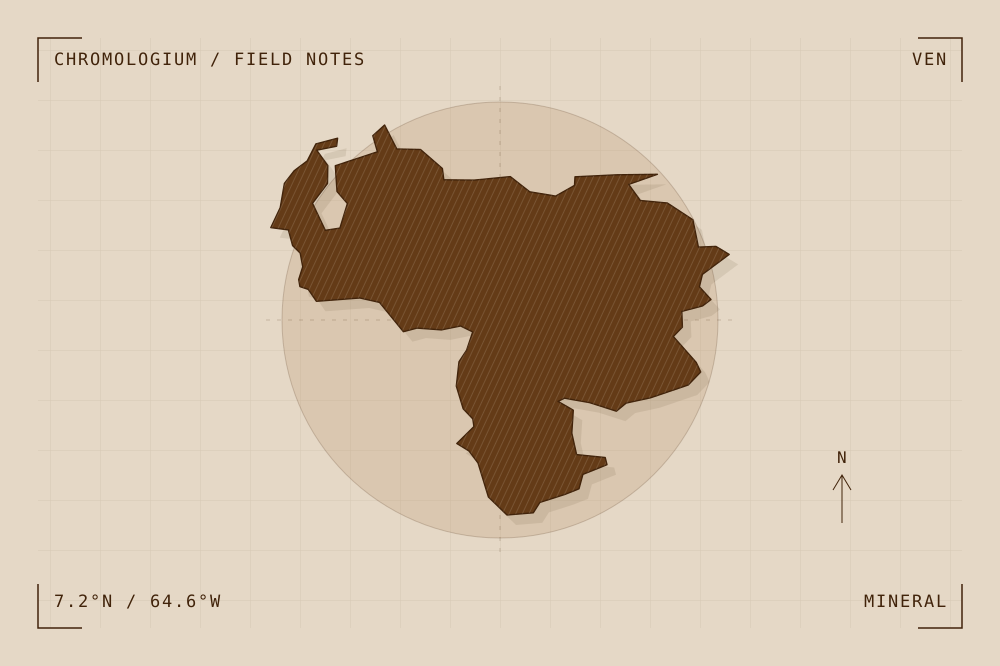
Artwork record · Geographic plate record. Map geometry: Natural Earth, public domain. The archive follows its map’s place names, including territories and disputed areas.
A closer look
Questions about this study
What does this study of Venezuela focus on?
Coro’s earthen buildings bring local construction practices together with Spanish Mudéjar and Dutch influences. Their material continuity helps connect individual houses into a coherent historic townscape.
Where can I find the original reference?
Coro and its Port, published by UNESCO World Heritage Centre. The artwork explores the reference’s material ideas; the linked source documents the place.
What could I try at the bench?
Arrange a few original earthen-coloured fronts with varied deep openings and a shared alignment. Let light describe their thickness. Preserve the distinct local, Mudéjar and Dutch influences in the historical account rather than merging them into a generic label.
Continue by material