Image note
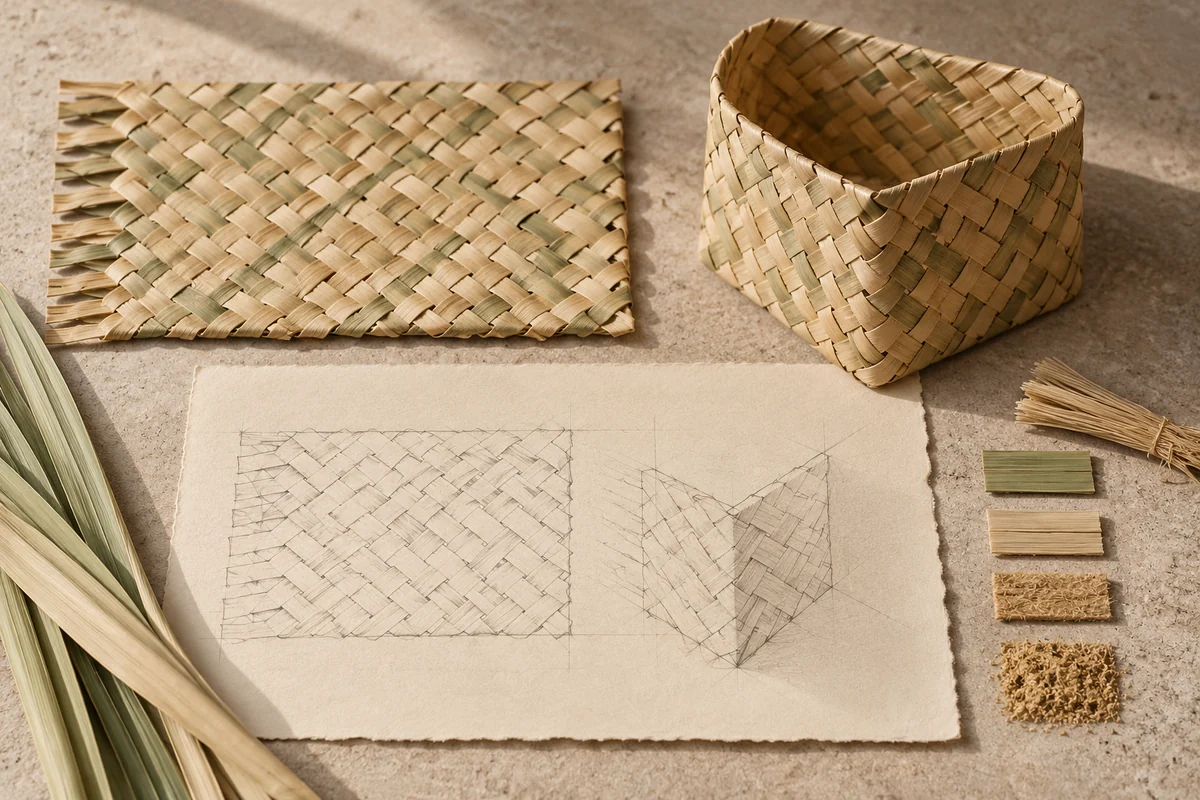
Three original interpretations of plaited straw & woven volume, informed by Straw by Storr. These images explore material and spatial ideas; they are not documentary views or measured reconstructions of the reference. The palette is drawn from the material portrait.
Publication credit: The Chromologium.
Image credits and reuseThe colour strip is the entry’s study palette. Artwork sources and image credits and reuse terms are recorded in the archive.
Artwork recordThree views of one material idea.
Bahamian straw makers turn narrow plant-fibre strips into bags, baskets and other objects. The tourism board’s maker profiles provide a starting point for following individual practices within this living craft.
Read the material study01 / Reading the material
A strip becomes a volume
A straw plait starts as a narrow, repeatable operation. Its interest increases when that operation has to turn, widen or meet another edge. Follow the fibres through those transitions: they reveal more about making than an isolated patch of regular weave can show.
02 / From surface to space
Read the whole.
Then the edge.
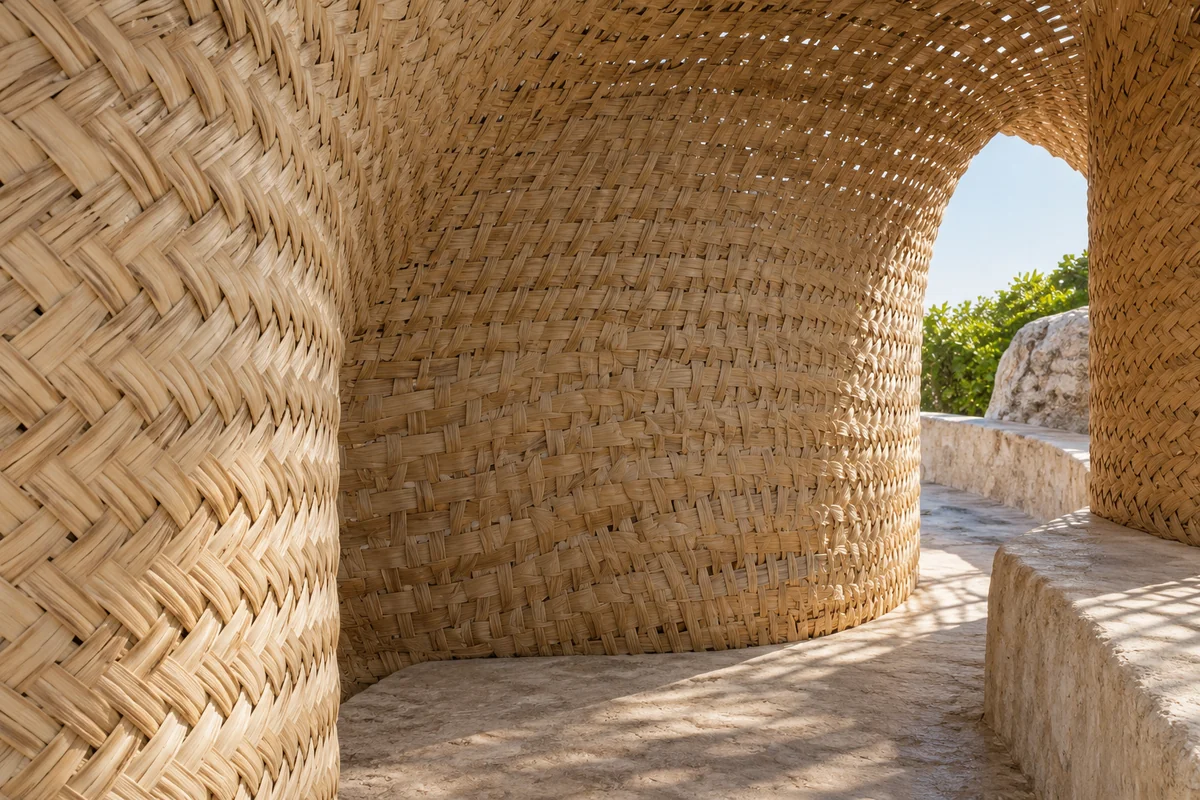
A basket or bag is a useful study in the relationship between a flexible surface and a contained space. Compare the open rim, the curved wall and the flatter base. Each area asks the same material to behave differently while the continuity of the weave holds the object together.
Compare a flat plait with the point where it turns a corner. What changes in spacing allow a woven surface to become a volume?
03 / Colour in context
A palette you can work with.
Five tones drawn from the material portrait. Select a colour, compare it on paper and ink, or copy its value into your own study.
Surface
#735430
Colour values & paper / ink comparison
oklch(0.470 0.066 69.199) · primary
The colour stays fixed as its surroundings change.
Try the bench exercise
04 / At the bench
Make the observation tangible.
Fold a strip of paper into an original woven corner. Change strip width or spacing one variable at a time. Credit the particular maker when studying a finished Bahamian object rather than treating the craft as anonymous.
Keep a view of the whole beside a close detail. Note the material, lighting and the one variable you changed.
Source & orientation
Keep the reference close.
Bahamas Ministry of Tourism. (n.d.). Straw by Storr. Retrieved October 10, 2026.
The material readings and bench exercise are editorial studies of this particular reference. The artwork explores its material ideas; the linked source documents the place.
Artwork & cartographic records
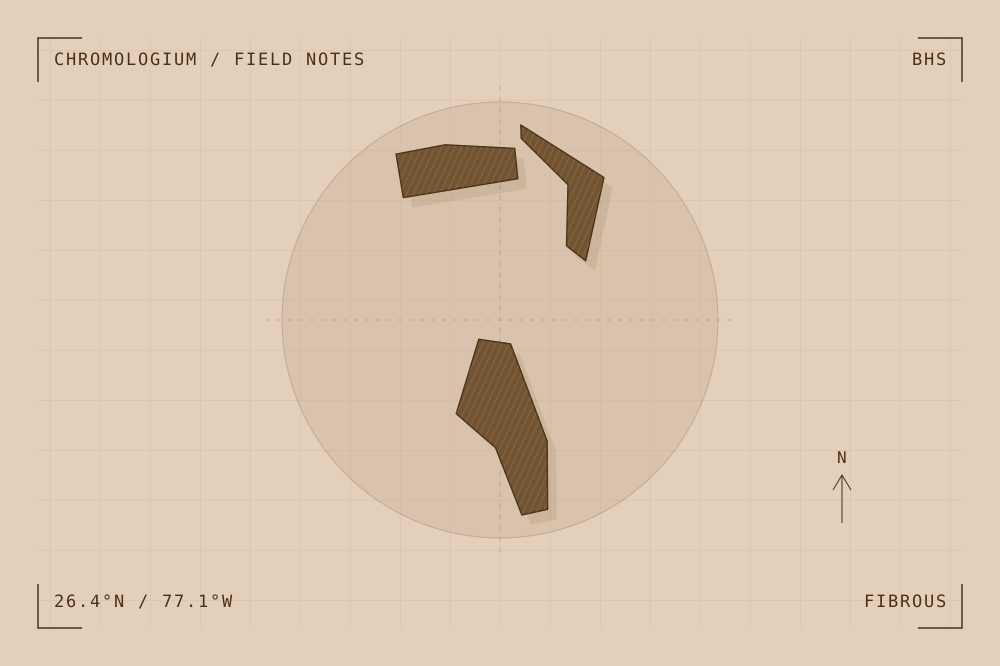
Artwork record · Geographic plate record. Map geometry: Natural Earth, public domain. The archive follows its map’s place names, including territories and disputed areas.
A closer look
Questions about this study
What does this study of Bahamas focus on?
Bahamian straw makers turn narrow plant-fibre strips into bags, baskets and other objects. The tourism board’s maker profiles provide a starting point for following individual practices within this living craft.
Where can I find the original reference?
Straw by Storr, published by Bahamas Ministry of Tourism. The artwork explores the reference’s material ideas; the linked source documents the place.
What could I try at the bench?
Fold a strip of paper into an original woven corner. Change strip width or spacing one variable at a time. Credit the particular maker when studying a finished Bahamian object rather than treating the craft as anonymous.
Continue by material