Image note
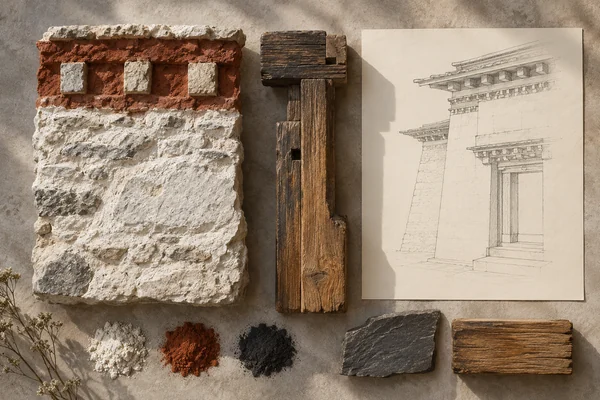
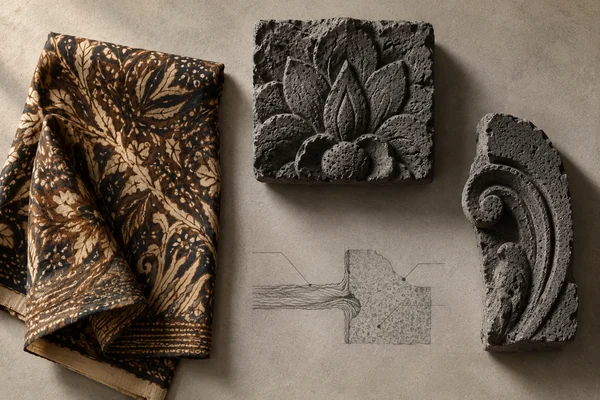
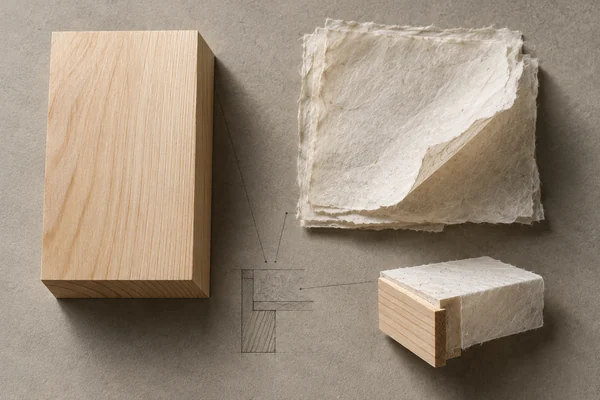
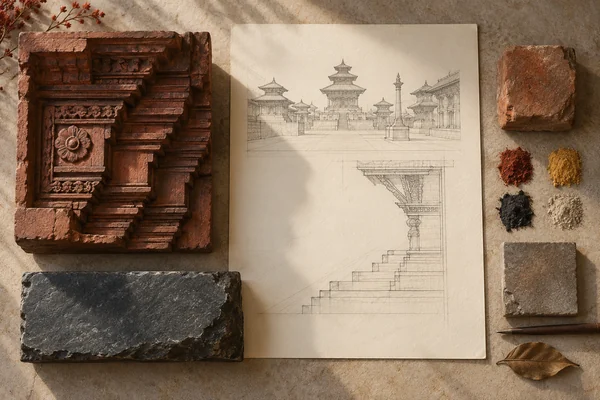
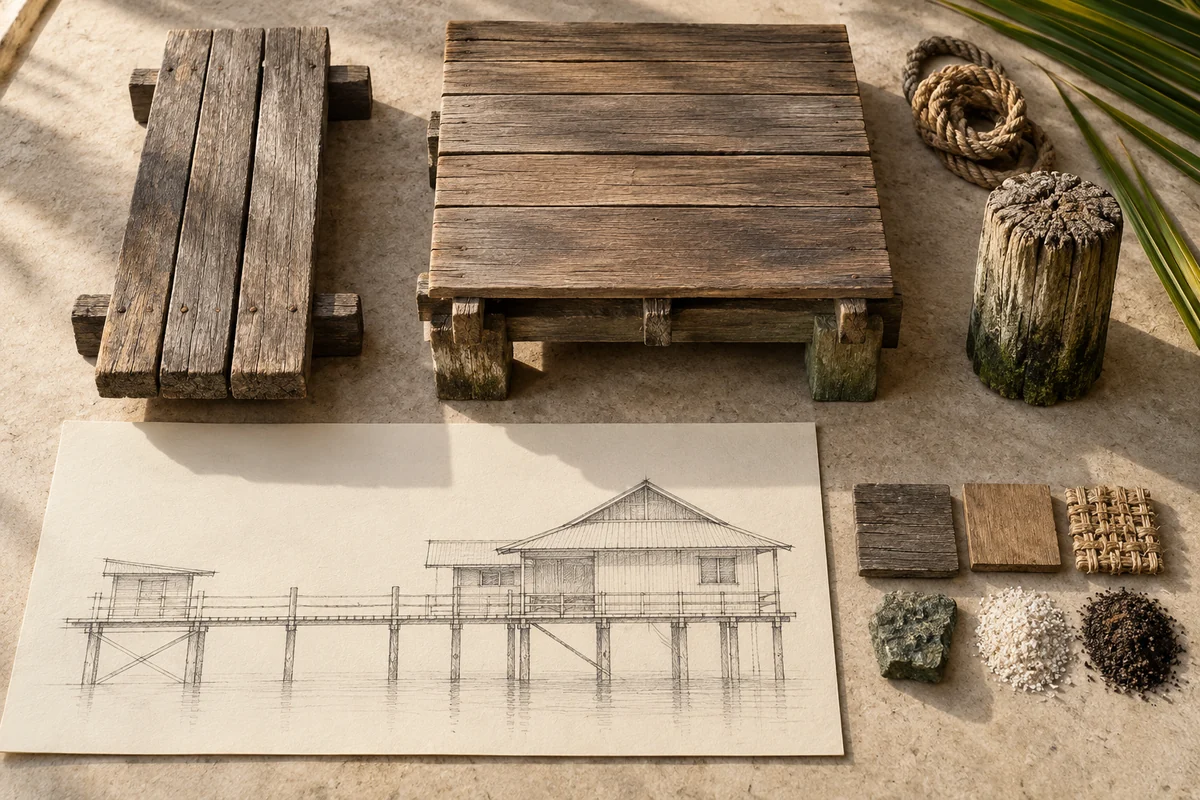
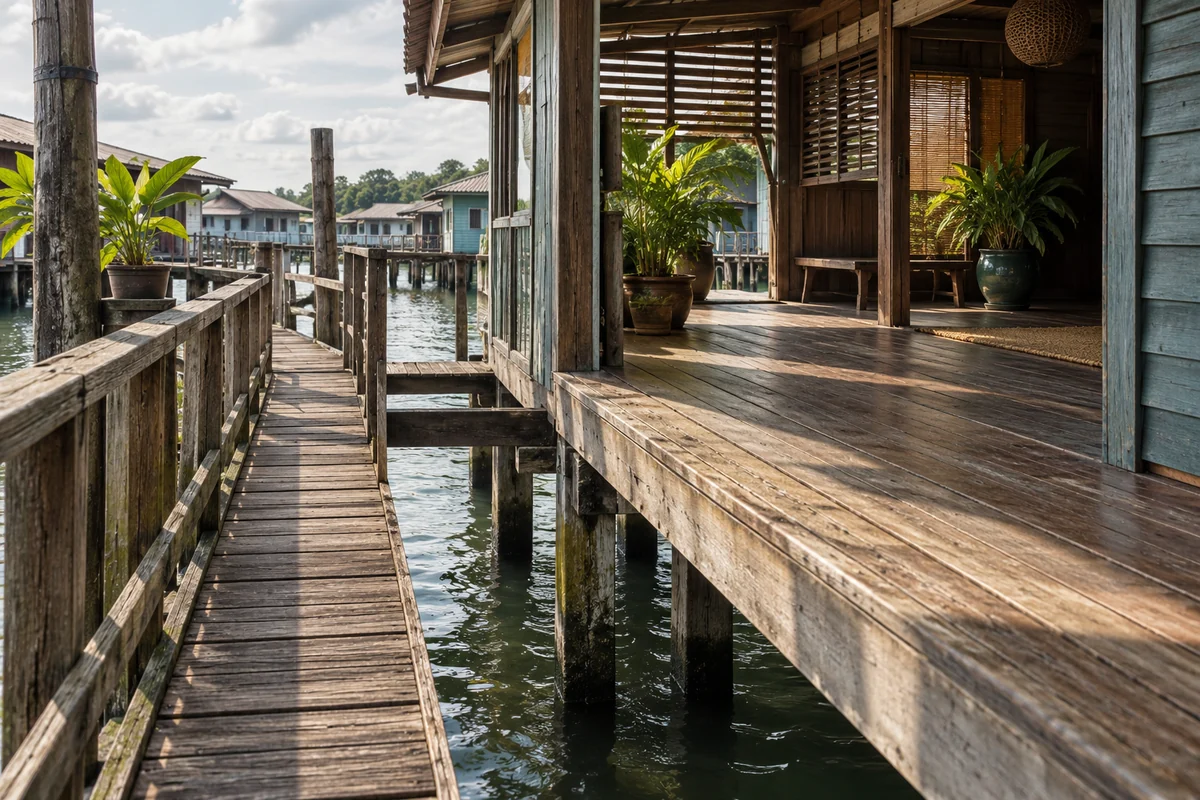
Three original interpretations of raised houses & connected walkways, informed by Kampong Ayer walking trail. These images explore material and spatial ideas; they are not documentary views or measured reconstructions of the reference. The palette is drawn from the material portrait.
Publication credit: The Chromologium.
Image credits and reuseThe colour strip is the entry’s study palette. Artwork sources and image credits and reuse terms are recorded in the archive.
Artwork recordThree views of one material idea.
Kampong Ayer’s houses and walkways form a settlement over water. Brunei’s heritage walking trail documents its buildings, routes and continuing community life.
Read the material study01 / Reading the material
A street above the water
Kampong Ayer makes circulation visible as a structure in its own right. A narrow walkway, a widened landing and a house platform can form a clear hierarchy without a conventional paved street. Look at the joins between these surfaces rather than only at the buildings they connect.
02 / From surface to space
Read the whole.
Then the edge.
Water remains present beneath and between the routes. The spaces left open are as important to the settlement’s reading as the occupied platforms. In a plan study, preserve these intervals so that the network does not become a solid block.
Compare a narrow connecting walkway with the wider platform of a house. How does a settlement create streets and thresholds when its ground is water?
03 / Colour in context
A palette you can work with.
Five tones drawn from the material portrait. Select a colour, compare it on paper and ink, or copy its value into your own study.
Surface
#5c4d37
Colour values & paper / ink comparison
oklch(0.429 0.039 76.916) · primary
The colour stays fixed as its surroundings change.
Try the bench exercise
04 / At the bench
Make the observation tangible.
Compose a set of platforms connected by slender routes. Give one crossing room to widen into a threshold. Use the exercise to study connection and shared space, not to propose changes to the living settlement.
Keep a view of the whole beside a close detail. Note the material, lighting and the one variable you changed.
Source & orientation
Keep the reference close.
Brunei Tourism. (n.d.). Kampong Ayer walking trail. Retrieved October 10, 2026.
The material readings and bench exercise are editorial studies of this particular reference. The artwork explores its material ideas; the linked source documents the place.
Artwork & cartographic records
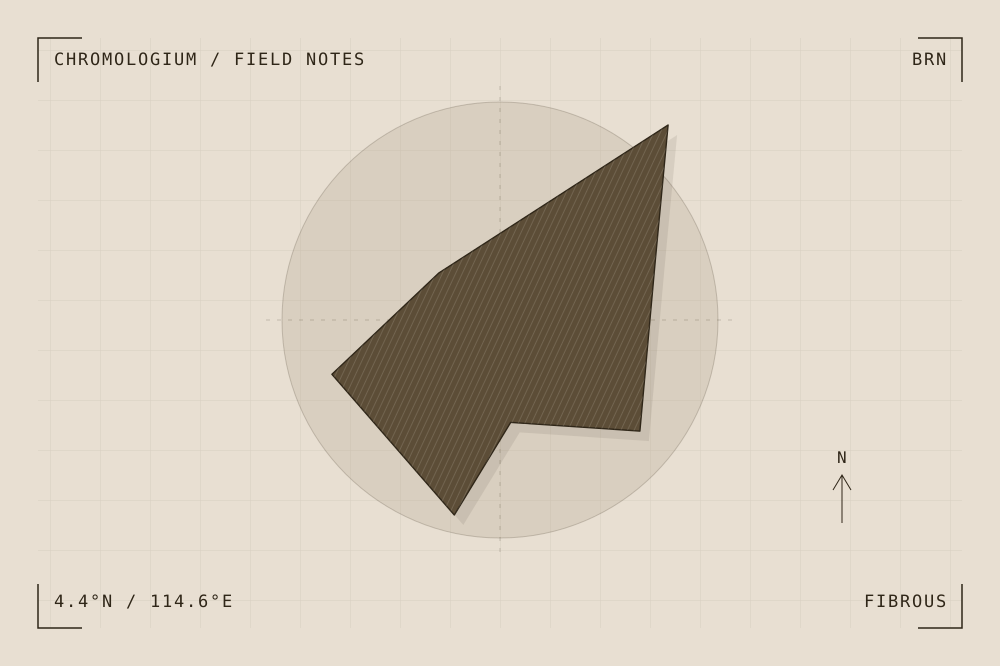
Artwork record · Geographic plate record. Map geometry: Natural Earth, public domain. The archive follows its map’s place names, including territories and disputed areas.
A closer look
Questions about this study
What does this study of Brunei focus on?
Kampong Ayer’s houses and walkways form a settlement over water. Brunei’s heritage walking trail documents its buildings, routes and continuing community life.
Where can I find the original reference?
Kampong Ayer walking trail, published by Brunei Tourism. The artwork explores the reference’s material ideas; the linked source documents the place.
What could I try at the bench?
Compose a set of platforms connected by slender routes. Give one crossing room to widen into a threshold. Use the exercise to study connection and shared space, not to propose changes to the living settlement.
Continue by material