Image note
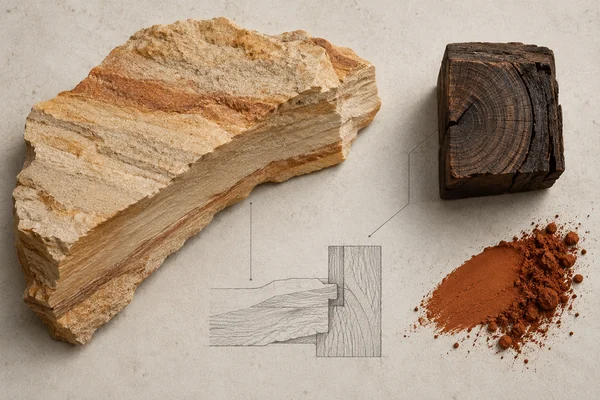
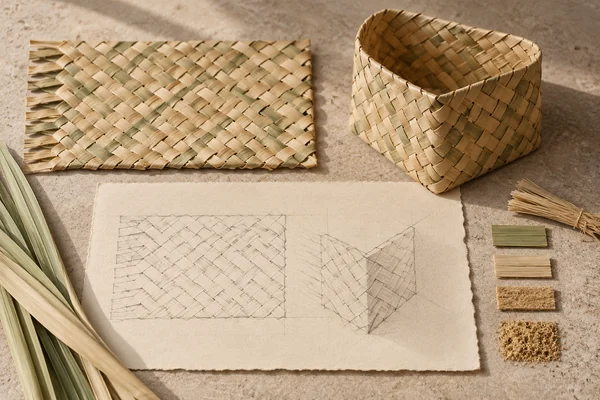
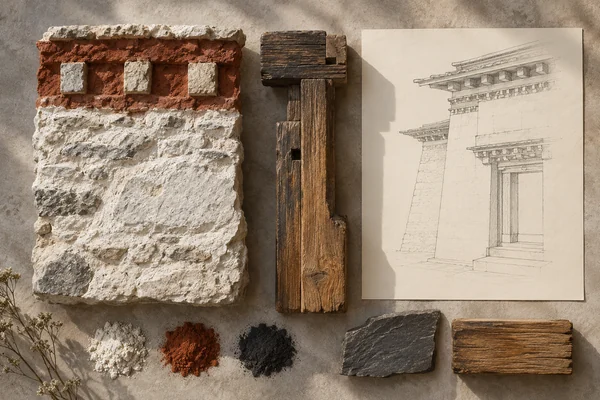
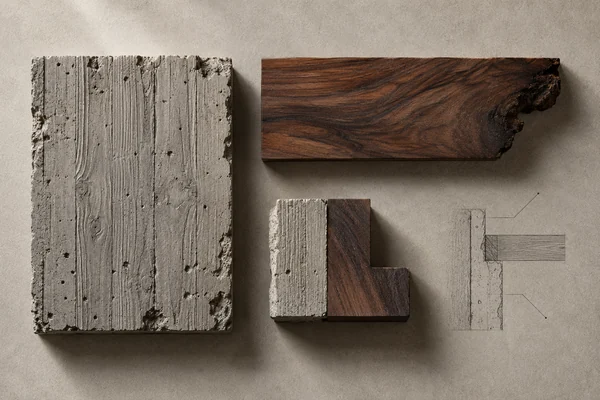
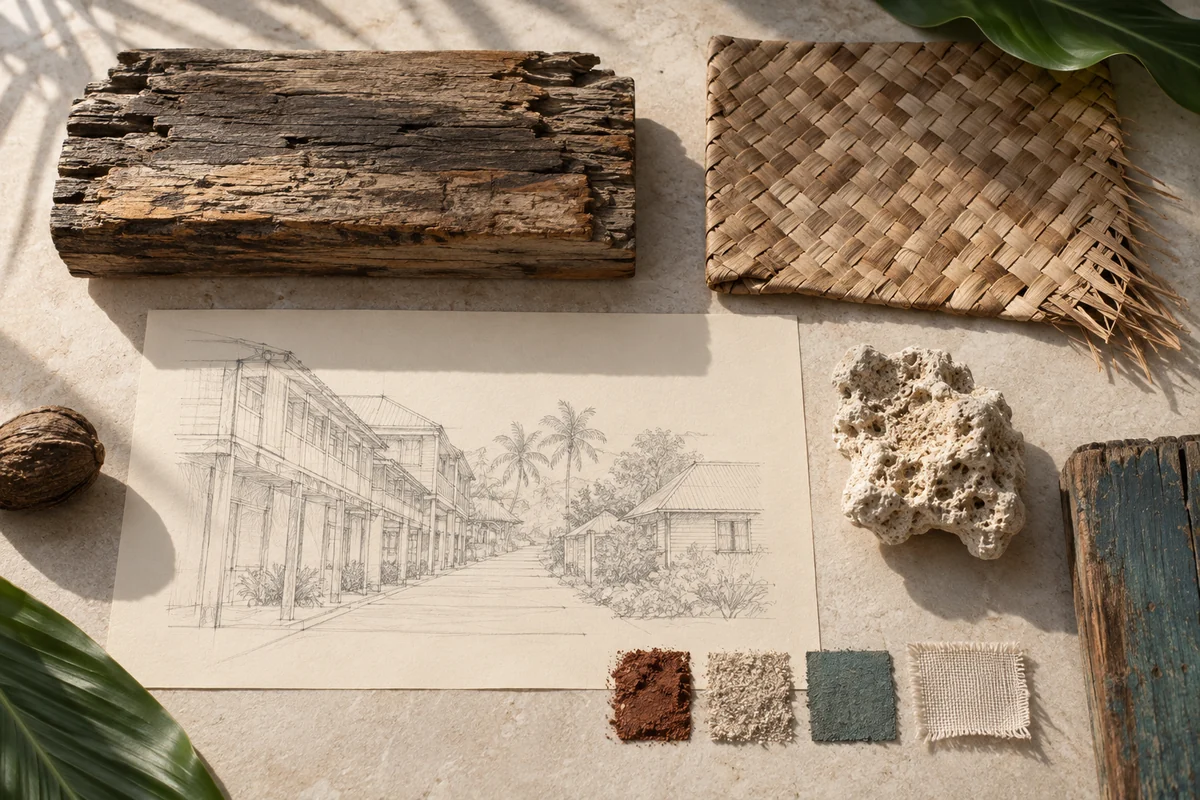
Three original interpretations of low-rise timber streetscapes, informed by Levuka Historical Port Town. These images explore material and spatial ideas; they are not documentary views or measured reconstructions of the reference. The palette is drawn from the material portrait.
Publication credit: The Chromologium.
Image credits and reuseThe colour strip is the entry’s study palette. Artwork sources and image credits and reuse terms are recorded in the archive.
Artwork recordThree views of one material idea.
Levuka’s port town grew around existing Indigenous settlements. Its beachfront buildings and inland village relationships make the town a useful study in how imported building types meet local ways of occupying a coast.
Read the material study01 / Reading the material
A frontage connected to a hinterland
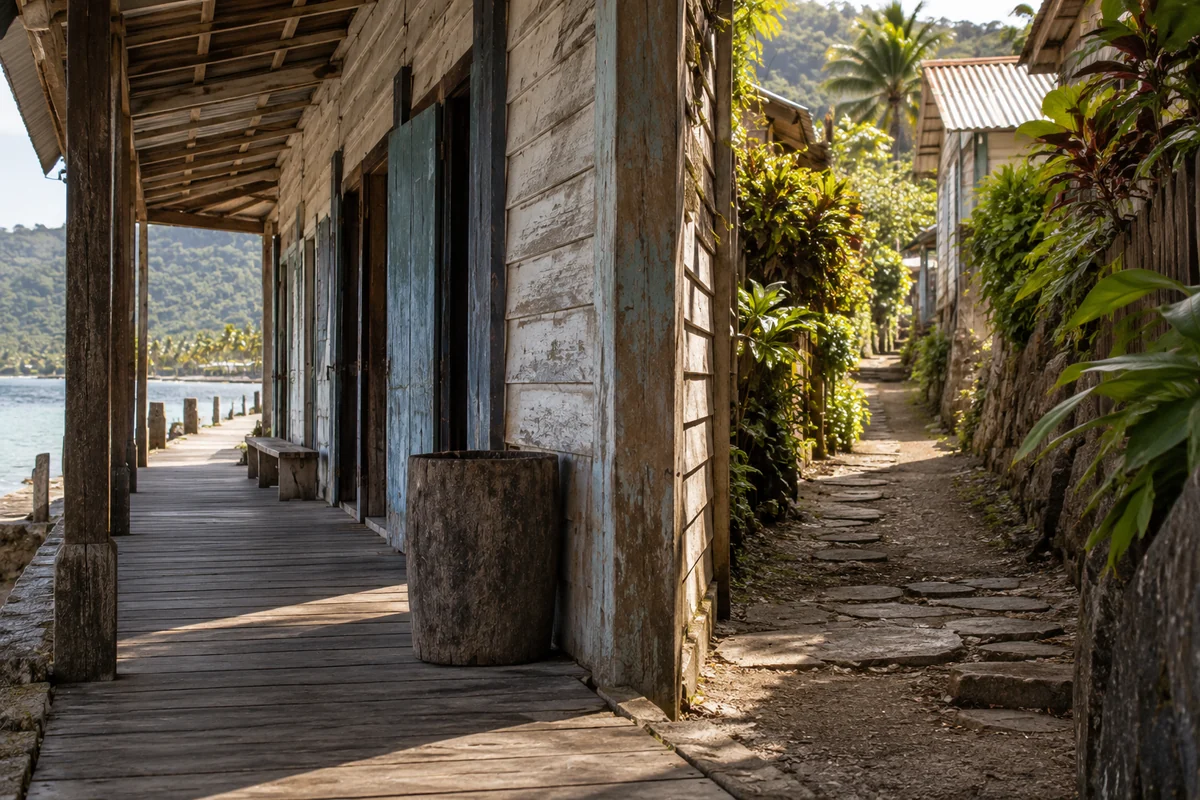
Levuka’s waterfront buildings form a recognizable edge, but the town extends through paths and relationships inland. A continuous frontage can orient a visitor while smaller routes distribute movement beyond it. The public face and the deeper settlement should be read together.
02 / From surface to space
Read the whole.
Then the edge.
Compare the long, relatively coherent coastal view with a turn into a narrower inland path. The change in scale gives individual buildings and spaces a different presence. This transition is more useful than treating the waterfront as a row of unrelated picturesque objects.
Follow the shift from a continuous waterfront frontage to smaller paths inland. What makes the port read as a town rather than a row of monuments?
03 / Colour in context
A palette you can work with.
Five tones drawn from the material portrait. Select a colour, compare it on paper and ink, or copy its value into your own study.
Surface
#84634a
Colour values & paper / ink comparison
oklch(0.527 0.057 58.288) · primary
The colour stays fixed as its surroundings change.
Try the bench exercise
04 / At the bench
Make the observation tangible.
Make a linear composition with a strong front edge and several smaller connections behind it. Vary those routes without dissolving the main line. Keep the town’s Indigenous settlement relationships present when discussing imported building types.
Keep a view of the whole beside a close detail. Note the material, lighting and the one variable you changed.
Source & orientation
Keep the reference close.
UNESCO World Heritage Centre. (n.d.). Levuka Historical Port Town. Retrieved October 10, 2026.
The material readings and bench exercise are editorial studies of this particular reference. The artwork explores its material ideas; the linked source documents the place.
Artwork & cartographic records
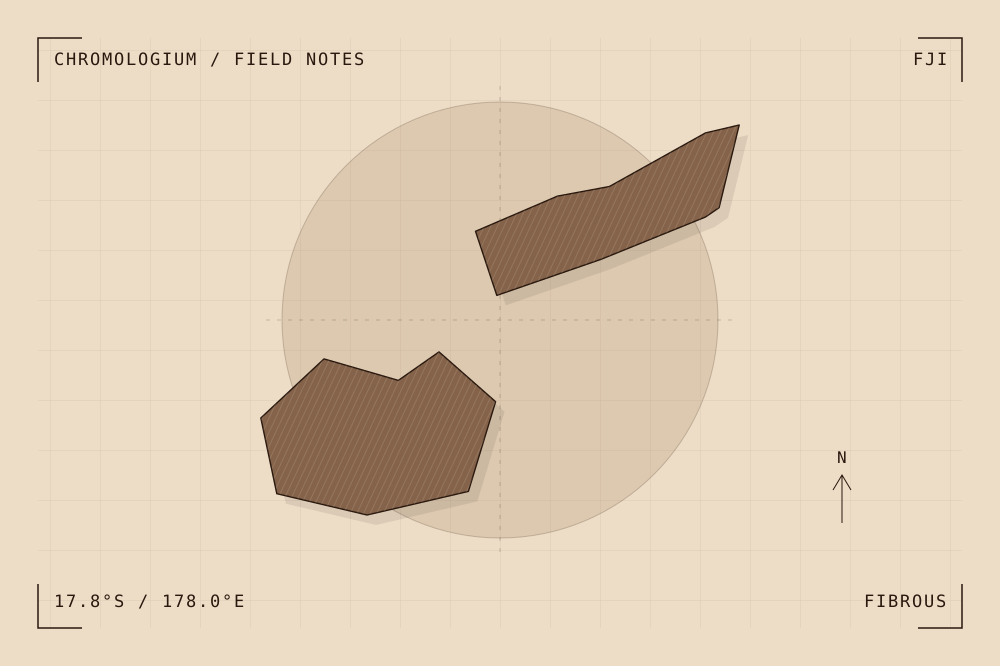
Artwork record · Geographic plate record. Map geometry: Natural Earth, public domain. The archive follows its map’s place names, including territories and disputed areas.
A closer look
Questions about this study
What does this study of Fiji focus on?
Levuka’s port town grew around existing Indigenous settlements. Its beachfront buildings and inland village relationships make the town a useful study in how imported building types meet local ways of occupying a coast.
Where can I find the original reference?
Levuka Historical Port Town, published by UNESCO World Heritage Centre. The artwork explores the reference’s material ideas; the linked source documents the place.
What could I try at the bench?
Make a linear composition with a strong front edge and several smaller connections behind it. Vary those routes without dissolving the main line. Keep the town’s Indigenous settlement relationships present when discussing imported building types.
Continue by material