NZL / Stone & substance
New Zealand
Volcanic mountains & sacred landscape
Develop a system from this study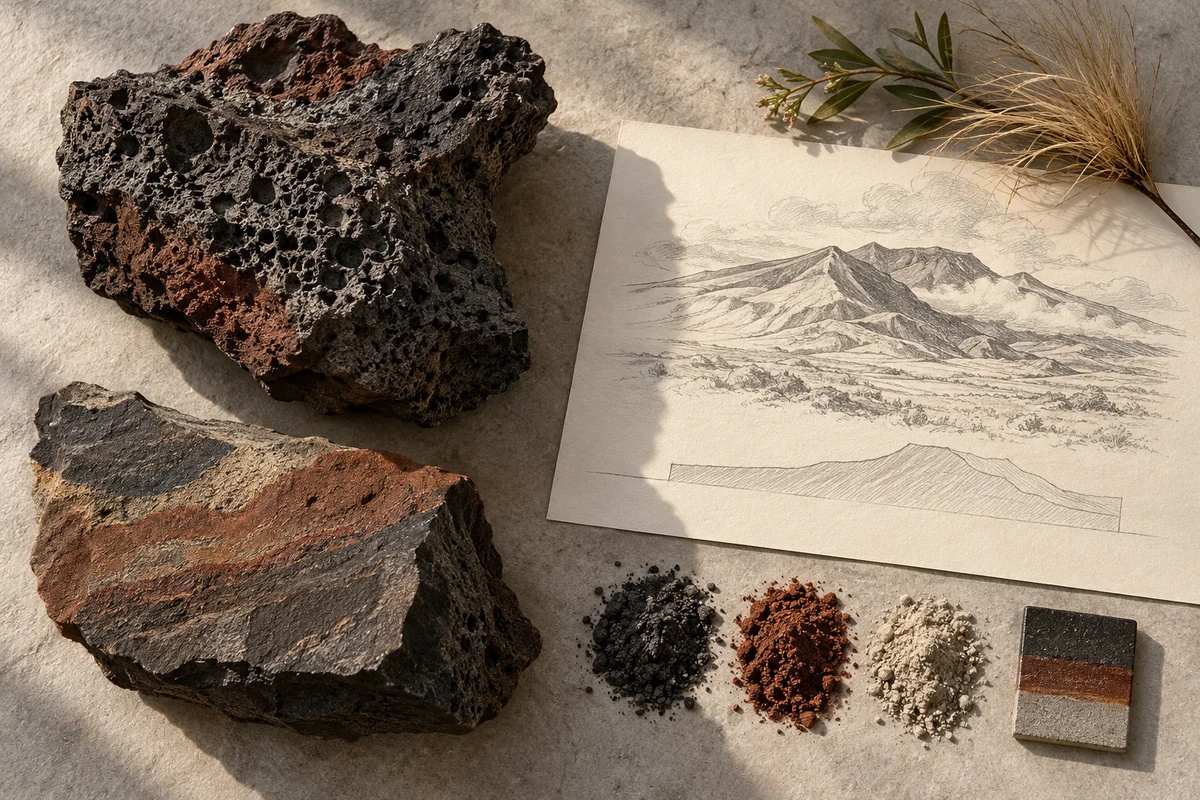
Image note
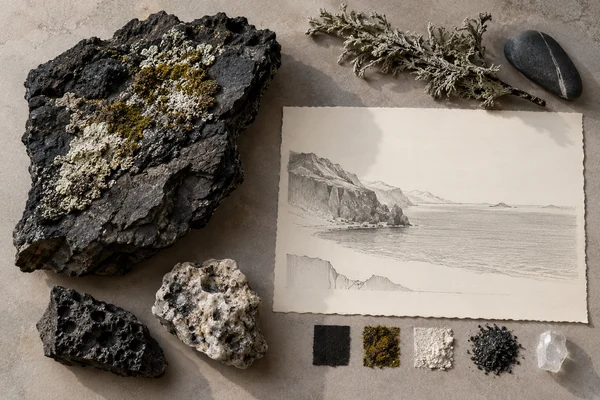
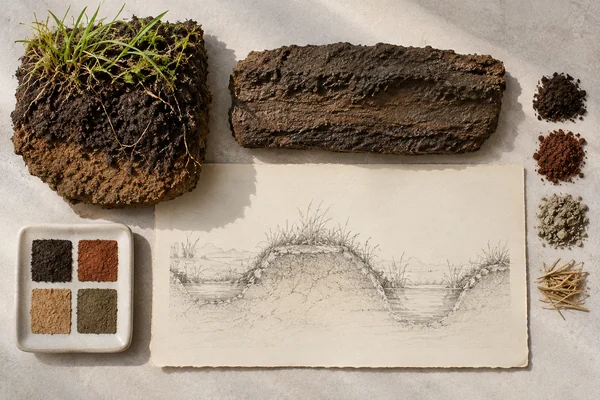
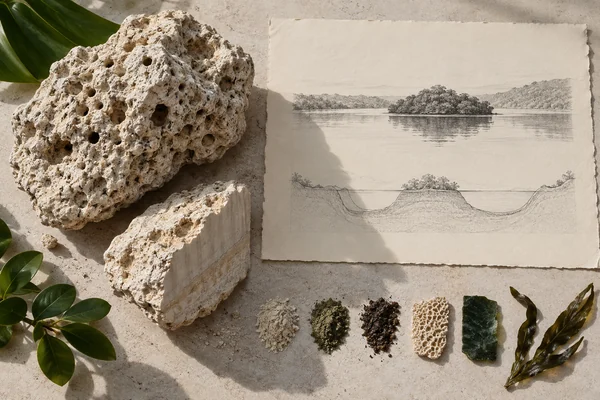
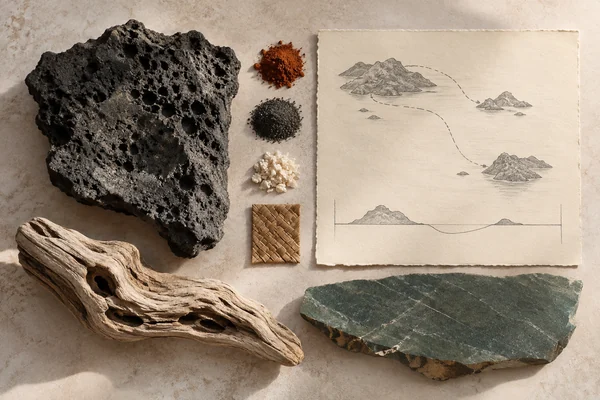
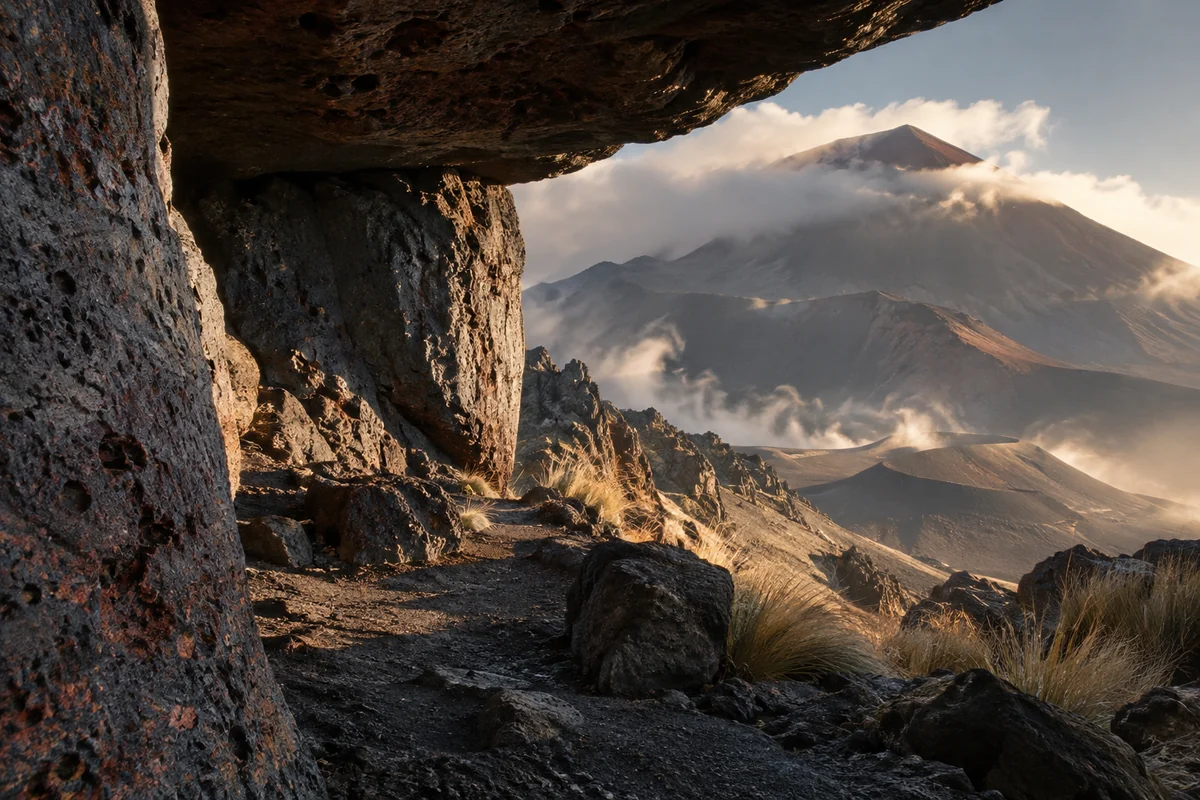
Three original interpretations of volcanic mountains & sacred landscape, informed by Tongariro National Park. These images explore material and spatial ideas; they are not documentary views or measured reconstructions of the reference. The palette is drawn from the material portrait.
Publication credit: The Chromologium.
Image credits and reuseThe colour strip is the entry’s study palette. Artwork sources and image credits and reuse terms are recorded in the archive.
Artwork recordThree views of one material idea.
Tongariro’s volcanic mountains hold cultural and religious significance for Māori communities. The park’s landforms belong to a living relationship between people and place as well as a geological record.
Read the material study01 / Reading the material
A profile with living significance
Tongariro’s volcanic landforms belong to a cultural landscape with continuing Māori significance. A formal reading of slope, light and weather is useful only when that relationship remains present. The mountain is not an empty geometric object available to be renamed by a design study.
02 / From surface to space
Read the whole.
Then the edge.
A changing sky can alter how one profile reads without changing its underlying form. Compare a clear edge with a partly veiled one, keeping the viewpoint consistent. This makes atmosphere visible as part of the encounter rather than a decorative background.
Study the profile of a volcanic slope through changes of light and weather. Keep the cultural landscape present alongside the physical form.
03 / Colour in context
A palette you can work with.
Five tones drawn from the material portrait. Select a colour, compare it on paper and ink, or copy its value into your own study.
Surface
#785e48
Colour values & paper / ink comparison
oklch(0.502 0.047 61.658) · primary
The colour stays fixed as its surroundings change.
Try the bench exercise
04 / At the bench
Make the observation tangible.
Study an original, nonidentifiable landform under two lighting conditions. Let material and silhouette carry the composition. Return to the cited cultural landscape record when discussing Tongariro itself, rather than treating the exercise as its representation.
Keep a view of the whole beside a close detail. Note the material, lighting and the one variable you changed.
Source & orientation
Keep the reference close.
UNESCO World Heritage Centre. (n.d.). Tongariro National Park. Retrieved October 10, 2026.
The material readings and bench exercise are editorial studies of this particular reference. The artwork explores its material ideas; the linked source documents the place.
Artwork & cartographic records
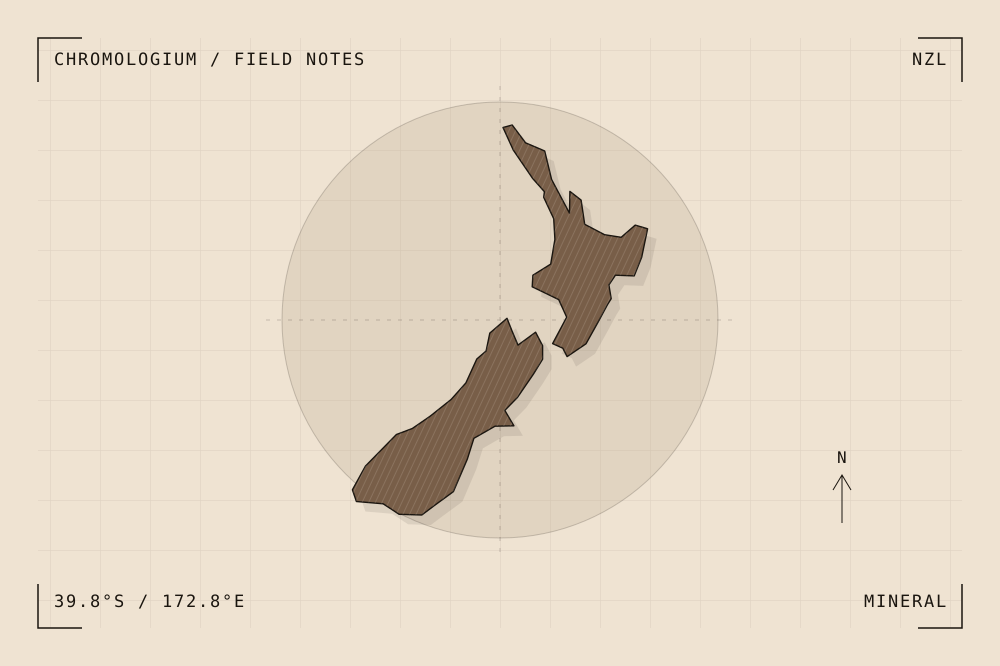
Artwork record · Geographic plate record. Map geometry: Natural Earth, public domain. The archive follows its map’s place names, including territories and disputed areas.
A closer look
Questions about this study
What does this study of New Zealand focus on?
Tongariro’s volcanic mountains hold cultural and religious significance for Māori communities. The park’s landforms belong to a living relationship between people and place as well as a geological record.
Where can I find the original reference?
Tongariro National Park, published by UNESCO World Heritage Centre. The artwork explores the reference’s material ideas; the linked source documents the place.
What could I try at the bench?
Study an original, nonidentifiable landform under two lighting conditions. Let material and silhouette carry the composition. Return to the cited cultural landscape record when discussing Tongariro itself, rather than treating the exercise as its representation.
Continue by material