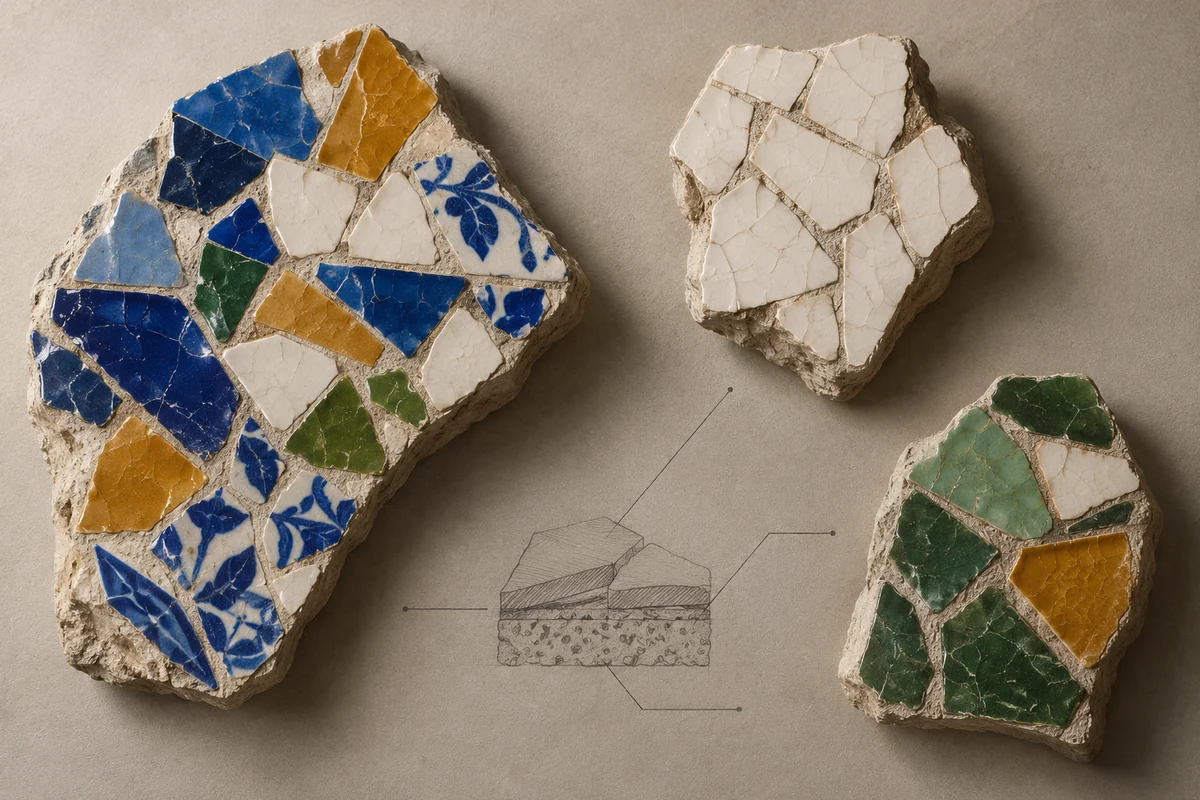
Image note
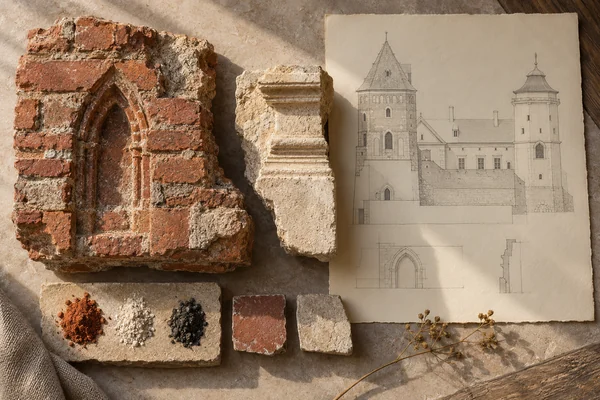
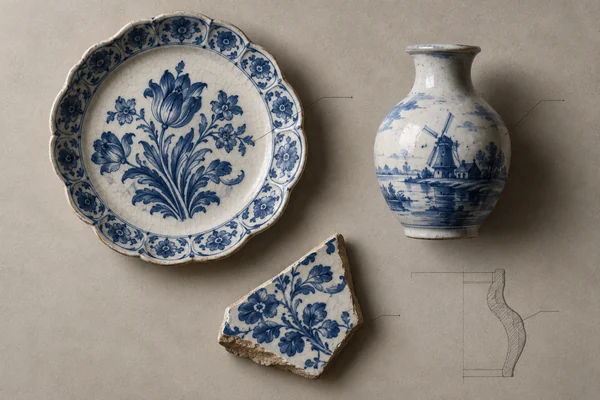
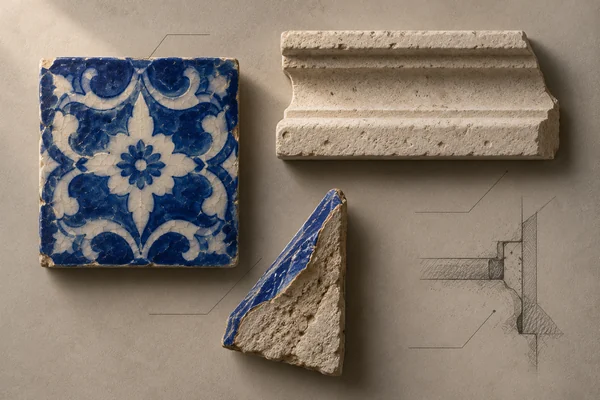
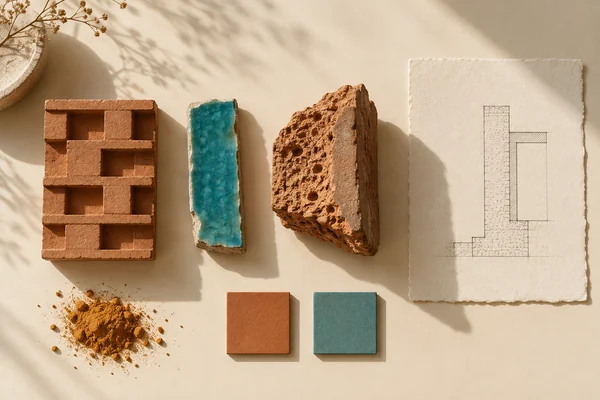
An interpretation of trencadís ceramic mosaic. The architecture and section drawing are imagined studies, rather than records of a particular building or construction detail.
Publication credit: The Chromologium.
Image credits and reuseThe colour strip is the entry’s study palette. Artwork sources and image credits and reuse terms are recorded in the archive.
Artwork recordOrganic Structuralism
Colour, piece by piece.
Follow the rhythm of individual surfaces, then see how the palette holds them together.
Material & Chromatic Spectrum
Calibrated OkLCH color science mapped from historical mineral pigments, architectural substrates, and intaglio inks.
Castilian Gold
#F4B400
Colour values & paper / ink comparison
oklch(0.78 0.17 80) · primary
The colour stays fixed as its surroundings change.
From Physical Lineage to Digital Space
“The straight line belongs to man; the curve belongs to God.”
Antoni Gaudí’s structural catenary arches and trencadís mosaics rejected the tyranny of the strict 90-degree right angle. By modeling architecture on nature’s organic tensile equilibrium, Spanish design heritage inspires modern non-linear kinetic spring physics, fluid organic corner radii, and dynamic color-mixing algorithms.
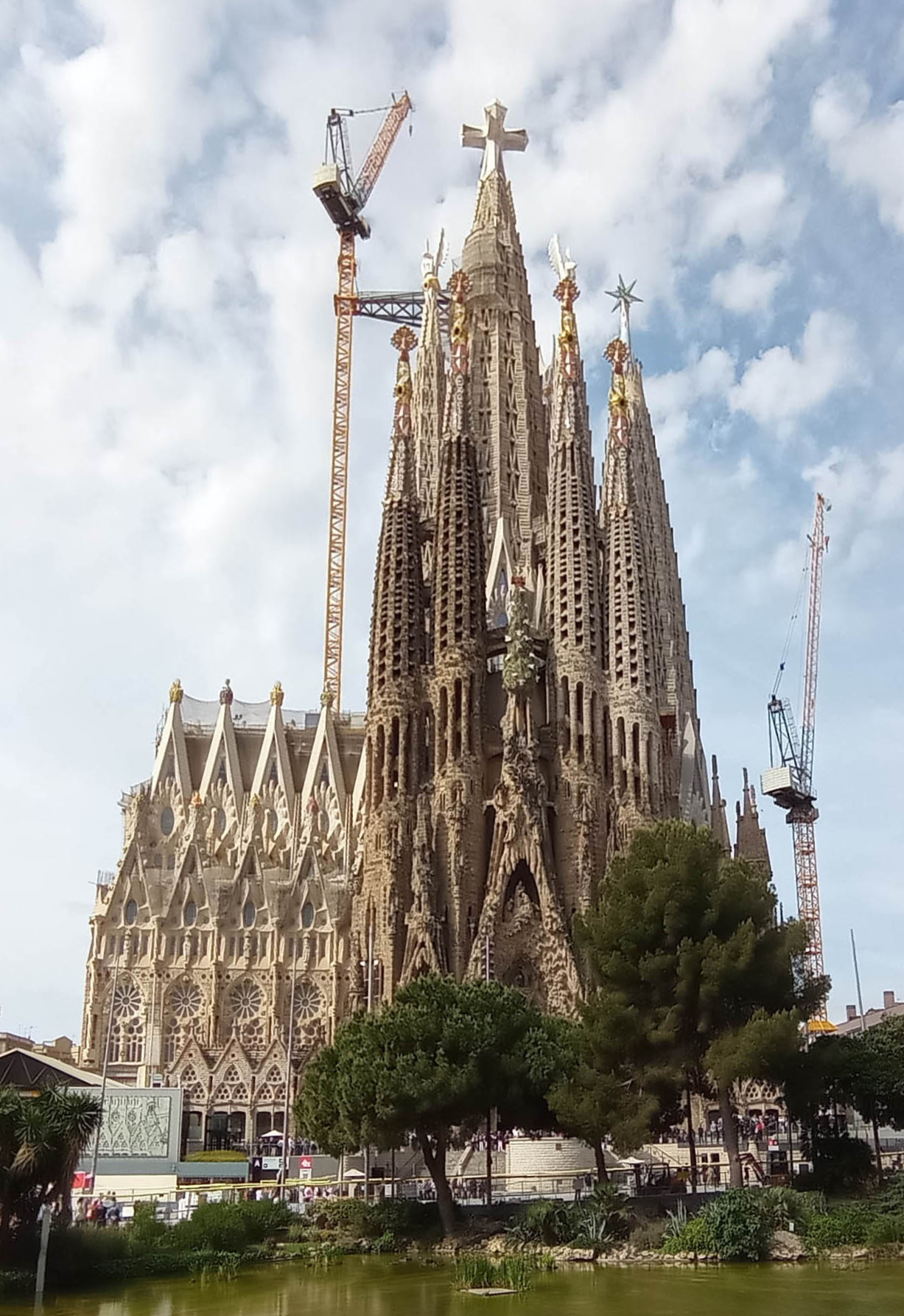
Basílica de la Sagrada Família
The cathedral that rejected right angles — hyperboloid columns, catenary arches, and biomorphic geometry derived from the structural logic of nature itself.
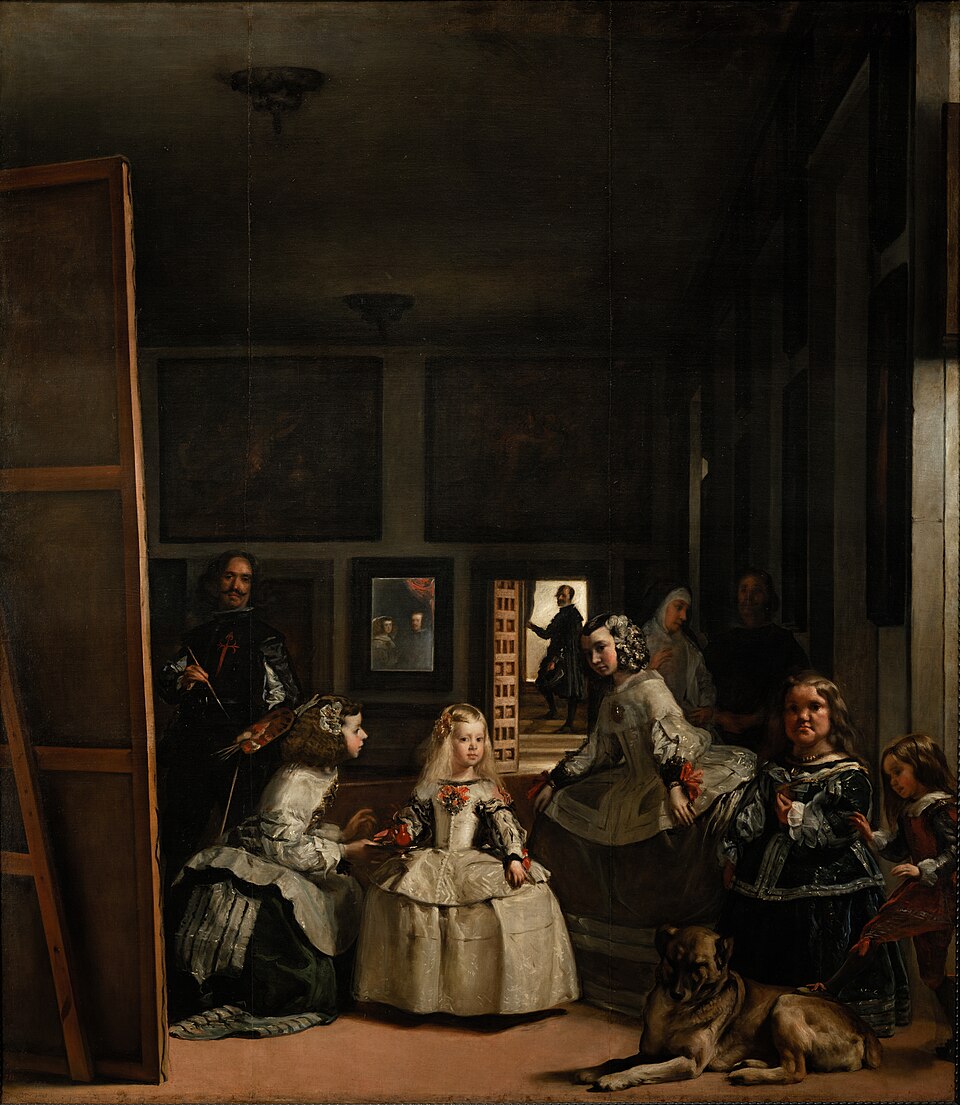
Las Meninas
The primary compositional study embodying Spain's national color philosophy, surface chemistry, and aesthetic tension.
Experiment with this palette
Dynamic Component Diorama
Real-time rendering of interactive UI primitives styled with Spain's sovereign design tokens.
Organic Structuralism
Tactile surface responding with 0.45 optical friction and underdamped (resonant) kinetics.
Explore the global map
Spain in the Global Material Cartography
Spatial provenance, trade route vectors, solar diurnal phase, and localized craft beacons across Spain.
Regional craft hubs & cities
Regional Craft Hubs & Historical Cities
Granular material lineages, landmark architecture, and specialized regional craft centers across Spain.
The primary urban design center showcasing Spain's definitive spatial landmarks and historical Organic Structuralism craft traditions.
Regional artisan workshops preserving ancestral material extraction, pigment chemistry, and tactile fabrication techniques.
Modern architectural studios translating traditional tactile properties into scalable digital user interfaces and physical environments.
Material specifications & sound
Sensory Specifications & Surface Friction
CULTURAL ACOUSTIC LINEAGE & PROVENANCE
A percussive acoustic tradition fusing Moorish zellige courtyard reflections, Spanish cedar guitar tap plates (golpeadores), and resonant bronze mission bells, creating sharp, expressive rhythmic transients.
PSYCHOACOUSTIC & COGNITIVE PROFILE
698 Hz (F5), sparking immediate kinetic alertness, rhythmic engagement, and passionate focus.
DIGITAL UI TRANSLATION SPEC
Synthesized live via the browser's Web Audio API with exponential gain decay and fifth-harmonic overtone dispersion to provide tactile, non-speech micro-interaction feedback.
Connected Systems & Lexicon Axioms
“Spain: Design Provenance & Material Spectrum.” The Chromologium — Design Atlas, 2026. chromologium.com/atlas/spain
Primary references
Return to the source.
A closer look
Questions about this study
What material idea connects this study of Spain?
Organic Structuralism: The straight line belongs to man; the curve belongs to God. Follow the rhythm of individual surfaces, then see how the palette holds them together.
Which building can I use as a reference?
Basílica de la Sagrada Família (1238–1358). The cathedral that rejected right angles — hyperboloid columns, catenary arches, and biomorphic geometry derived from the structural logic of nature itself. Read the heritage record.
How can I work with these colours?
Select a swatch in the palette to copy its HEX value, then expand the paper and ink comparison to see how the surrounding ground changes its appearance. The optional experiment lets you try the palette on interface elements.
Continue by material