Image note
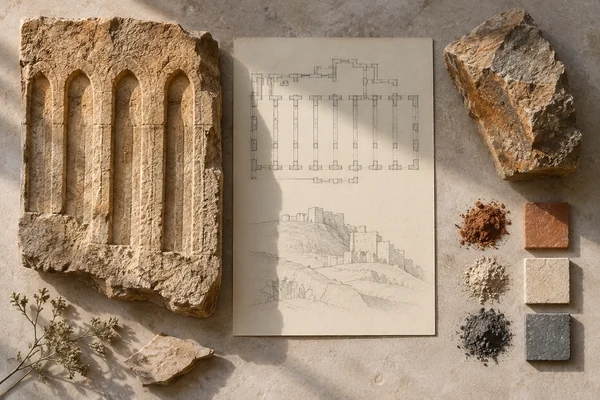
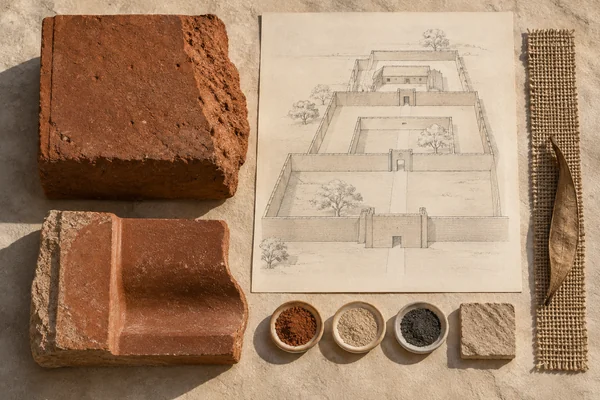
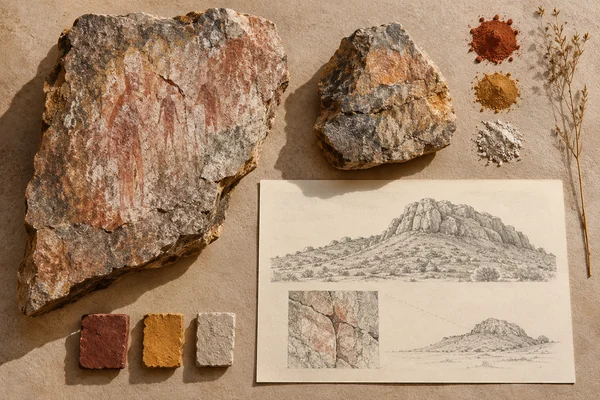
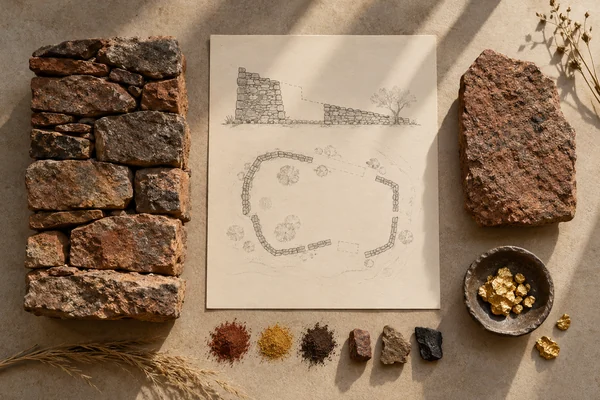
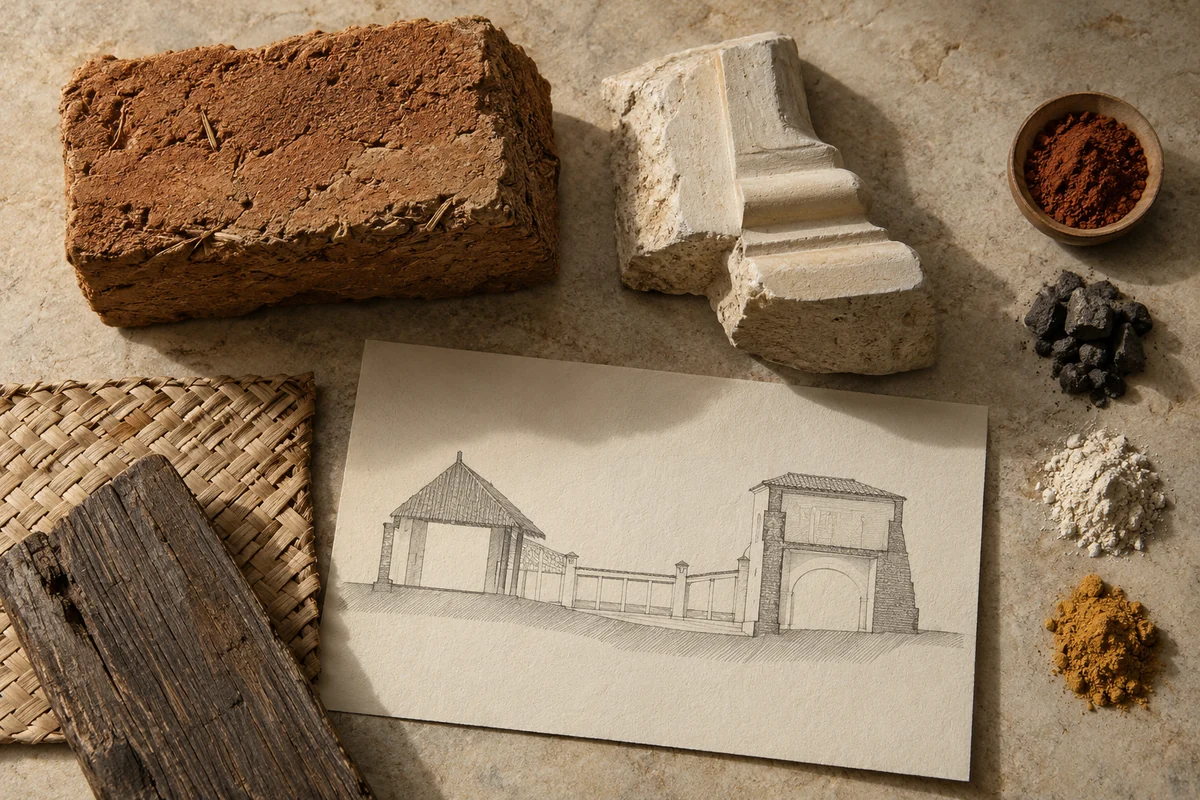
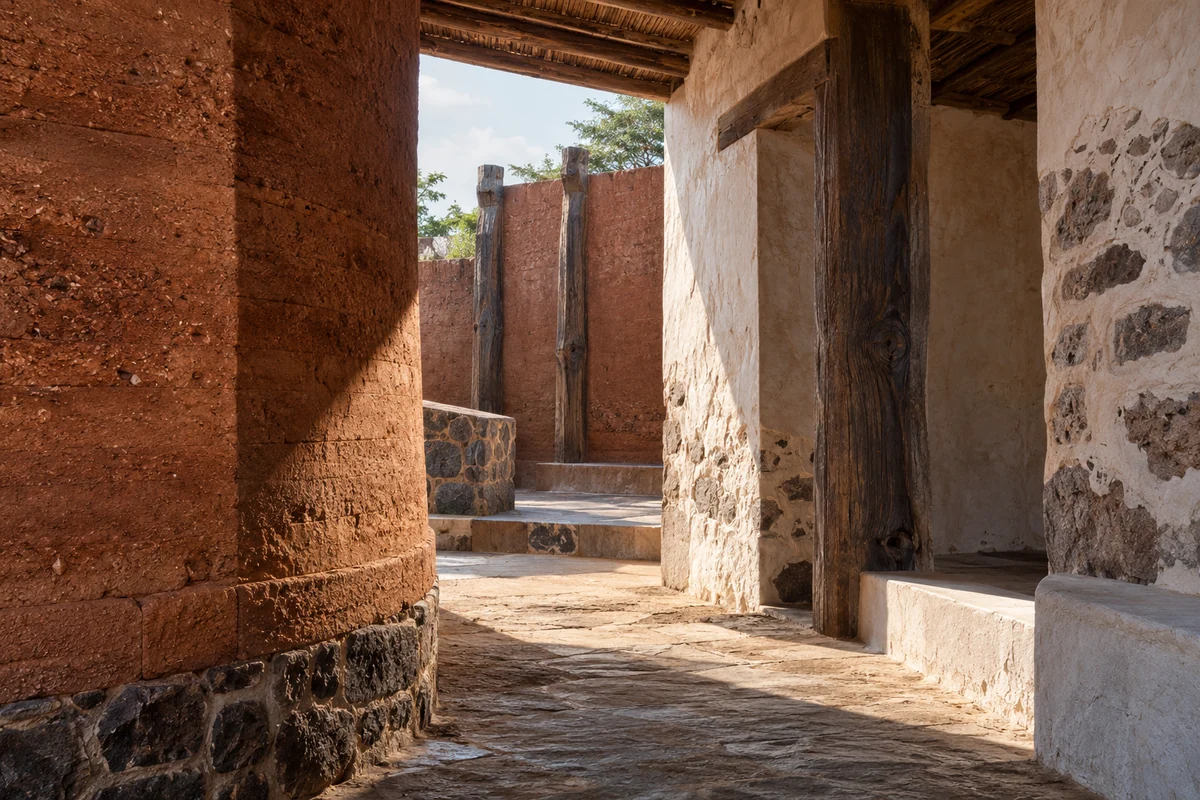
Three original interpretations of royal spaces & changing construction, informed by Mbanza Kongo, Vestiges of the Capital of the former Kingdom of Kongo. These images explore material and spatial ideas; they are not documentary views or measured reconstructions of the reference. The palette is drawn from the material portrait.
Publication credit: The Chromologium.
Image credits and reuseThe colour strip is the entry’s study palette. Artwork sources and image credits and reuse terms are recorded in the archive.
Artwork recordThree views of one material idea.
Mbanza Kongo was the political and spiritual capital of the Kingdom of Kongo. Its historic centre brings royal and sacred places together with changes in building practice following Portuguese contact.
Read the material study01 / Reading the material
A centre made of relationships
Mbanza Kongo’s value lies in the relationships among royal, residential and sacred places. A material change is one part of that history, not a complete explanation of it. Read the ensemble as a sequence of uses and encounters before concentrating on the appearance of a single building.
02 / From surface to space
Read the whole.
Then the edge.
A court can act as a hinge between separate structures. The dimensions of its edges, the direction of approach and the position of an entrance all influence how a group reads as a centre. Leave room in the study for open ground to have as much presence as built mass.
Trace the spatial relationship between residence, court and sacred place. Compare construction changes without assuming that one material replaced an entire local tradition.
03 / Colour in context
A palette you can work with.
Five tones drawn from the material portrait. Select a colour, compare it on paper and ink, or copy its value into your own study.
Surface
#653417
Colour values & paper / ink comparison
oklch(0.383 0.081 48.948) · primary
The colour stays fixed as its surroundings change.
Try the bench exercise
04 / At the bench
Make the observation tangible.
Arrange three volumes around an intentionally shaped void. Give each volume a different surface while preserving one shared alignment. The exercise is about continuity through change, not reconstructing an unrecorded historical plan.
Keep a view of the whole beside a close detail. Note the material, lighting and the one variable you changed.
Source & orientation
Keep the reference close.
UNESCO World Heritage Centre. (n.d.). Mbanza Kongo, Vestiges of the Capital of the former Kingdom of Kongo. Retrieved October 10, 2026.
The material readings and bench exercise are editorial studies of this particular reference. The artwork explores its material ideas; the linked source documents the place.
Artwork & cartographic records
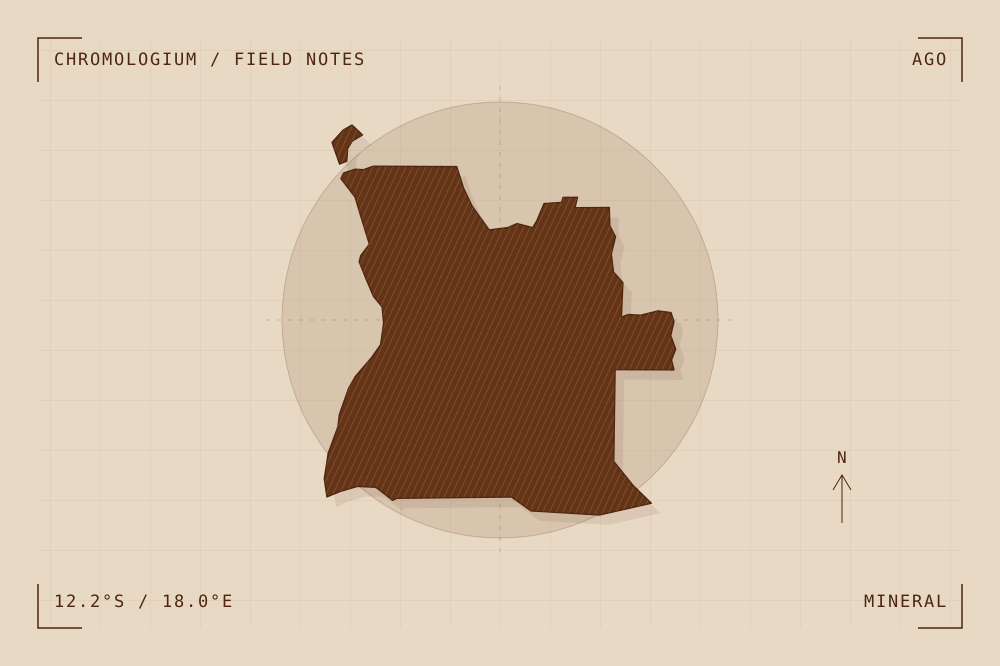
Artwork record · Geographic plate record. Map geometry: Natural Earth, public domain. The archive follows its map’s place names, including territories and disputed areas.
A closer look
Questions about this study
What does this study of Angola focus on?
Mbanza Kongo was the political and spiritual capital of the Kingdom of Kongo. Its historic centre brings royal and sacred places together with changes in building practice following Portuguese contact.
Where can I find the original reference?
Mbanza Kongo, Vestiges of the Capital of the former Kingdom of Kongo, published by UNESCO World Heritage Centre. The artwork explores the reference’s material ideas; the linked source documents the place.
What could I try at the bench?
Arrange three volumes around an intentionally shaped void. Give each volume a different surface while preserving one shared alignment. The exercise is about continuity through change, not reconstructing an unrecorded historical plan.
Continue by material