ATA / Metal & reflection
Antarctica
Elevated research modules & moving ice
Develop a system from this study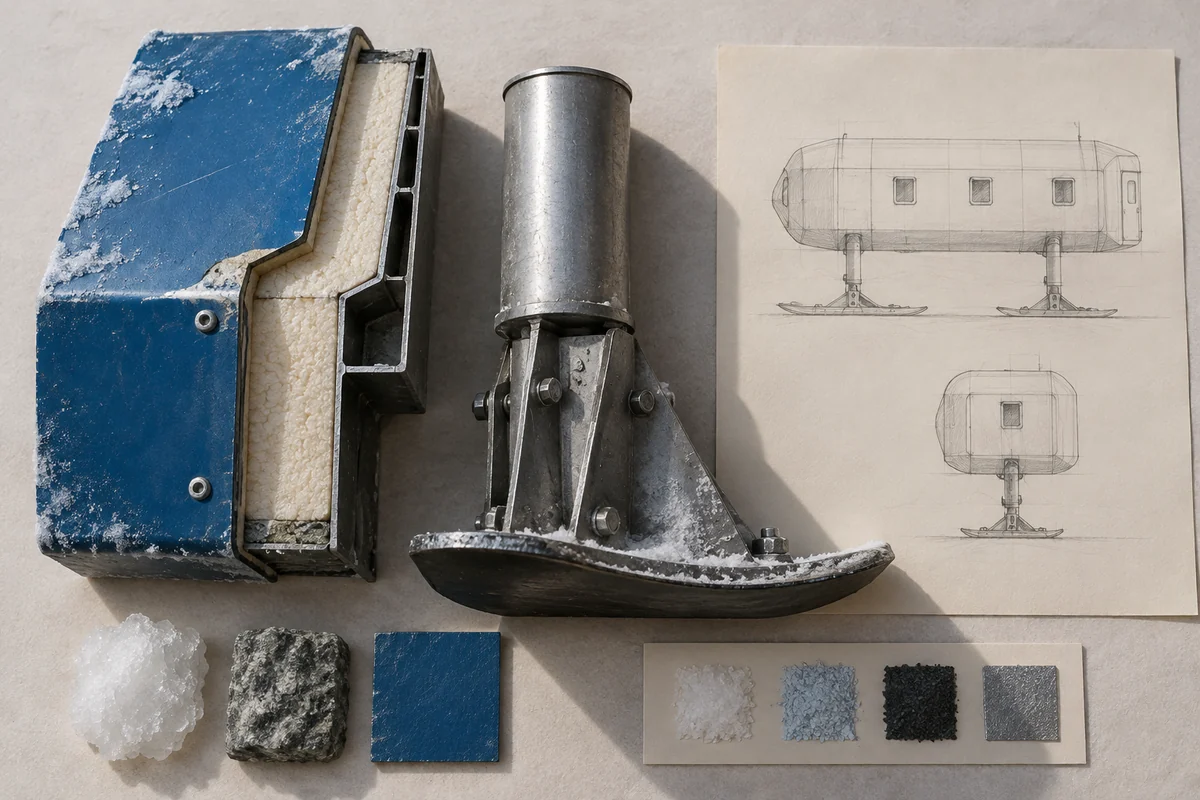
Image note
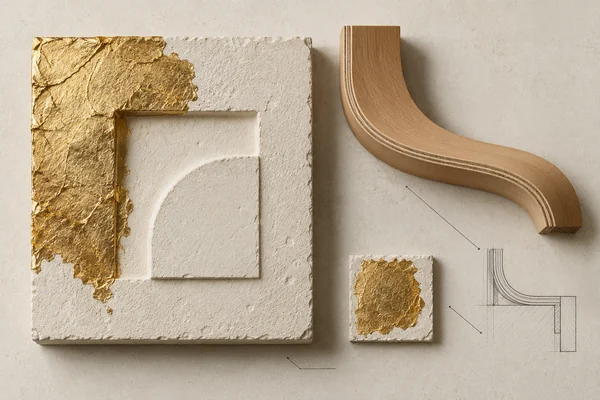
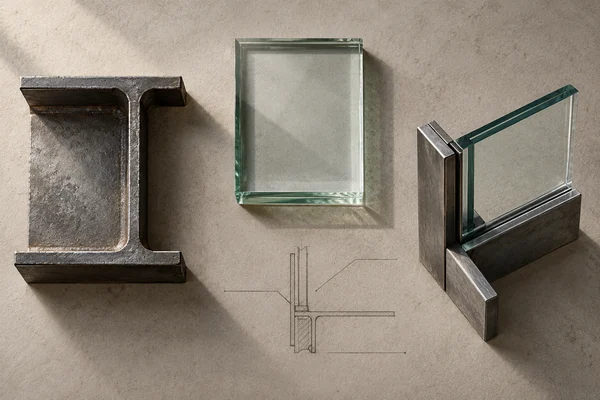
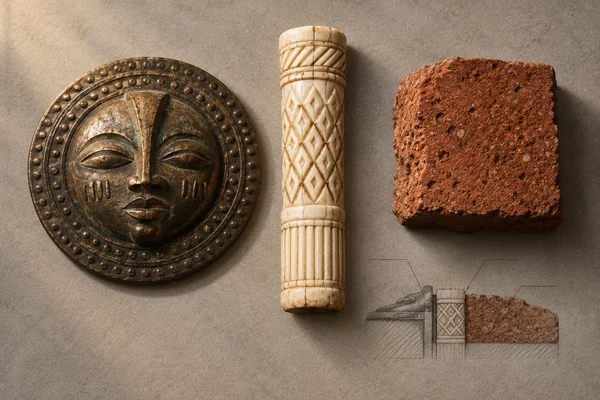
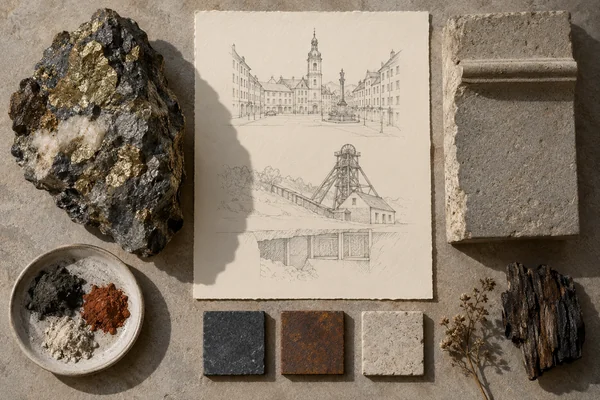
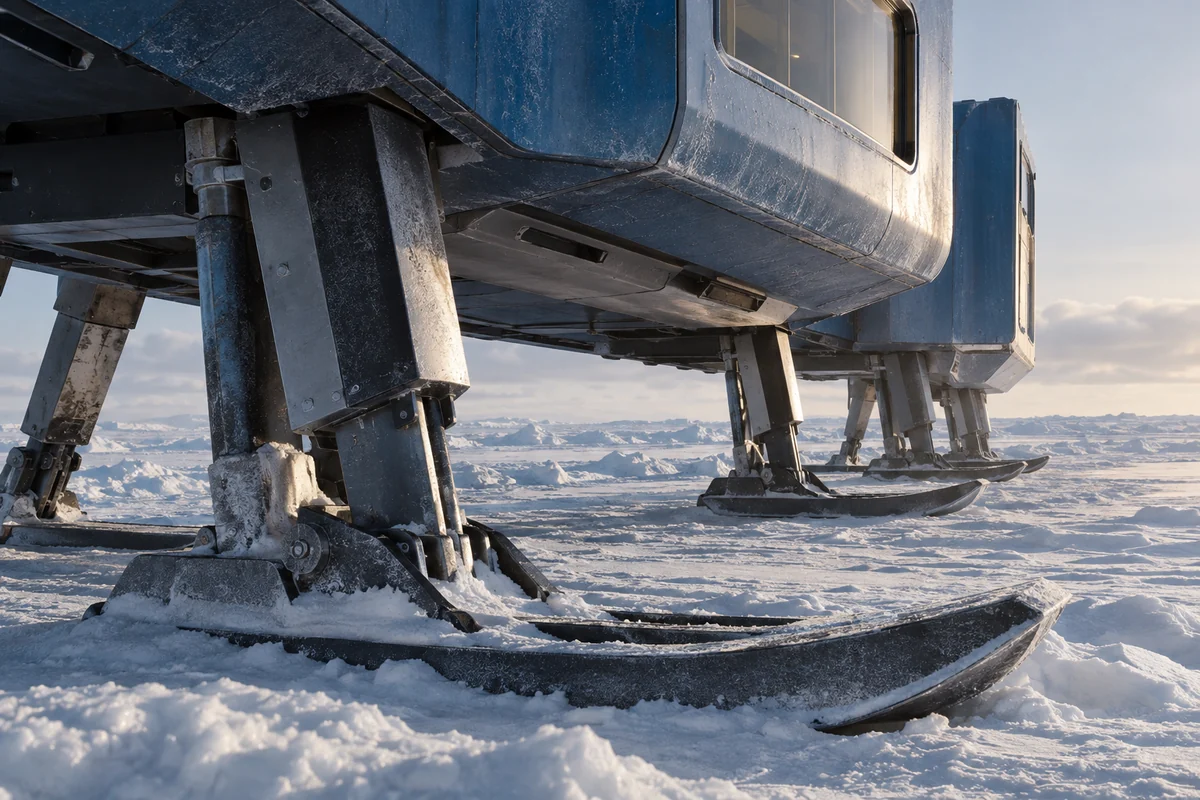
Three original interpretations of elevated research modules & moving ice, informed by Seventy years on the ice: Halley Research Station. These images explore material and spatial ideas; they are not documentary views or measured reconstructions of the reference. The palette is drawn from the material portrait.
Publication credit: The Chromologium.
Image credits and reuseThe colour strip is the entry’s study palette. Artwork sources and image credits and reuse terms are recorded in the archive.
Artwork recordThree views of one material idea.
Halley Research Station on the Brunt Ice Shelf uses raised, relocatable modules. British Antarctic Survey’s account describes architecture designed around snow accumulation and the movement of its icy site.
Read the material study01 / Reading the material
Architecture with an adjustable ground
Halley’s raised modules make the support system part of the architecture’s visible identity. The enclosure reads as a precise shell, while legs and skis express a different job: maintaining a workable relationship with a moving, accumulating surface. The contrast is between a stable room and an adaptable footing.
02 / From surface to space
Read the whole.
Then the edge.
The space beneath a raised module matters as much as the volume above it. In a section study, preserve that open interval rather than reducing the building to a coloured box. A narrow contact point and a broad enclosed body create a clear hierarchy of weight and support.
Compare a module’s enclosed shell with the legs and skis below it. What changes when a building’s relationship to the ground must remain adjustable?
03 / Colour in context
A palette you can work with.
Five tones drawn from the material portrait. Select a colour, compare it on paper and ink, or copy its value into your own study.
Surface
#4c5b6b
Colour values & paper / ink comparison
oklch(0.465 0.032 250.191) · primary
The colour stays fixed as its surroundings change.
Try the bench exercise
04 / At the bench
Make the observation tangible.
Design a small elevated volume with a legible separation between shell, joint and base. Use cool whites and one strong accent to distinguish functions. Treat the result as a spatial sketch, not an engineering proposal for polar conditions.
Keep a view of the whole beside a close detail. Note the material, lighting and the one variable you changed.
Source & orientation
Keep the reference close.
British Antarctic Survey. (n.d.). Seventy years on the ice: Halley Research Station. Retrieved October 10, 2026.
The material readings and bench exercise are editorial studies of this particular reference. The artwork explores its material ideas; the linked source documents the place.
Artwork & cartographic records
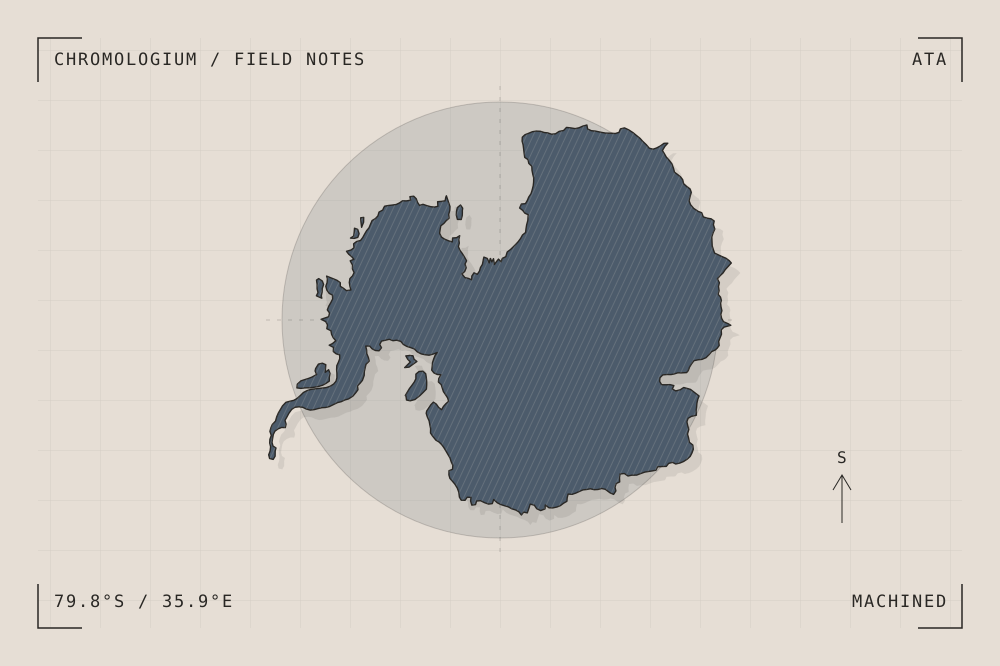
Artwork record · Geographic plate record. Map geometry: Natural Earth, public domain. The archive follows its map’s place names, including territories and disputed areas.
A closer look
Questions about this study
What does this study of Antarctica focus on?
Halley Research Station on the Brunt Ice Shelf uses raised, relocatable modules. British Antarctic Survey’s account describes architecture designed around snow accumulation and the movement of its icy site.
Where can I find the original reference?
Seventy years on the ice: Halley Research Station, published by British Antarctic Survey. The artwork explores the reference’s material ideas; the linked source documents the place.
What could I try at the bench?
Design a small elevated volume with a legible separation between shell, joint and base. Use cool whites and one strong accent to distinguish functions. Treat the result as a spatial sketch, not an engineering proposal for polar conditions.
Continue by material