Image note
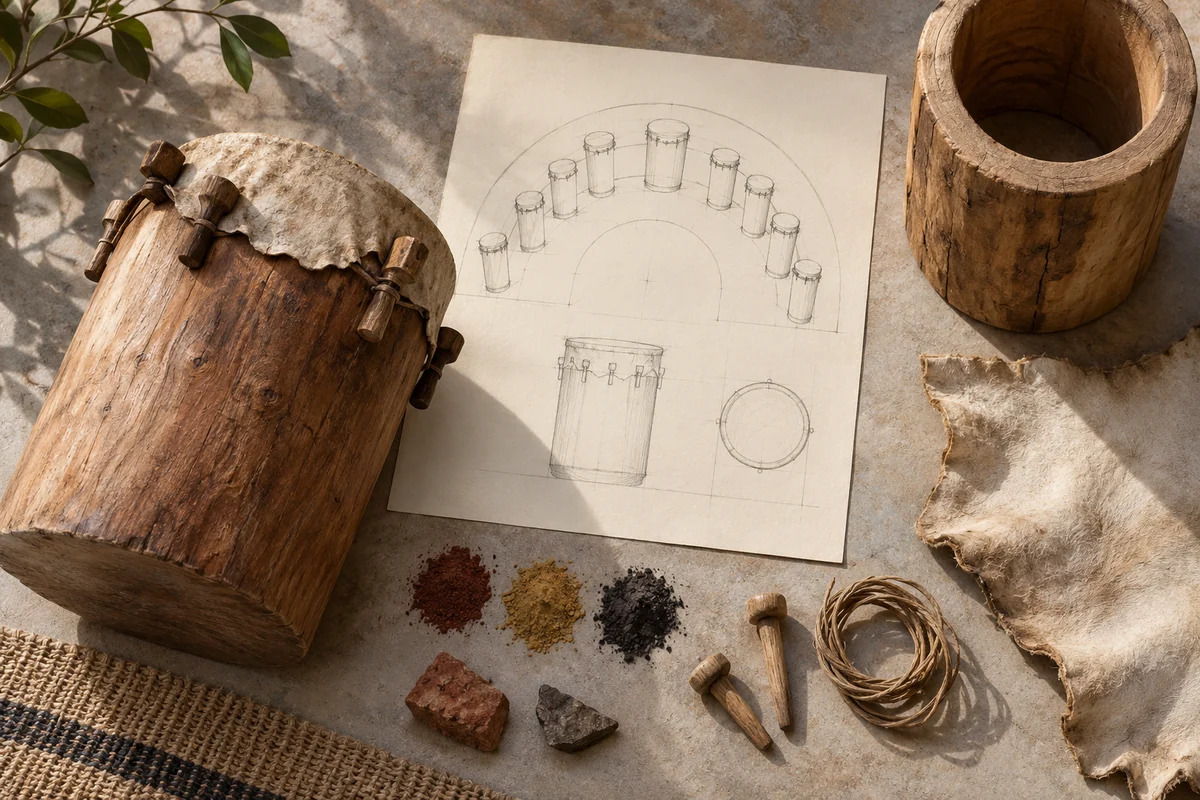
Three original interpretations of drum making & collective rhythm, informed by Ritual dance of the royal drum. These images explore material and spatial ideas; they are not documentary views or measured reconstructions of the reference. The palette is drawn from the material portrait.
Publication credit: The Chromologium.
Image credits and reuseThe colour strip is the entry’s study palette. Artwork sources and image credits and reuse terms are recorded in the archive.
Artwork recordThree views of one material idea.
Burundi’s royal drum practice brings together drum making, performance, dance and the transmission of knowledge. UNESCO describes an arrangement of drums and performers that makes the ensemble spatial as well as musical.
Read the material study01 / Reading the material
Rhythm between objects
The royal drum practice brings making, performance and transmission together. A drum’s cylindrical body is one visible part of a much larger relationship. Repetition across the ensemble does not erase the roles of performers, movement or the knowledge carried through the practice.
02 / From surface to space
Read the whole.
Then the edge.
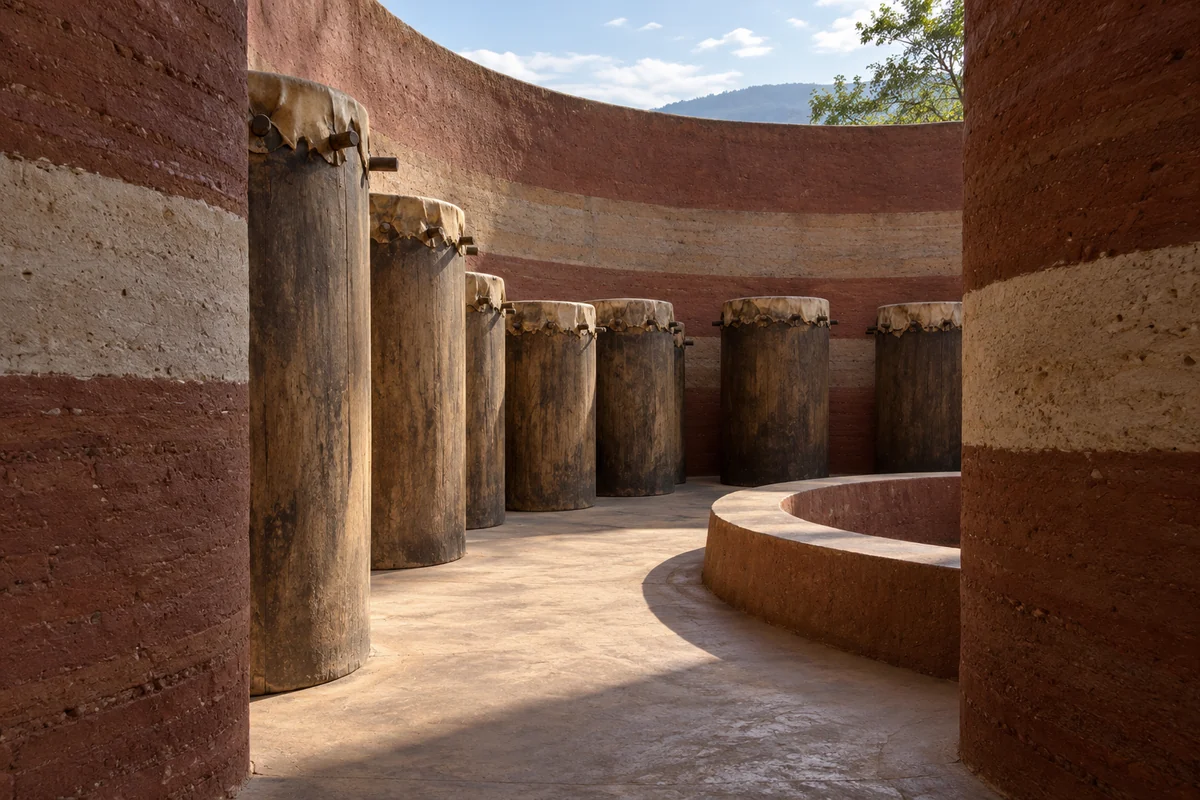
A semicircular arrangement makes rhythm spatial: individual objects face into a shared field. Study the distances and orientations between them, not just their silhouettes. A plan can describe this organization without claiming to reproduce the sound or ceremonial meaning.
Compare the repeated cylindrical forms with the semicircular performance arrangement. Consider rhythm as a relationship between people and objects, not just a surface pattern.
03 / Colour in context
A palette you can work with.
Five tones drawn from the material portrait. Select a colour, compare it on paper and ink, or copy its value into your own study.
Surface
#663a1f
Colour values & paper / ink comparison
oklch(0.397 0.074 50.751) · primary
The colour stays fixed as its surroundings change.
Try the bench exercise
04 / At the bench
Make the observation tangible.
Arrange a series of plain, original volumes around an open centre. Vary one interval and observe how the group changes. Keep the study about spatial rhythm; do not assign invented acoustic measurements to the traditional drums.
Keep a view of the whole beside a close detail. Note the material, lighting and the one variable you changed.
Source & orientation
Keep the reference close.
UNESCO Intangible Cultural Heritage. (n.d.). Ritual dance of the royal drum. Retrieved October 10, 2026.
The material readings and bench exercise are editorial studies of this particular reference. The artwork explores its material ideas; the linked source documents the place.
Artwork & cartographic records
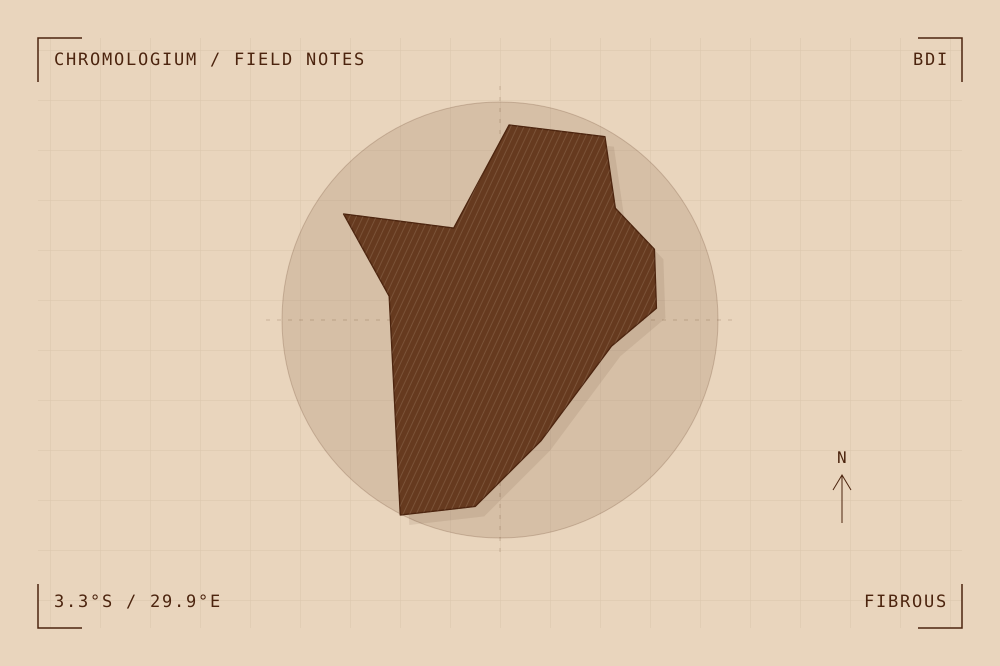
Artwork record · Geographic plate record. Map geometry: Natural Earth, public domain. The archive follows its map’s place names, including territories and disputed areas.
A closer look
Questions about this study
What does this study of Burundi focus on?
Burundi’s royal drum practice brings together drum making, performance, dance and the transmission of knowledge. UNESCO describes an arrangement of drums and performers that makes the ensemble spatial as well as musical.
Where can I find the original reference?
Ritual dance of the royal drum, published by UNESCO Intangible Cultural Heritage. The artwork explores the reference’s material ideas; the linked source documents the place.
What could I try at the bench?
Arrange a series of plain, original volumes around an open centre. Vary one interval and observe how the group changes. Keep the study about spatial rhythm; do not assign invented acoustic measurements to the traditional drums.
Continue by material
Follow the surface.
Central African Republic
Savannah fields & seasonal floodplains
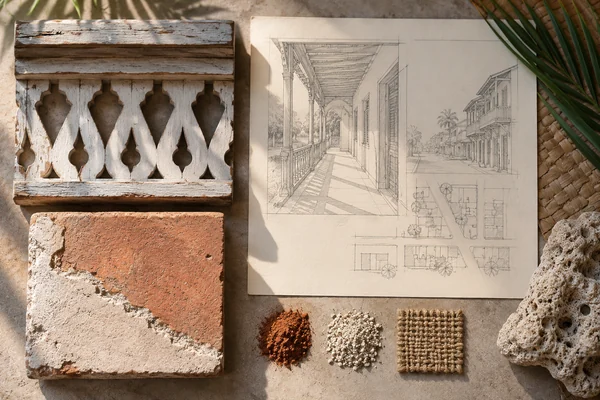
Côte d’Ivoire
Verandas, galleries & coastal quarters
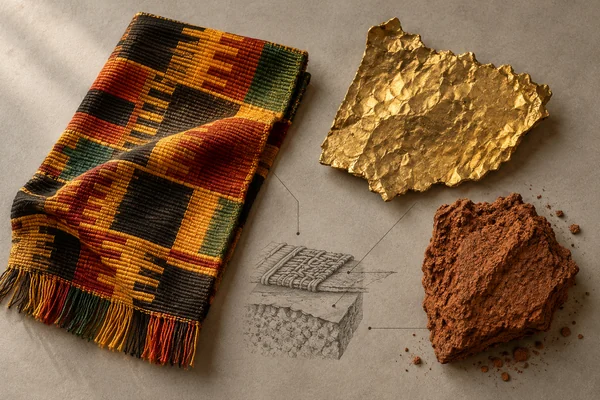
Ghana
Handwoven kente silk, beaten gold & laterite earth
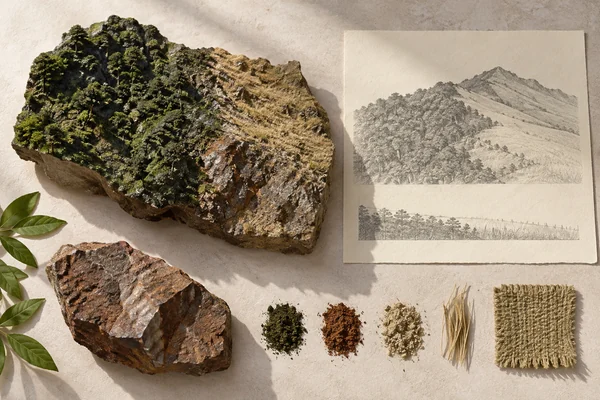
Guinea
Forest slopes & mountain grasslands