CAF / Grain & direction
Central African Republic
Savannah fields & seasonal floodplains
Develop a system from this study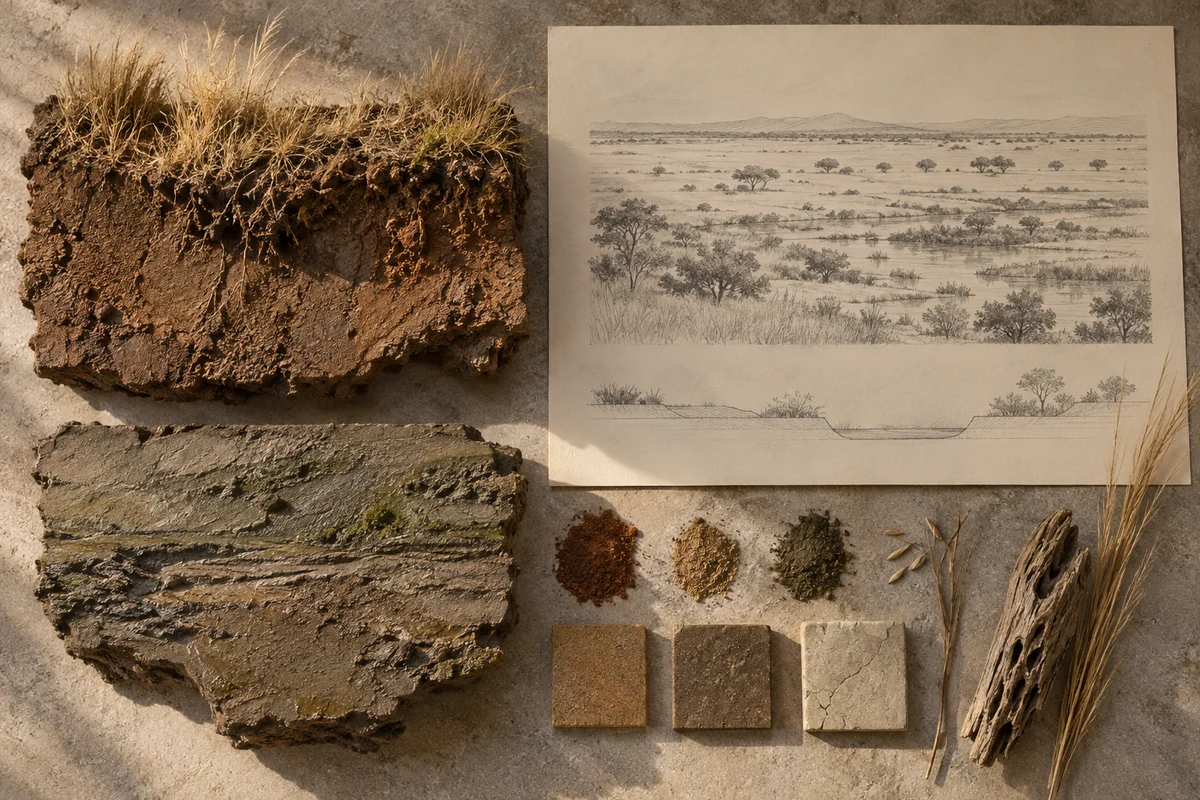
Image note
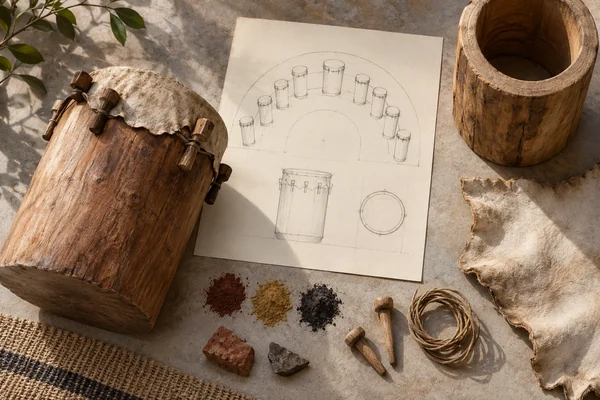
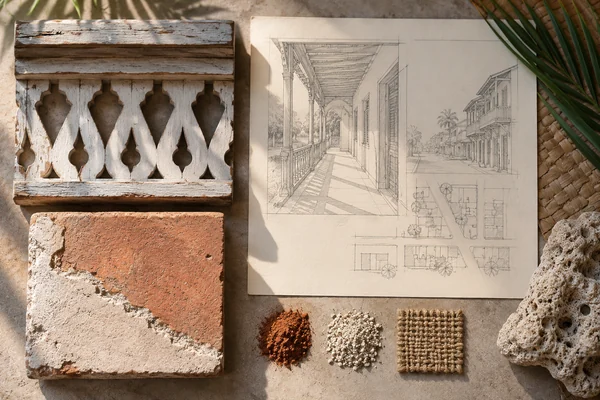
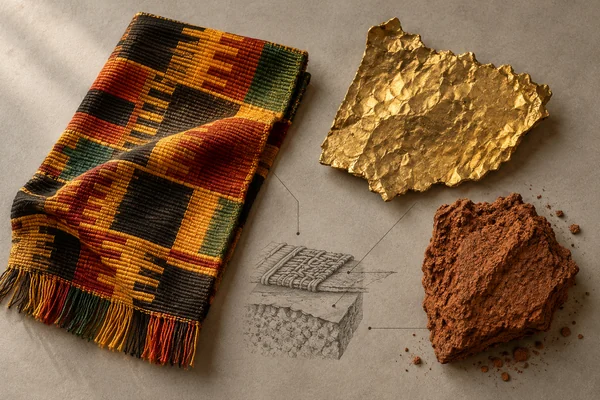
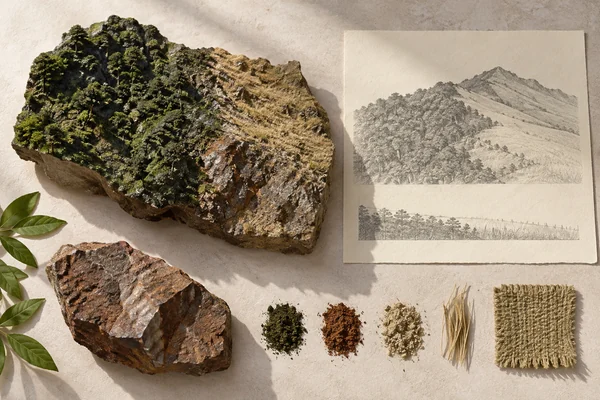
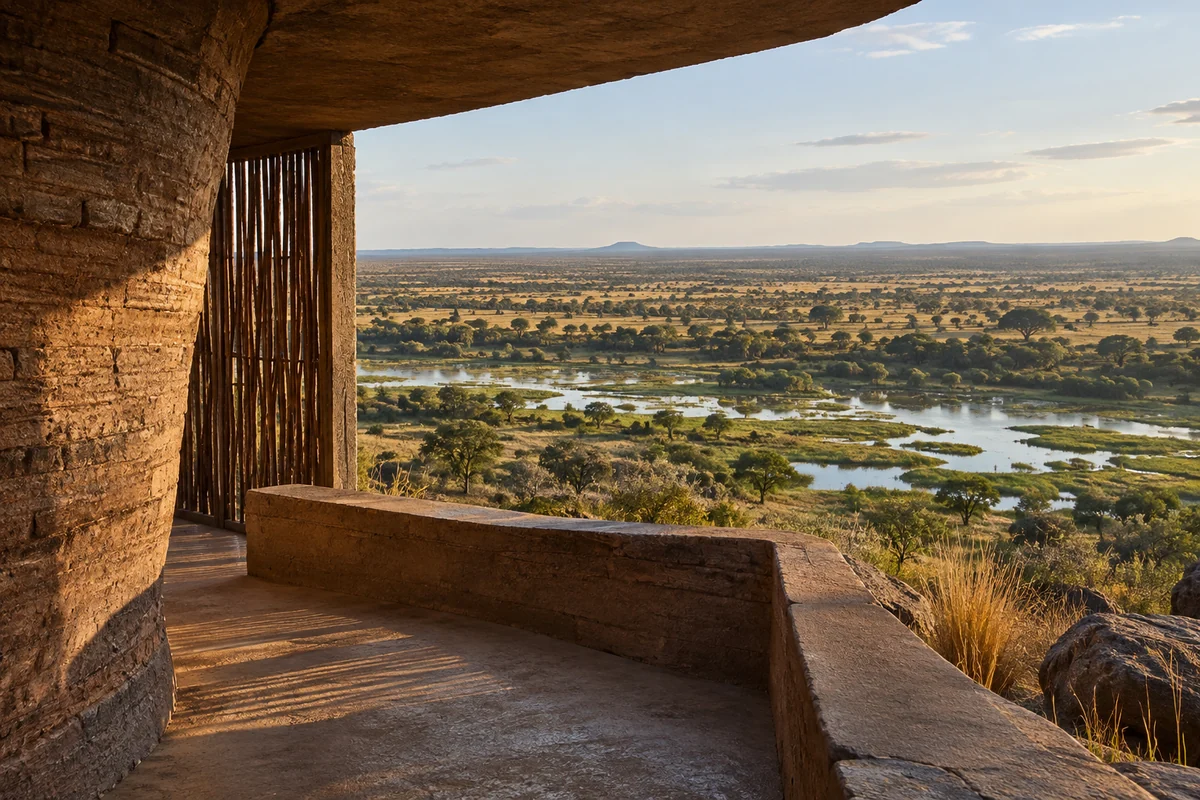
Three original interpretations of savannah fields & seasonal floodplains, informed by Manovo-Gounda St Floris National Park. These images explore material and spatial ideas; they are not documentary views or measured reconstructions of the reference. The palette is drawn from the material portrait.
Publication credit: The Chromologium.
Image credits and reuseThe colour strip is the entry’s study palette. Artwork sources and image credits and reuse terms are recorded in the archive.
Artwork recordThree views of one material idea.
Manovo-Gounda St Floris contains extensive savannah and northern floodplain environments. The landscape reference emphasizes broad spatial transitions between open ground, vegetation and water.
Read the material study01 / Reading the material
Open ground is not empty
The savannah and floodplain reference at Manovo-Gounda St Floris suggests a field organized through intervals. Repeated patches of vegetation and changing ground conditions can establish rhythm without forming a regular grid. The horizon provides a stable line against which those differences become visible.
02 / From surface to space
Read the whole.
Then the edge.
Compare the apparent continuity of a broad view with the broken edges of a closer one. A floodplain boundary may be understood as a band rather than a sharp line. The scale of observation changes which pattern comes forward.
Compare the long horizon of a savannah with the broken edge of a floodplain. How do repeated vegetation patches organize a seemingly open field?
03 / Colour in context
A palette you can work with.
Five tones drawn from the material portrait. Select a colour, compare it on paper and ink, or copy its value into your own study.
Surface
#644729
Colour values & paper / ink comparison
oklch(0.423 0.059 65.958) · primary
The colour stays fixed as its surroundings change.
Try the bench exercise
04 / At the bench
Make the observation tangible.
Compose a wide horizontal field with unevenly spaced clusters and a softer boundary zone. Limit the colour range so that spacing carries the composition. Treat it as a landscape reading, not a mapped record of current habitats.
Keep a view of the whole beside a close detail. Note the material, lighting and the one variable you changed.
Source & orientation
Keep the reference close.
UNESCO World Heritage Centre. (n.d.). Manovo-Gounda St Floris National Park. Retrieved October 10, 2026.
The material readings and bench exercise are editorial studies of this particular reference. The artwork explores its material ideas; the linked source documents the place.
Artwork & cartographic records
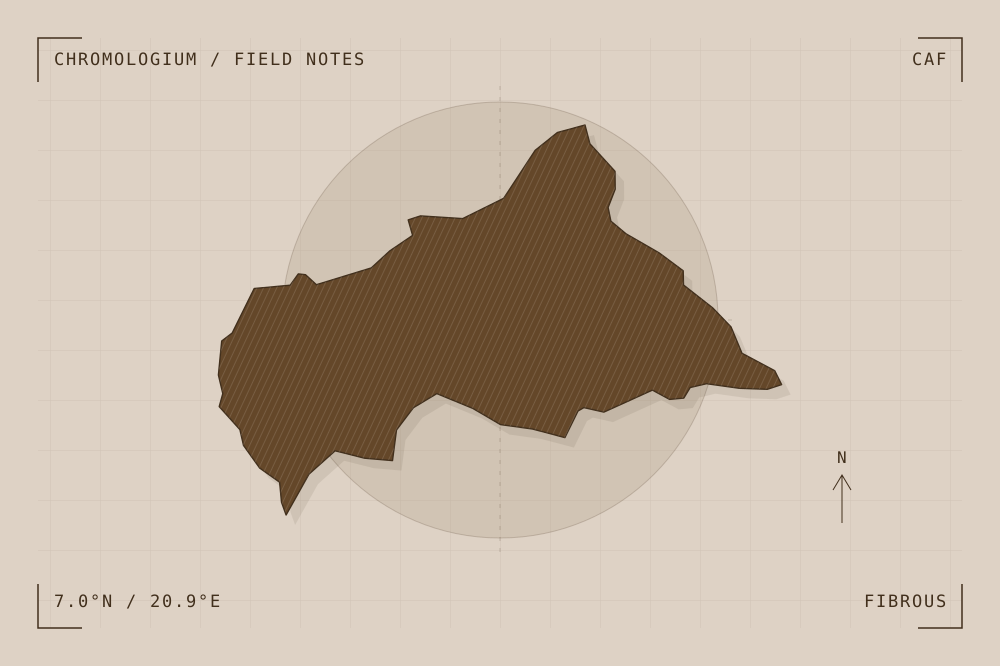
Artwork record · Geographic plate record. Map geometry: Natural Earth, public domain. The archive follows its map’s place names, including territories and disputed areas.
A closer look
Questions about this study
What does this study of Central African Republic focus on?
Manovo-Gounda St Floris contains extensive savannah and northern floodplain environments. The landscape reference emphasizes broad spatial transitions between open ground, vegetation and water.
Where can I find the original reference?
Manovo-Gounda St Floris National Park, published by UNESCO World Heritage Centre. The artwork explores the reference’s material ideas; the linked source documents the place.
What could I try at the bench?
Compose a wide horizontal field with unevenly spaced clusters and a softer boundary zone. Limit the colour range so that spacing carries the composition. Treat it as a landscape reading, not a mapped record of current habitats.
Continue by material