SEN / Stone & substance
Senegal
Historic enclosures & difficult heritage
Develop a system from this study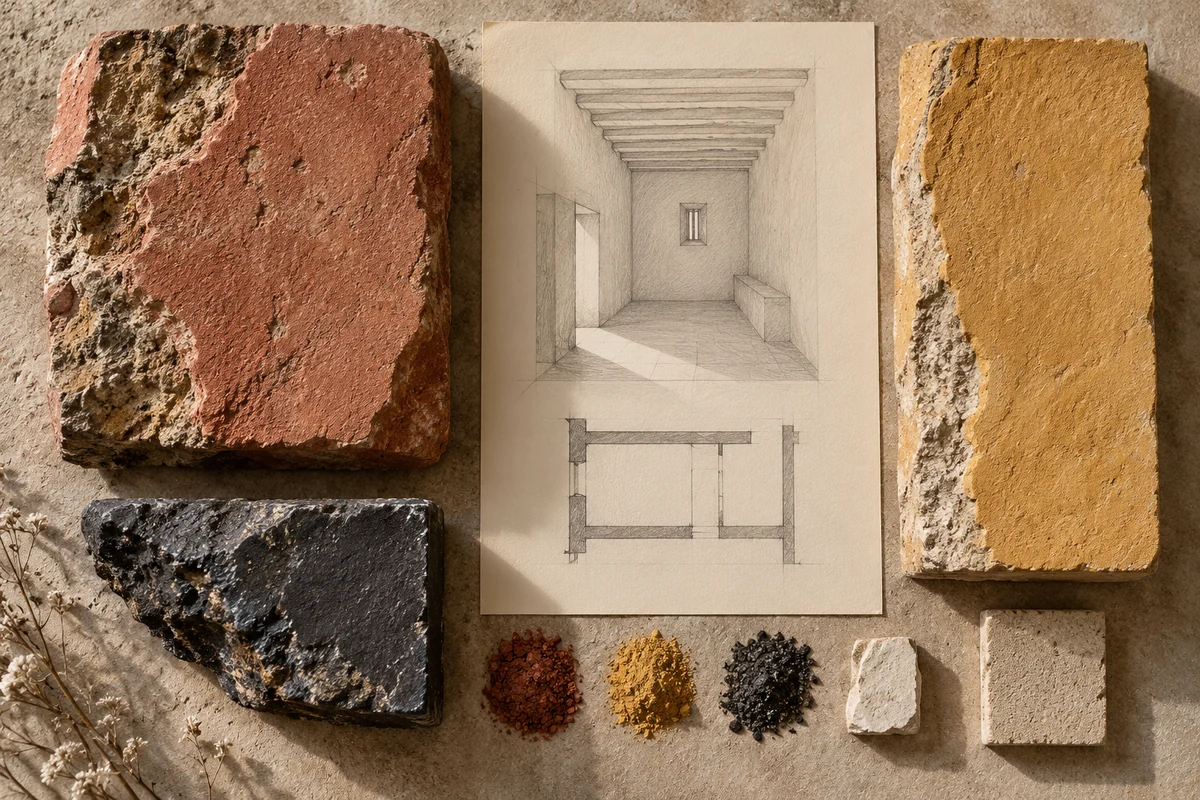
Image note
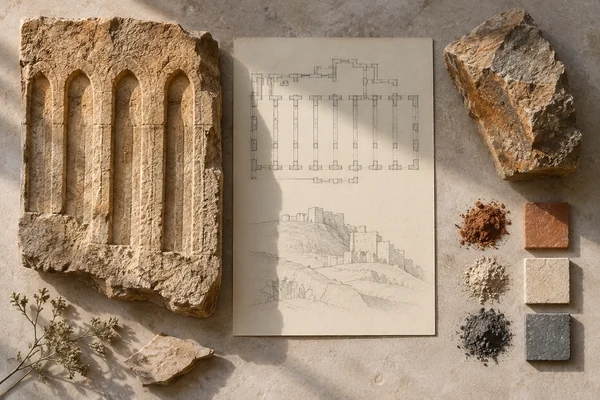
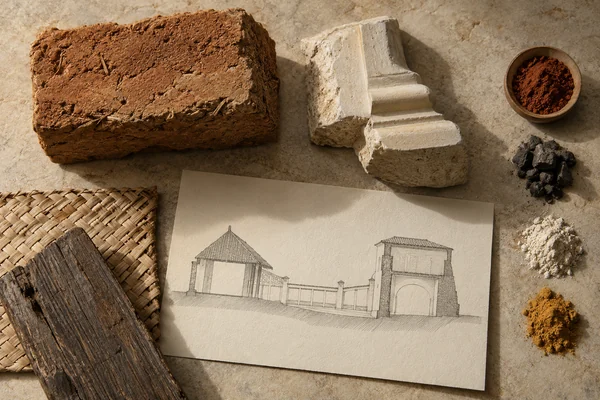
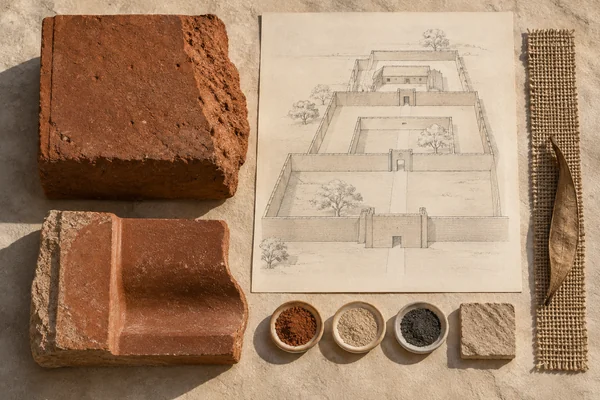
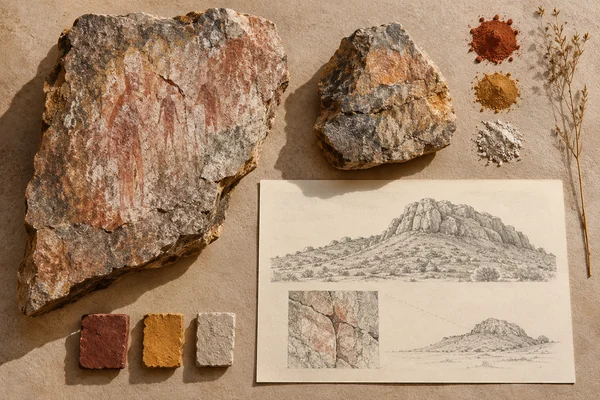
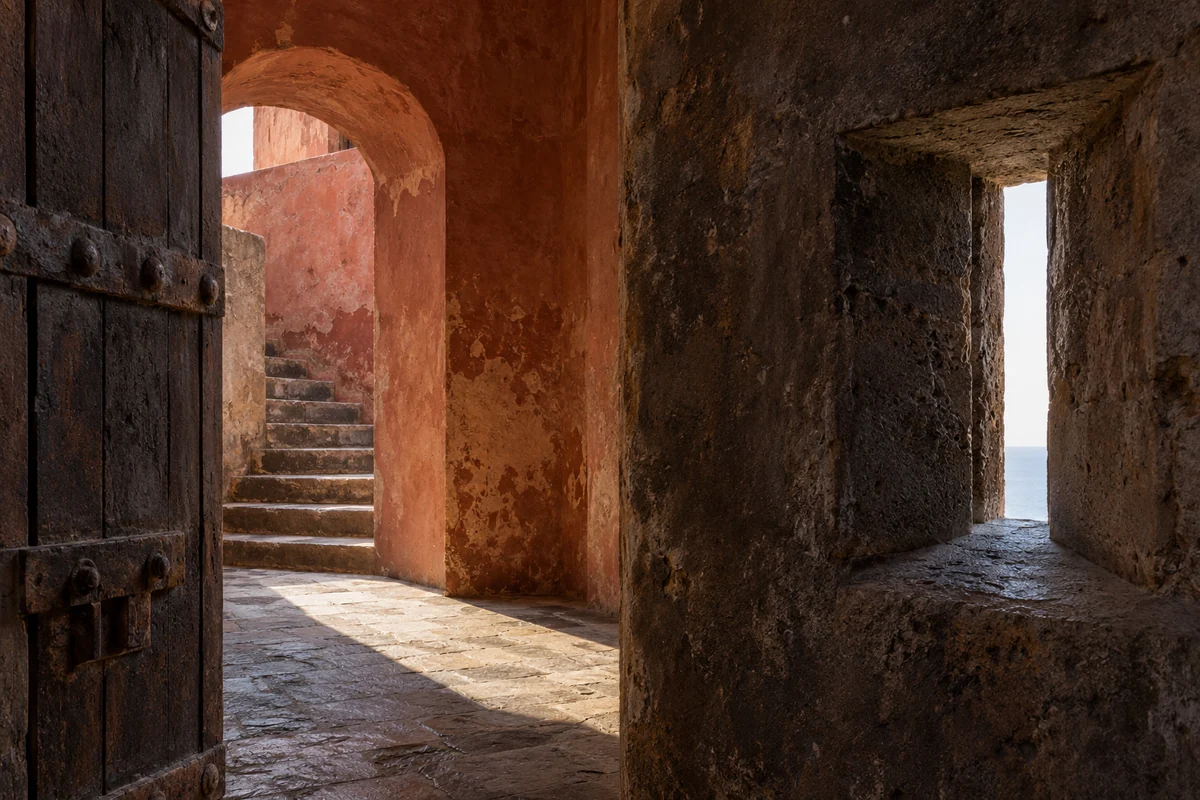
Three original interpretations of historic enclosures & difficult heritage, informed by Island of Gorée. These images explore material and spatial ideas; they are not documentary views or measured reconstructions of the reference. The palette is drawn from the material portrait.
Publication credit: The Chromologium.
Image credits and reuseThe colour strip is the entry’s study palette. Artwork sources and image credits and reuse terms are recorded in the archive.
Artwork recordThree views of one material idea.
Gorée’s architecture preserves stark differences between spaces used by enslaved people and by slave traders. The island’s role as a place of memory must remain central to any reading of its built environment.
Read the material study01 / Reading the material
The room and the unequal threshold
Gorée’s built environment must be read through the people whose lives were shaped by it. Differences in room size, enclosure and access are not neutral compositional choices here. Attractive surfaces and proportions cannot be separated from the island’s role as a place of memory.
02 / From surface to space
Read the whole.
Then the edge.
Compare the route offered to one occupant with the restrictions imposed on another. A plan can make this inequality visible in ways a facade photograph does not. Keep the historical account close to the spatial reading so that the architecture does not become an abstract exercise in contrast.
Study how enclosure, access and the size of a room encode unequal power. Avoid separating attractive facades from the histories behind them.
03 / Colour in context
A palette you can work with.
Five tones drawn from the material portrait. Select a colour, compare it on paper and ink, or copy its value into your own study.
Surface
#7b4327
Colour values & paper / ink comparison
oklch(0.446 0.088 46.171) · primary
The colour stays fixed as its surroundings change.
Try the bench exercise
04 / At the bench
Make the observation tangible.
Use a clearly labelled access diagram to study how thresholds distribute freedom of movement. Distinguish observation from inference. The purpose is to understand the built expression of unequal power, not to turn spaces of suffering into decorative references.
Keep a view of the whole beside a close detail. Note the material, lighting and the one variable you changed.
Source & orientation
Keep the reference close.
UNESCO World Heritage Centre. (n.d.). Island of Gorée. Retrieved October 10, 2026.
The material readings and bench exercise are editorial studies of this particular reference. The artwork explores its material ideas; the linked source documents the place.
Artwork & cartographic records
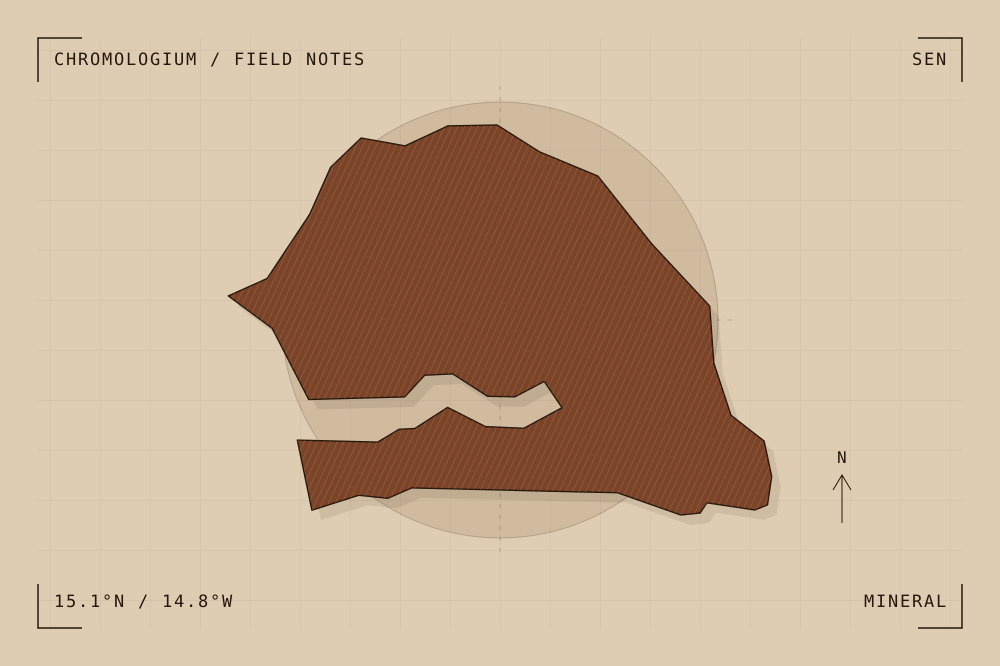
Artwork record · Geographic plate record. Map geometry: Natural Earth, public domain. The archive follows its map’s place names, including territories and disputed areas.
A closer look
Questions about this study
What does this study of Senegal focus on?
Gorée’s architecture preserves stark differences between spaces used by enslaved people and by slave traders. The island’s role as a place of memory must remain central to any reading of its built environment.
Where can I find the original reference?
Island of Gorée, published by UNESCO World Heritage Centre. The artwork explores the reference’s material ideas; the linked source documents the place.
What could I try at the bench?
Use a clearly labelled access diagram to study how thresholds distribute freedom of movement. Distinguish observation from inference. The purpose is to understand the built expression of unequal power, not to turn spaces of suffering into decorative references.
Continue by material