Image note
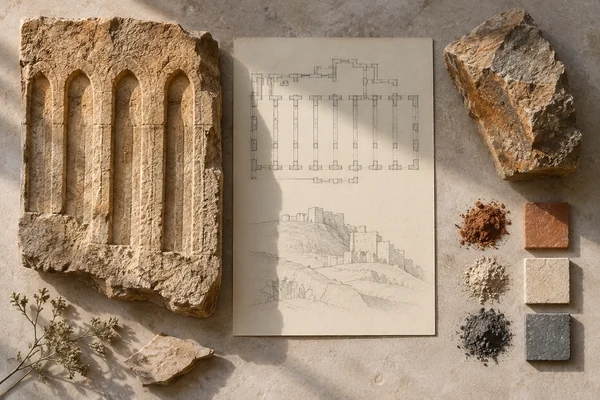
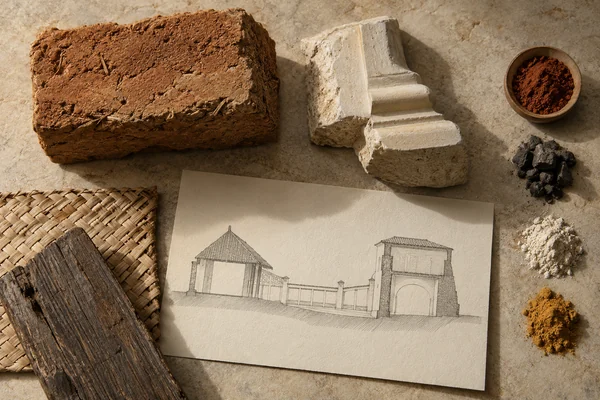
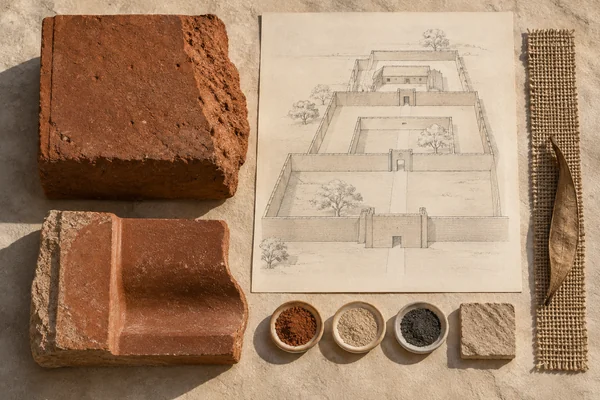
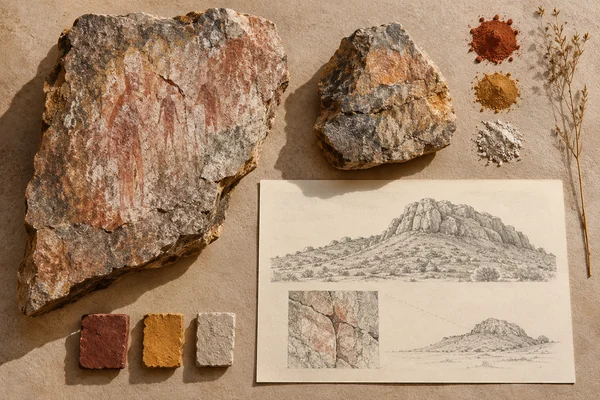
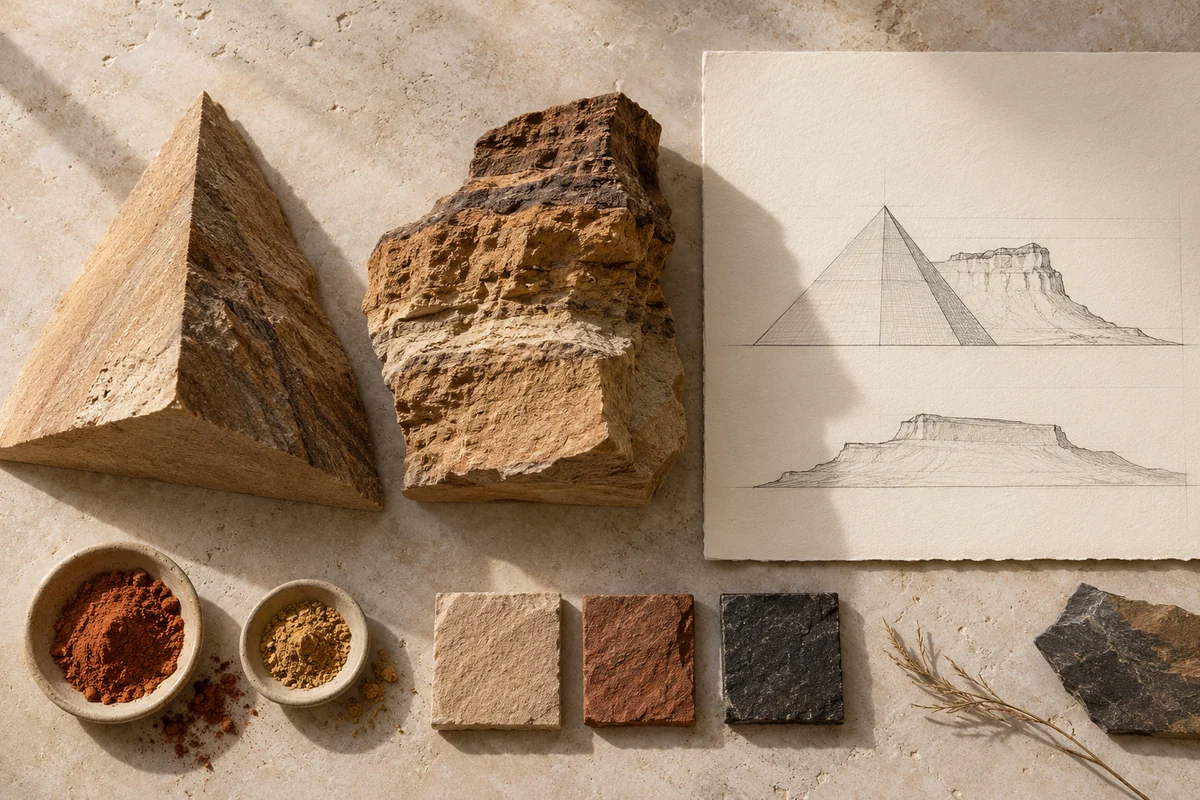
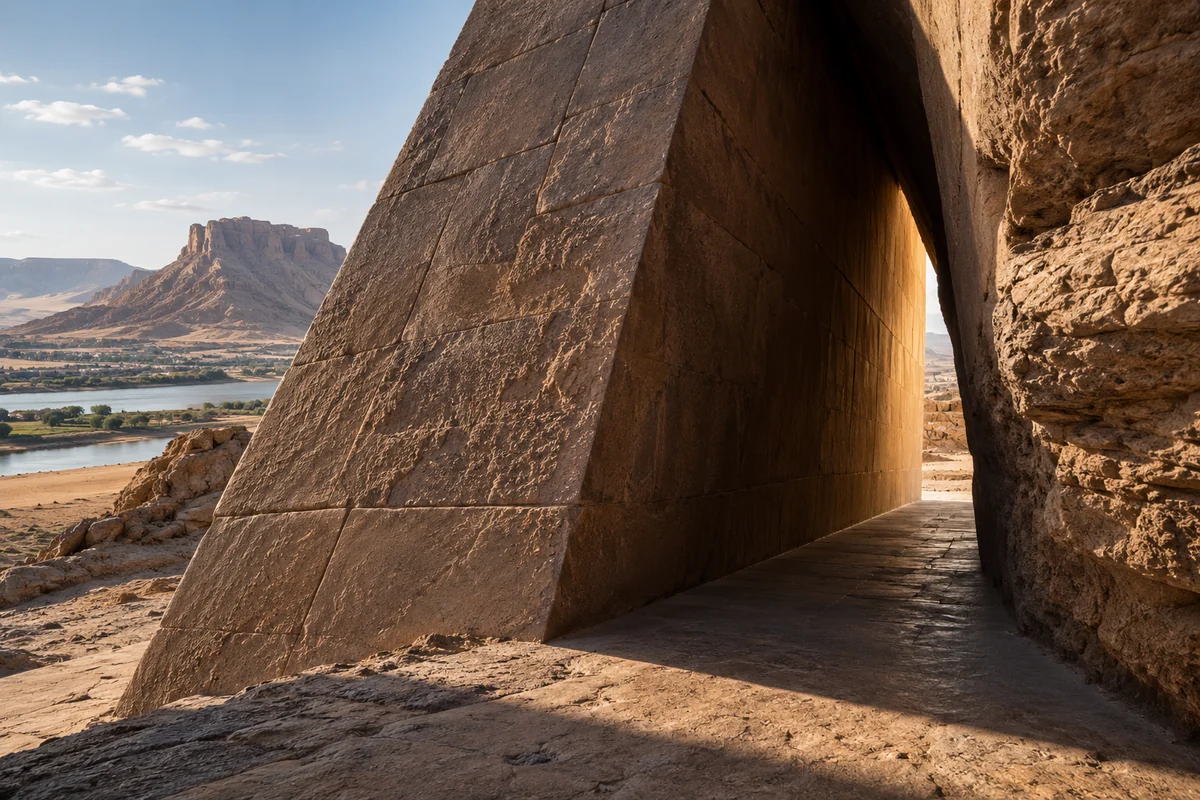
Three original interpretations of pyramidal mass & sacred landscape, informed by Gebel Barkal and the Sites of the Napatan Region. These images explore material and spatial ideas; they are not documentary views or measured reconstructions of the reference. The palette is drawn from the material portrait.
Publication credit: The Chromologium.
Image credits and reuseThe colour strip is the entry’s study palette. Artwork sources and image credits and reuse terms are recorded in the archive.
Artwork recordThree views of one material idea.
Gebel Barkal and the Napatan sites preserve temples, tombs and settlement remains associated with the kingdom of Kush. The hill and its surrounding structures form a connected sacred landscape along the Nile.
Read the material study01 / Reading the material
Built slopes beside a sacred hill
Gebel Barkal and the Napatan sites bring constructed forms into relation with a prominent natural profile. A pyramid’s regular slope and the hill’s less uniform outline can be compared formally while retaining their distinct religious and historical meanings.
02 / From surface to space
Read the whole.
Then the edge.
Read the structures as an ensemble within the Nile landscape. Their spacing and orientation matter alongside individual silhouettes. A distant profile and a closer ground-level view make different relationships visible, so neither should replace the other.
Read the slope of a pyramid against the natural profile of the hill. Separate a formal comparison from the religious meaning of either form.
03 / Colour in context
A palette you can work with.
Five tones drawn from the material portrait. Select a colour, compare it on paper and ink, or copy its value into your own study.
Surface
#694525
Colour values & paper / ink comparison
oklch(0.424 0.068 60.981) · primary
The colour stays fixed as its surroundings change.
Try the bench exercise
04 / At the bench
Make the observation tangible.
Compose an abstract regular volume beside an irregular mass with enough space to read both. Compare slopes and intervals. Keep the exercise separate from explanations of Kushite belief that require the historical record.
Keep a view of the whole beside a close detail. Note the material, lighting and the one variable you changed.
Source & orientation
Keep the reference close.
UNESCO World Heritage Centre. (n.d.). Gebel Barkal and the Sites of the Napatan Region. Retrieved October 10, 2026.
The material readings and bench exercise are editorial studies of this particular reference. The artwork explores its material ideas; the linked source documents the place.
Artwork & cartographic records
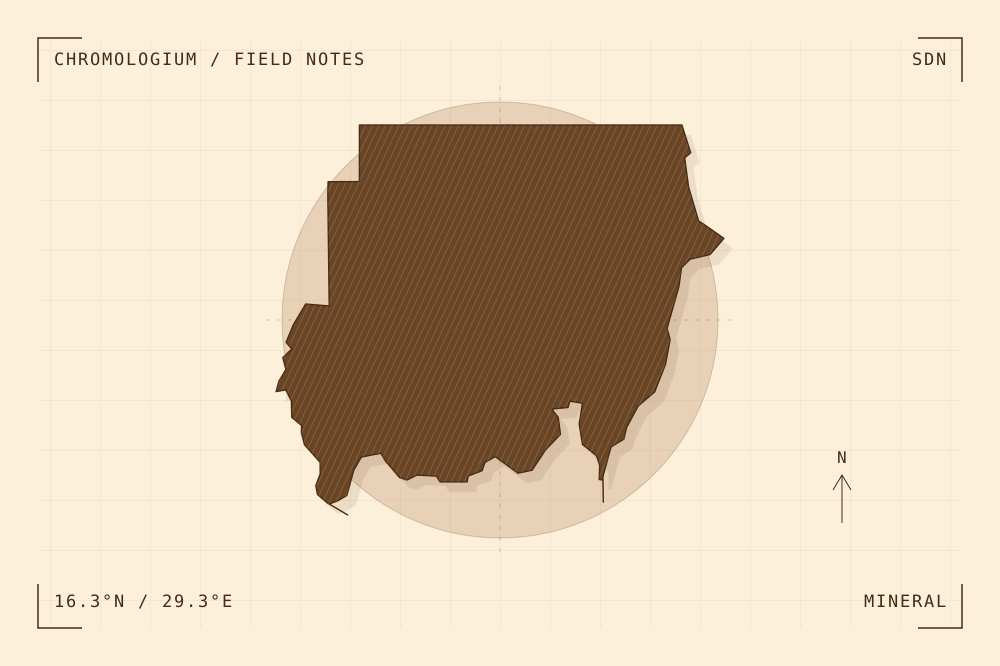
Artwork record · Geographic plate record. Map geometry: Natural Earth, public domain. The archive follows its map’s place names, including territories and disputed areas.
A closer look
Questions about this study
What does this study of Sudan focus on?
Gebel Barkal and the Napatan sites preserve temples, tombs and settlement remains associated with the kingdom of Kush. The hill and its surrounding structures form a connected sacred landscape along the Nile.
Where can I find the original reference?
Gebel Barkal and the Sites of the Napatan Region, published by UNESCO World Heritage Centre. The artwork explores the reference’s material ideas; the linked source documents the place.
What could I try at the bench?
Compose an abstract regular volume beside an irregular mass with enough space to read both. Compare slopes and intervals. Keep the exercise separate from explanations of Kushite belief that require the historical record.
Continue by material