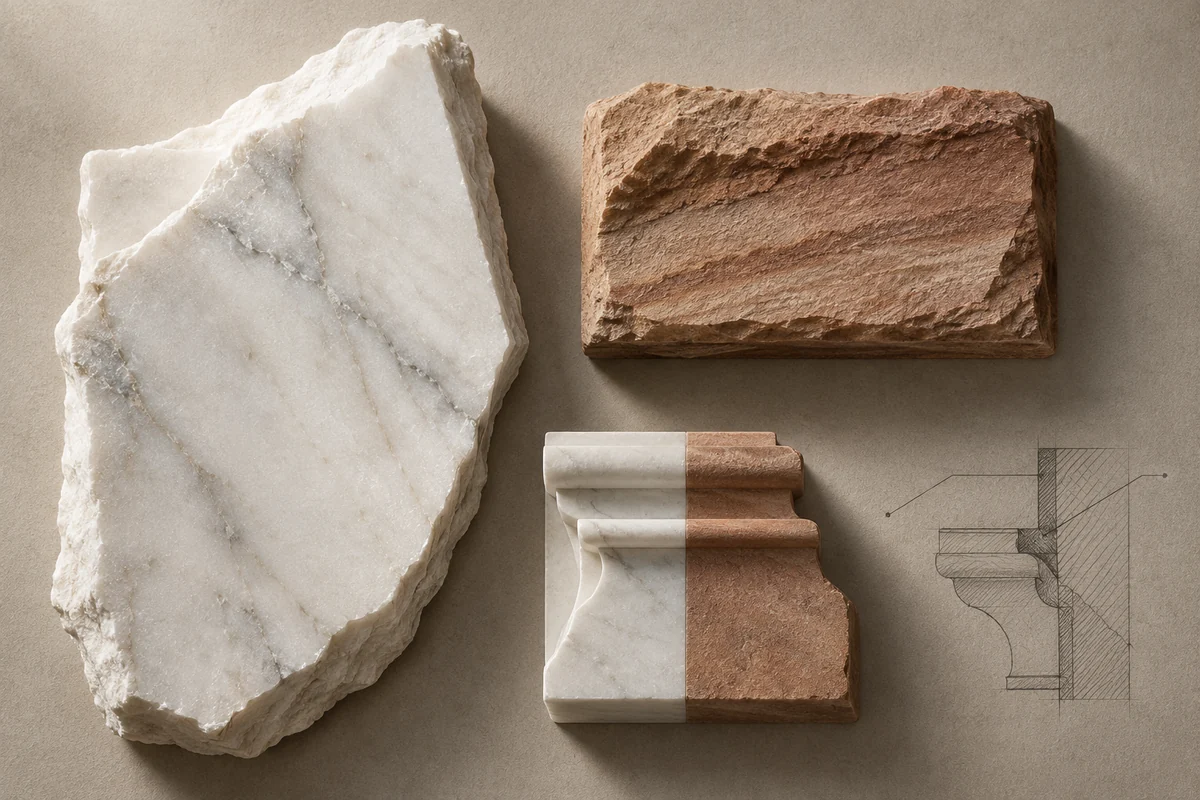
Image note
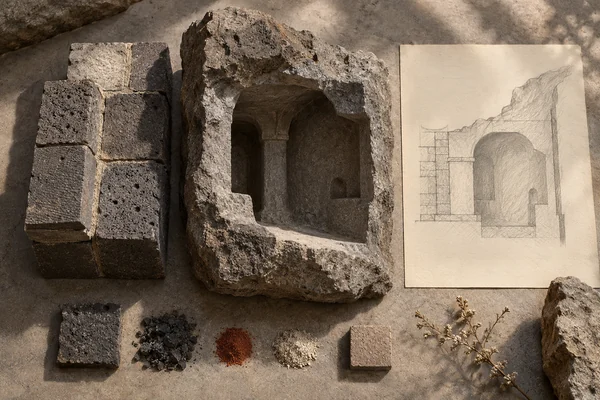
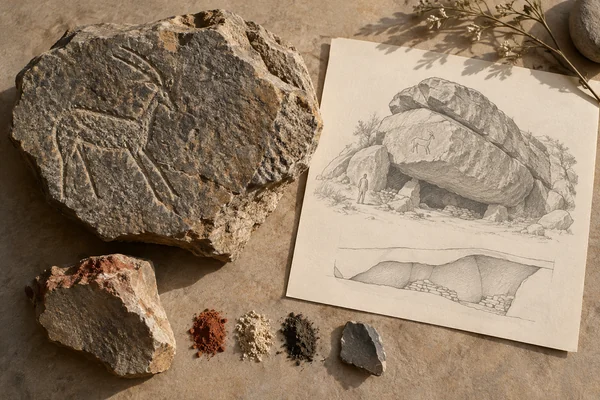
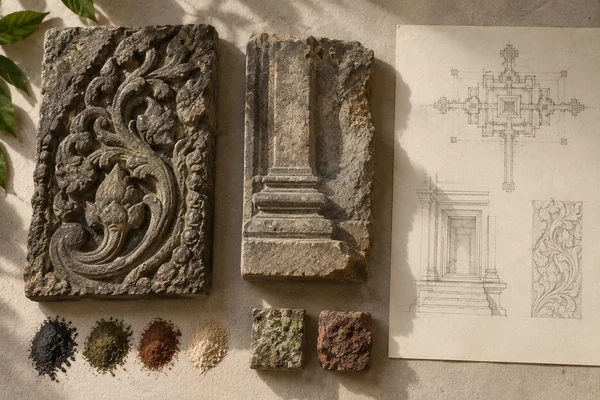
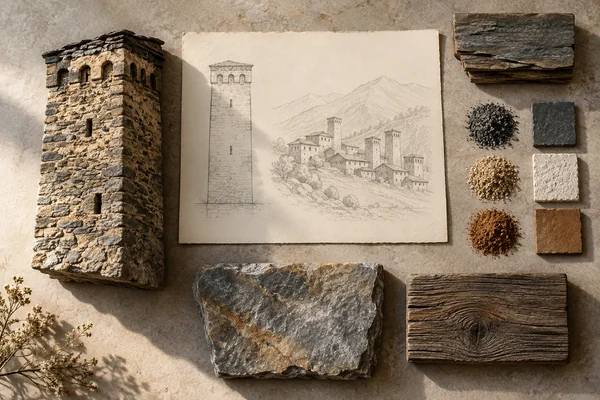
An interpretation of makrana marble & sandstone. The architecture and section drawing are imagined studies, rather than records of a particular building or construction detail.
Publication credit: The Chromologium.
Image credits and reuseThe colour strip is the entry’s study palette. Artwork sources and image credits and reuse terms are recorded in the archive.
Artwork recordVastu Shastra & Fractal Mandalas
Weight. Light. Time.
Move between the mass of the architecture and the small variations within its surfaces.
Material & Chromatic Spectrum
Calibrated OkLCH color science mapped from historical mineral pigments, architectural substrates, and intaglio inks.
Sovereign Saffron
#FF9933
Colour values & paper / ink comparison
oklch(0.77 0.17 65) · primary
The colour stays fixed as its surroundings change.
From Physical Lineage to Digital Space
“The building is a living organism, aligned to cardinal axes and celestial rhythms.”
Indian architectural tradition embeds cosmic orientation and recursive fractal geometry into physical stone. The stepped wells of Gujarat and the self-similar spires of Khajuraho demonstrate how recursive visual hierarchies structure infinite complexity into serene order—a profound paradigm for deep nested UI navigation trees, design token inheritance, and diurnal rhythm adaptation.
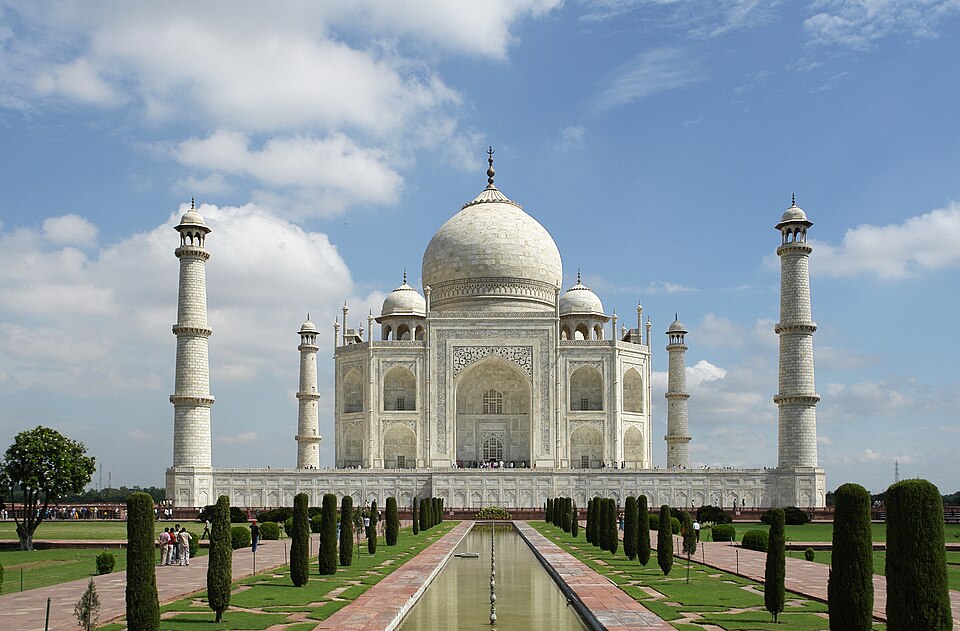
Taj Mahal
The pinnacle of Mughal architectural symmetry — translucent white Makrana marble, pietra dura floral inlays, and quadripartite charbagh garden geometry.
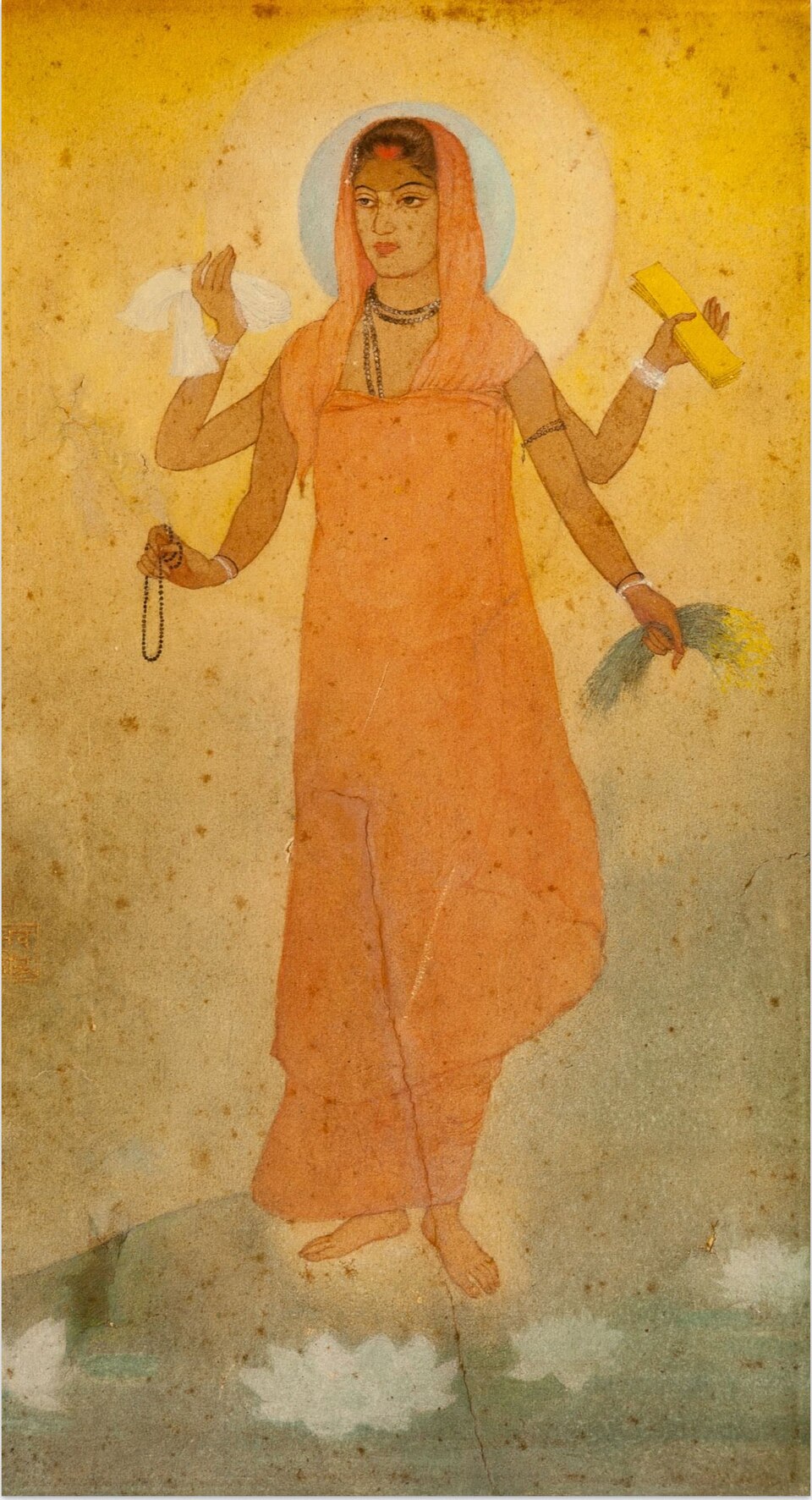
Bharat Mata
The primary compositional study embodying India's national color philosophy, surface chemistry, and aesthetic tension.
Experiment with this palette
Dynamic Component Diorama
Real-time rendering of interactive UI primitives styled with India's sovereign design tokens.
Vastu Shastra & Fractal Mandalas
Tactile surface responding with 0.36 optical friction and overdamped (quiet) kinetics.
Explore the global map
India in the Global Material Cartography
Spatial provenance, trade route vectors, solar diurnal phase, and localized craft beacons across India.
Regional craft hubs & cities
Regional Craft Hubs & Historical Cities
Granular material lineages, landmark architecture, and specialized regional craft centers across India.
The primary urban design center showcasing India's definitive spatial landmarks and historical Vastu Shastra & Fractal Mandalas craft traditions.
Regional artisan workshops preserving ancestral material extraction, pigment chemistry, and tactile fabrication techniques.
Modern architectural studios translating traditional tactile properties into scalable digital user interfaces and physical environments.
Material specifications & sound
Sensory Specifications & Surface Friction
CULTURAL ACOUSTIC LINEAGE & PROVENANCE
Cast from Panchaloha (sacred 5-metal bronze alloy: copper, tin, zinc, silver, gold), Indian temple Ghanta bells produce a sustained left-and-right brain synchronizing ringdown exceeding 10 seconds, tuning temple chambers to sacred Vedic acoustics.
PSYCHOACOUSTIC & COGNITIVE PROFILE
432 Hz Pythagorean sacred harmonic, promoting deep parasympathetic nervous system relaxation and meditative centering.
DIGITAL UI TRANSLATION SPEC
Synthesized live via the browser's Web Audio API with exponential gain decay and fifth-harmonic overtone dispersion to provide tactile, non-speech micro-interaction feedback.
Connected Systems & Lexicon Axioms
“India: Design Provenance & Material Spectrum.” The Chromologium — Design Atlas, 2026. chromologium.com/atlas/india
Primary references
Return to the source.
A closer look
Questions about this study
What material idea connects this study of India?
Vastu Shastra & Fractal Mandalas: The building is a living organism, aligned to cardinal axes and celestial rhythms. Move between the mass of the architecture and the small variations within its surfaces.
Which building can I use as a reference?
Taj Mahal (1632–1653). The pinnacle of Mughal architectural symmetry — translucent white Makrana marble, pietra dura floral inlays, and quadripartite charbagh garden geometry. Read the heritage record.
How can I work with these colours?
Select a swatch in the palette to copy its HEX value, then expand the paper and ink comparison to see how the surrounding ground changes its appearance. The optional experiment lets you try the palette on interface elements.
Continue by material