Image note
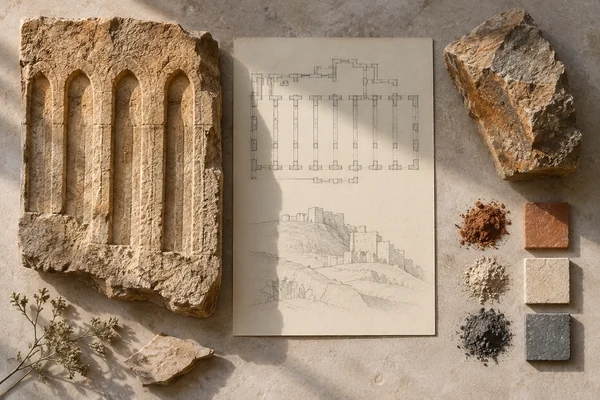
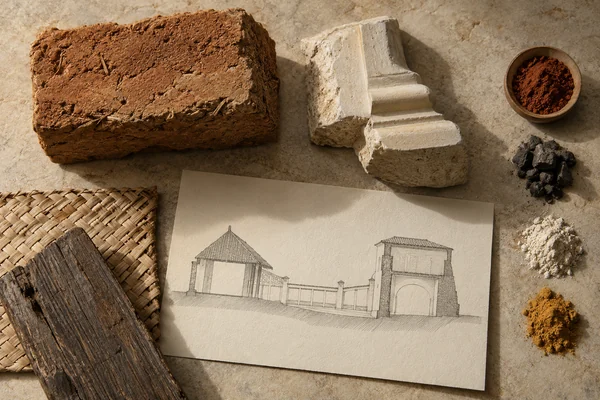
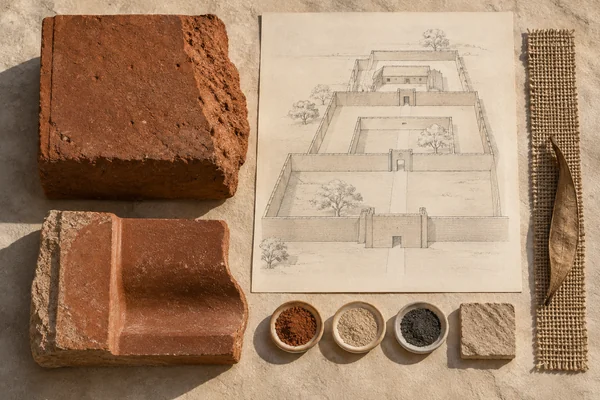
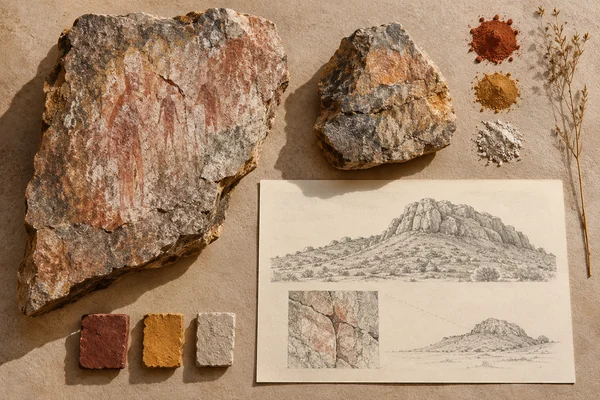
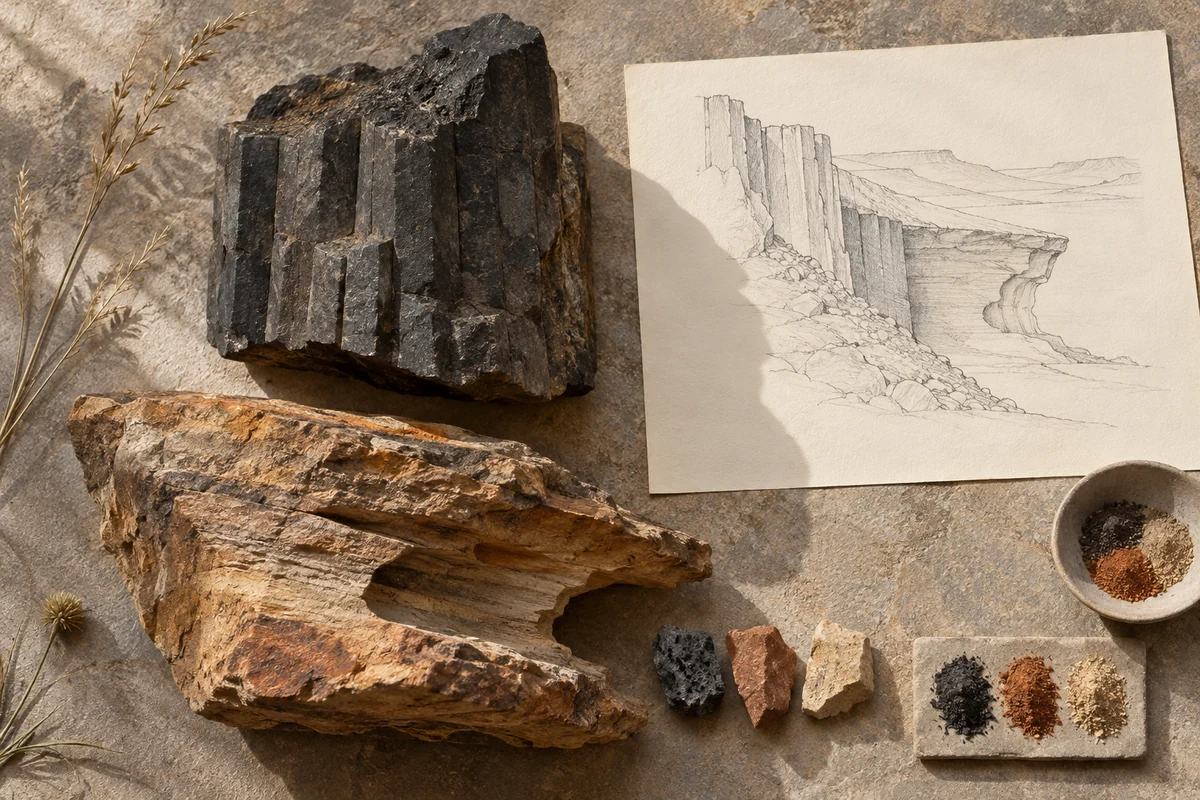
Three original interpretations of basalt heights & sandstone shelters, informed by Maloti-Drakensberg Park. These images explore material and spatial ideas; they are not documentary views or measured reconstructions of the reference. The palette is drawn from the material portrait.
Publication credit: The Chromologium.
Image credits and reuseThe colour strip is the entry’s study palette. Artwork sources and image credits and reuse terms are recorded in the archive.
Artwork recordThree views of one material idea.
Lesotho’s Sehlabathebe forms part of the transboundary Maloti-Drakensberg property. Basalt and sandstone landforms, rock shelters and associated heritage connect the mountain landscape across the present border.
Read the material study01 / Reading the material
The depth beneath the ledge
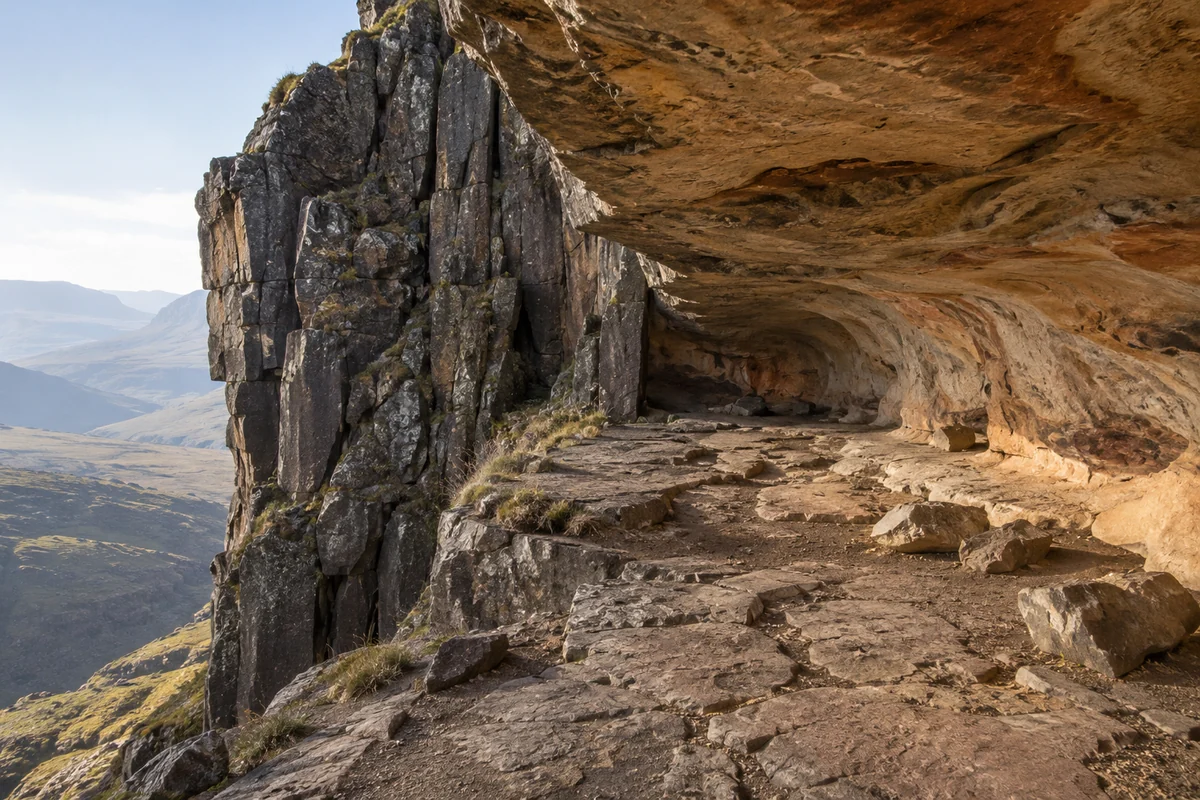
The Maloti-Drakensberg reference brings together highland profiles and sheltered depth. A sheer edge and an undercut recess can belong to one geological mass while offering very different spatial experiences. A section reveals that contrast better than a distant silhouette alone.
02 / From surface to space
Read the whole.
Then the edge.
Move from the open slope toward a sheltered edge. The change in overhead cover and light makes a boundary perceptible without a constructed wall. Keep the wider transboundary landscape present alongside the closer shelter study.
Study the difference between a sheer rock edge and an undercut shelter. Use a section drawing to show how geology creates habitable depth.
03 / Colour in context
A palette you can work with.
Five tones drawn from the material portrait. Select a colour, compare it on paper and ink, or copy its value into your own study.
Surface
#906038
Colour values & paper / ink comparison
oklch(0.532 0.084 59.392) · primary
The colour stays fixed as its surroundings change.
Try the bench exercise
04 / At the bench
Make the observation tangible.
Model one continuous mass with a pronounced overhang and a quieter recess. Compare the light at its exposed edge and protected back. Avoid treating a visual study as evidence of particular historical uses not established by the source.
Keep a view of the whole beside a close detail. Note the material, lighting and the one variable you changed.
Source & orientation
Keep the reference close.
UNESCO World Heritage Centre. (n.d.). Maloti-Drakensberg Park. Retrieved October 10, 2026.
The material readings and bench exercise are editorial studies of this particular reference. The artwork explores its material ideas; the linked source documents the place.
Artwork & cartographic records
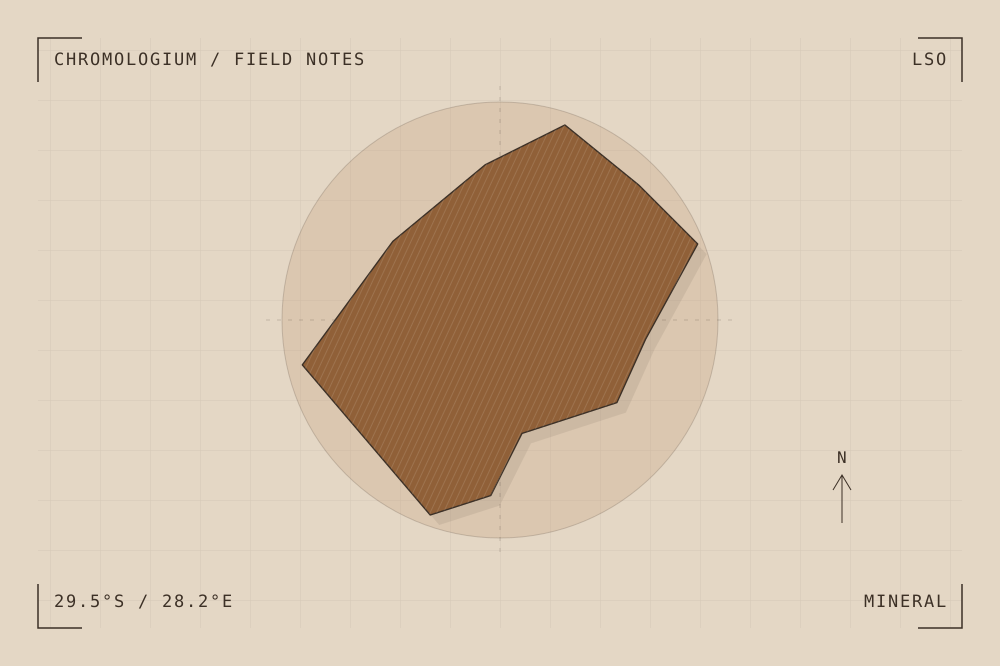
Artwork record · Geographic plate record. Map geometry: Natural Earth, public domain. The archive follows its map’s place names, including territories and disputed areas.
A closer look
Questions about this study
What does this study of Lesotho focus on?
Lesotho’s Sehlabathebe forms part of the transboundary Maloti-Drakensberg property. Basalt and sandstone landforms, rock shelters and associated heritage connect the mountain landscape across the present border.
Where can I find the original reference?
Maloti-Drakensberg Park, published by UNESCO World Heritage Centre. The artwork explores the reference’s material ideas; the linked source documents the place.
What could I try at the bench?
Model one continuous mass with a pronounced overhang and a quieter recess. Compare the light at its exposed edge and protected back. Avoid treating a visual study as evidence of particular historical uses not established by the source.
Continue by material