Image note
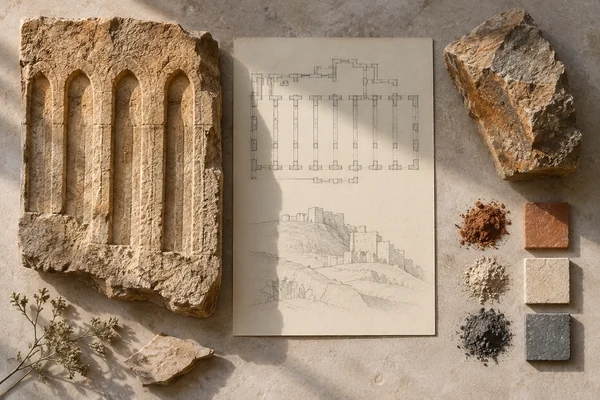
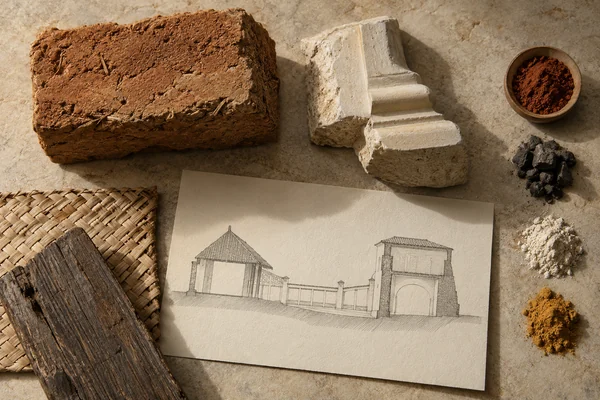
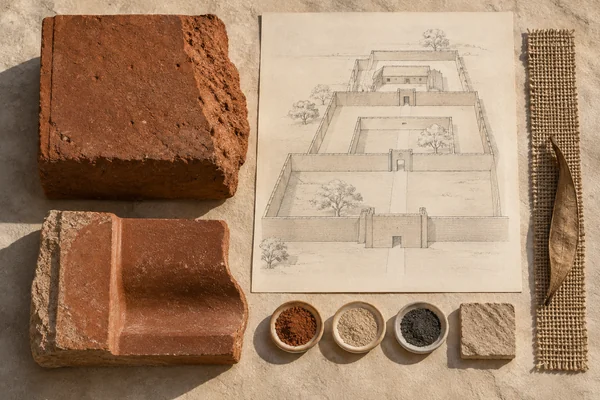
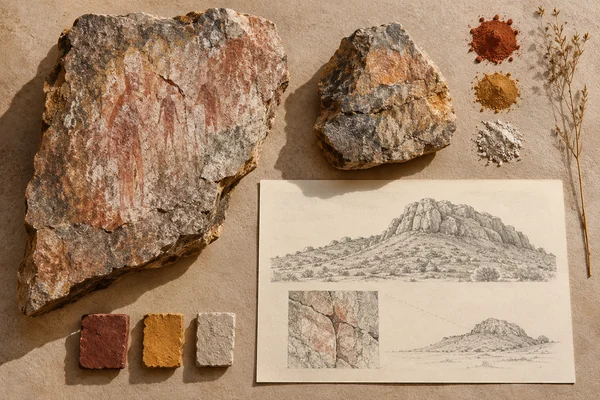
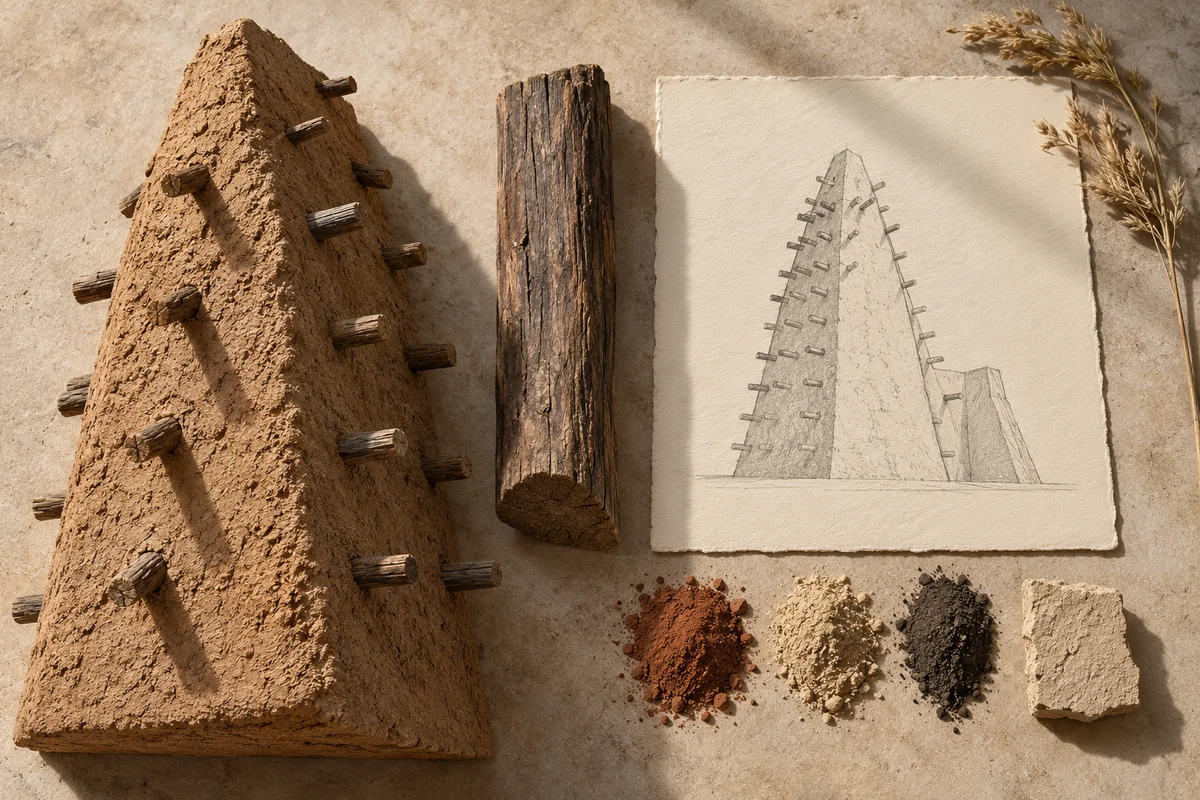
Three original interpretations of monumental earth & projecting timber, informed by Tomb of Askia. These images explore material and spatial ideas; they are not documentary views or measured reconstructions of the reference. The palette is drawn from the material portrait.
Publication credit: The Chromologium.
Image credits and reuseThe colour strip is the entry’s study palette. Artwork sources and image credits and reuse terms are recorded in the archive.
Artwork recordThree views of one material idea.
The Tomb of Askia at Gao is a pyramidal earthen monument associated with the Songhai Empire. It belongs to a wider complex of religious buildings and gathering space in the West African Sahel.
Read the material study01 / Reading the material
A tapering mass, a worked surface
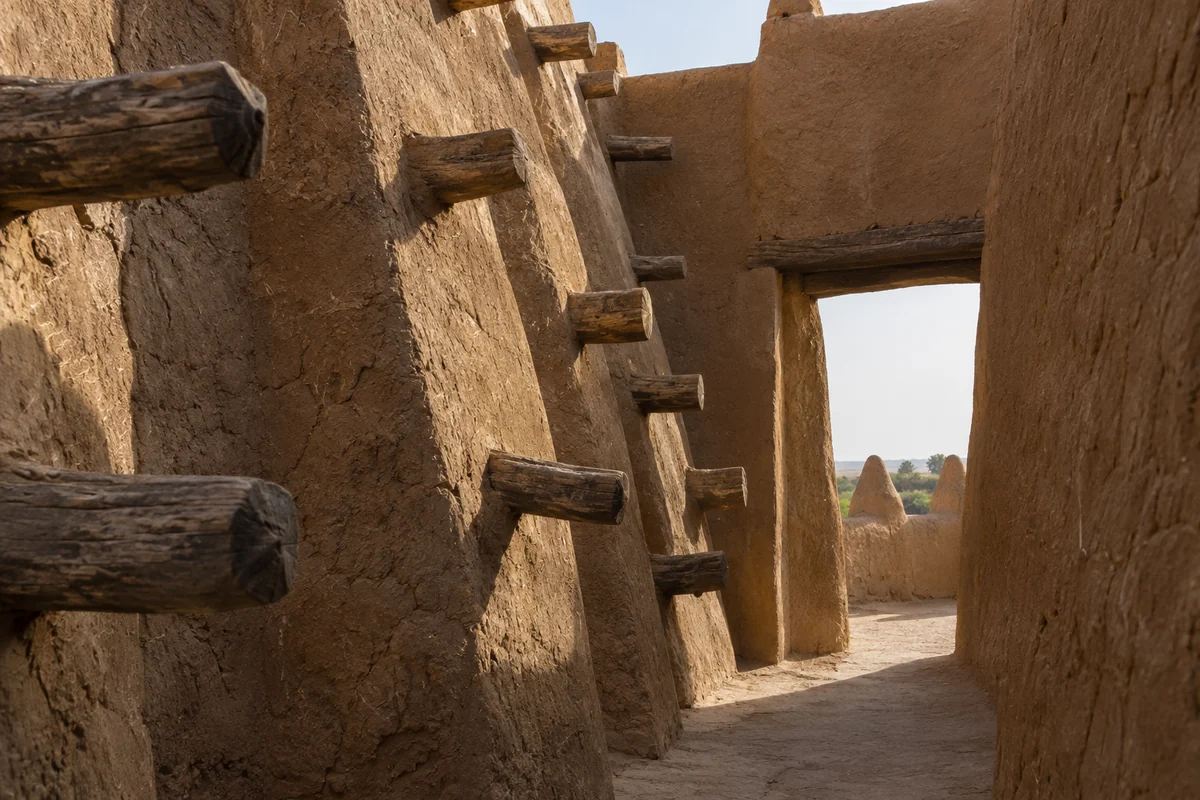
The Tomb of Askia’s earthen form reads first through its tapering silhouette, then through smaller elements that articulate the surface. The difference in scales gives the mass a strong presence without making it visually inert. Earthen architecture also belongs to a continuing practice of care.
02 / From surface to space
Read the whole.
Then the edge.
Compare the monument with the gathering spaces and buildings around it. Its height and profile gain meaning through that ensemble. A close surface image should return to this wider view rather than treating the monument as an isolated sculptural object.
Compare the monument’s tapering mass with the smaller elements that articulate its surface. Read earthen construction as an ongoing practice of care.
03 / Colour in context
A palette you can work with.
Five tones drawn from the material portrait. Select a colour, compare it on paper and ink, or copy its value into your own study.
Surface
#6b4a2c
Colour values & paper / ink comparison
oklch(0.438 0.063 62.268) · primary
The colour stays fixed as its surroundings change.
Try the bench exercise
04 / At the bench
Make the observation tangible.
Make a simple tapering earthen-coloured volume with restrained surface projections. Observe how side light distinguishes the details. Study mass and maintenance as related concerns without inventing a restoration method or measured material property.
Keep a view of the whole beside a close detail. Note the material, lighting and the one variable you changed.
Source & orientation
Keep the reference close.
UNESCO World Heritage Centre. (n.d.). Tomb of Askia. Retrieved October 10, 2026.
The material readings and bench exercise are editorial studies of this particular reference. The artwork explores its material ideas; the linked source documents the place.
Artwork & cartographic records
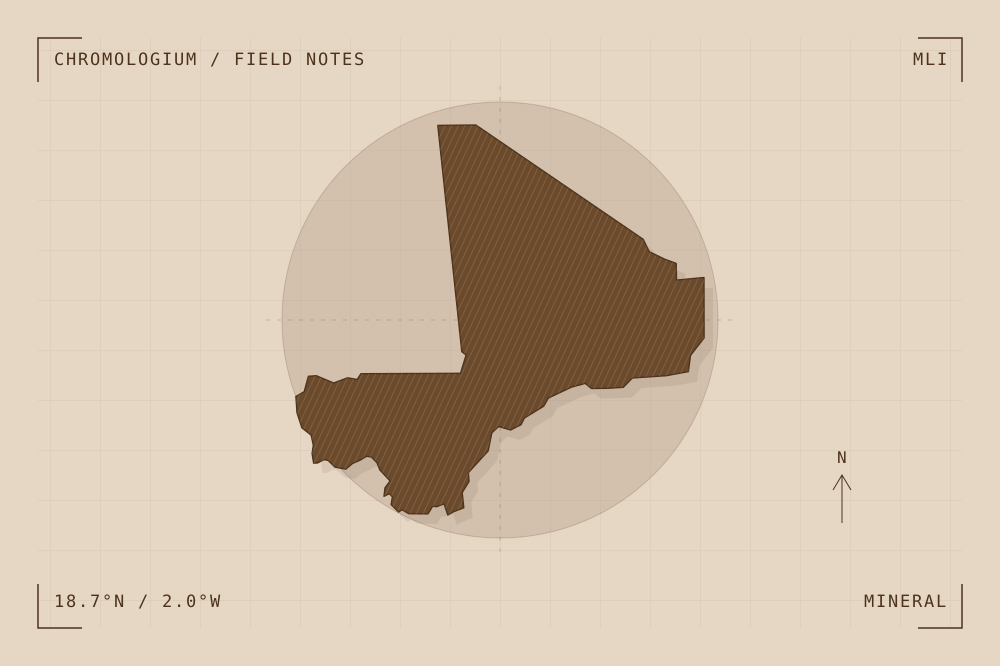
Artwork record · Geographic plate record. Map geometry: Natural Earth, public domain. The archive follows its map’s place names, including territories and disputed areas.
A closer look
Questions about this study
What does this study of Mali focus on?
The Tomb of Askia at Gao is a pyramidal earthen monument associated with the Songhai Empire. It belongs to a wider complex of religious buildings and gathering space in the West African Sahel.
Where can I find the original reference?
Tomb of Askia, published by UNESCO World Heritage Centre. The artwork explores the reference’s material ideas; the linked source documents the place.
What could I try at the bench?
Make a simple tapering earthen-coloured volume with restrained surface projections. Observe how side light distinguishes the details. Study mass and maintenance as related concerns without inventing a restoration method or measured material property.
Continue by material