KOR / Asia
South Korea
Red pine, granite foundation stones & white porcelain
Develop a system from this study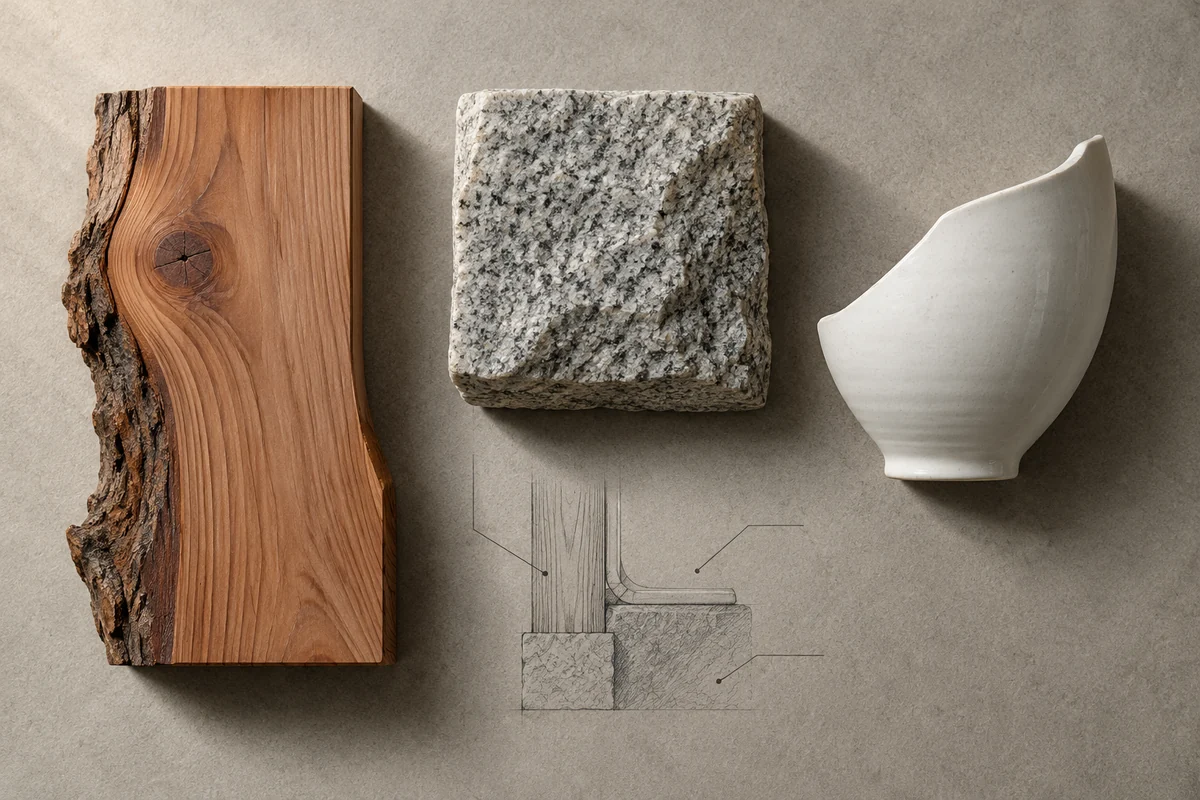
Image note
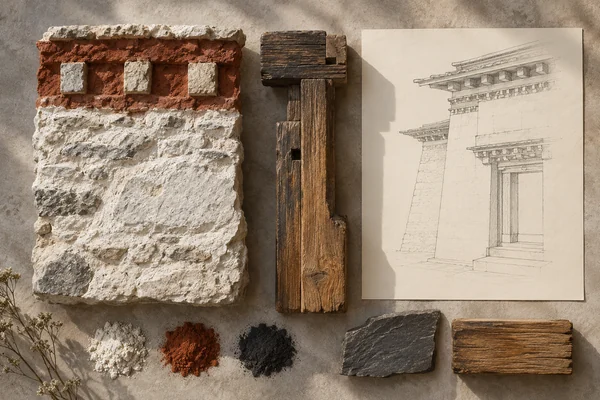
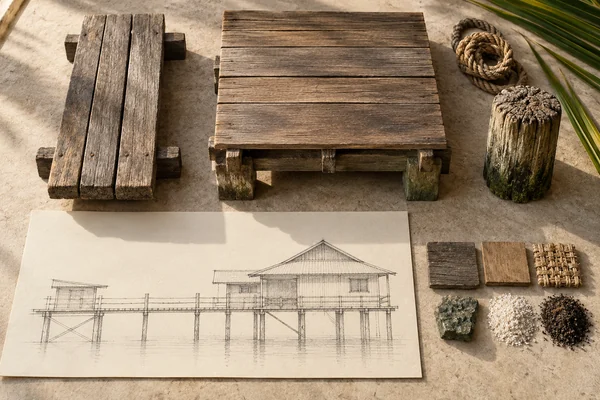
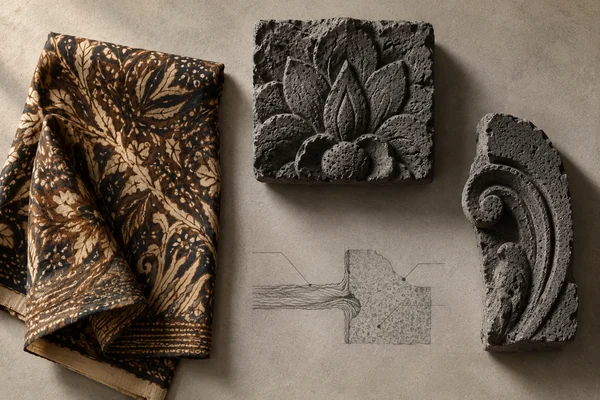
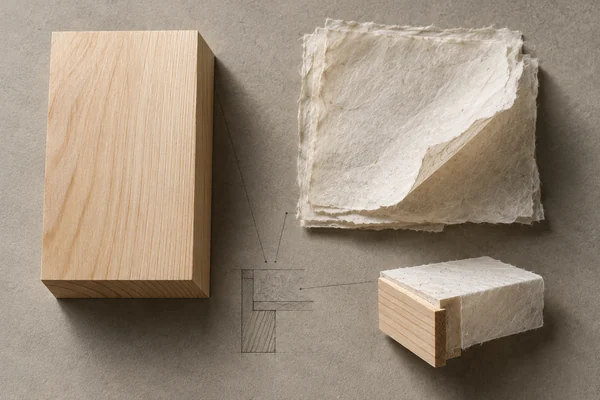
An interpretation of red pine, granite foundation stones & white porcelain. The architecture and section drawing are imagined studies, rather than records of a particular building or construction detail.
Publication credit: The Chromologium.
Image credits and reuseThe colour strip is the entry’s study palette. Artwork sources and image credits and reuse terms are recorded in the archive.
Artwork recordHanok Asymmetric Flow & Dancheong Mineral Palette
Along the grain.
Notice how a directional surface gives even a quiet composition a sense of movement.
Material & Chromatic Spectrum
Calibrated OkLCH color science mapped from historical mineral pigments, architectural substrates, and intaglio inks.
Taegeuk Blue
#0047A0
Colour values & paper / ink comparison
oklch(0.40 0.19 260) · primary
The colour stays fixed as its surroundings change.
From Physical Lineage to Digital Space
“The imperfect circle of the Moon Jar holds more truth than the ruler's exact diameter.”
The Joseon Moon Jar (Dalhangari) is made by fusing two separate hemispherical bowls at the center seam, intentionally preserving subtle organic asymmetry and natural warping. In modern digital design, this celebrated concept of 'imperfect perfection' guides the calibration of humanized micro-delays, kinetic physics springs, and organic tactile friction.
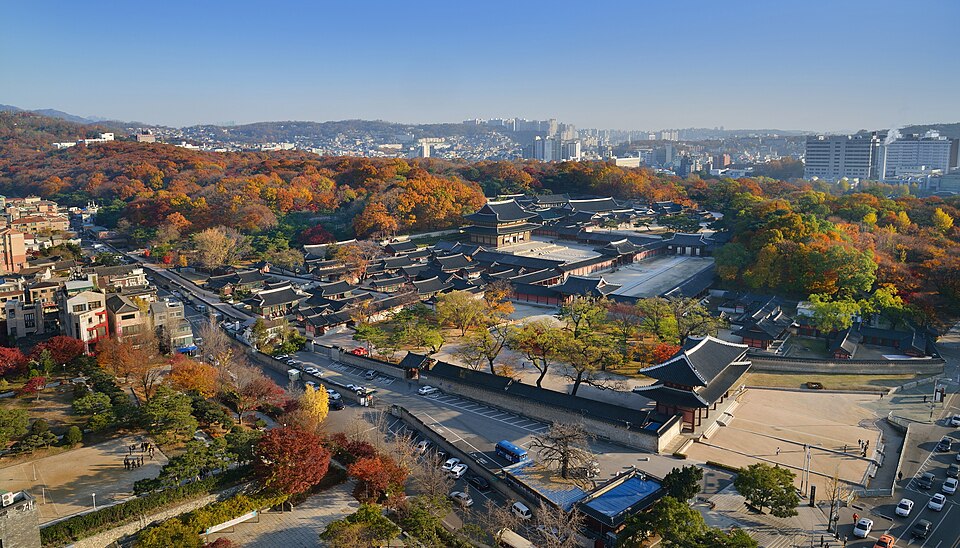
Changdeokgung Huwon (Secret Garden)
The quintessential Hanok landscape — buildings positioned to follow natural topography without leveling hills, celebrating the harmony of ondol floor warmth and maru wooden breezes.
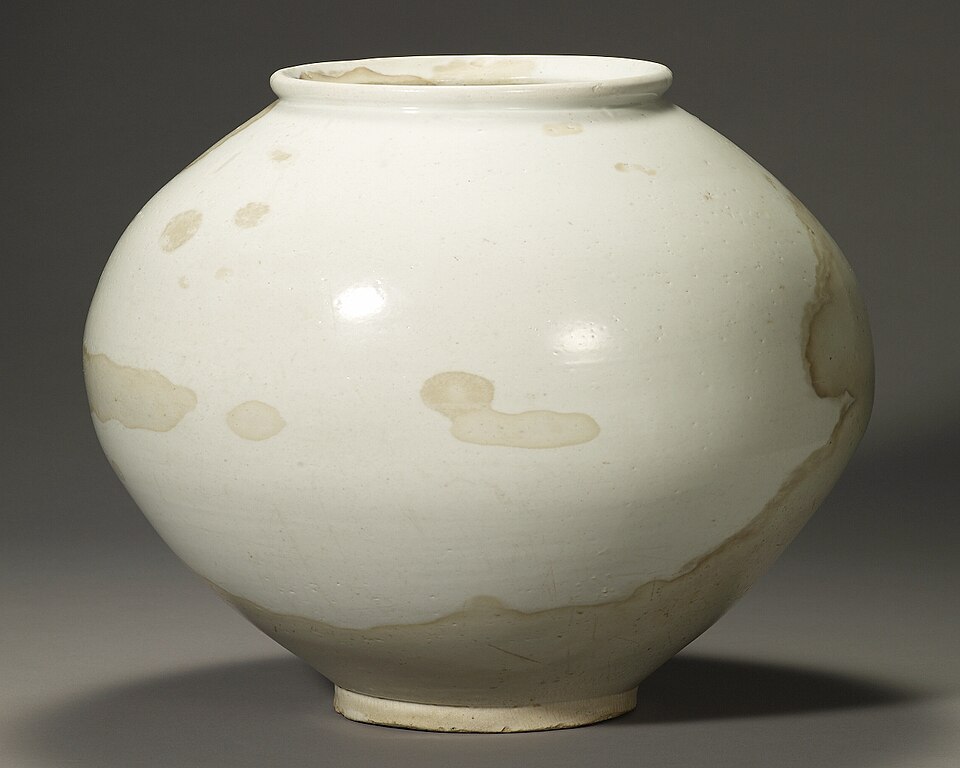
Joseon White Porcelain Moon Jar (Dalhangari)
The primary compositional study embodying South Korea's national color philosophy, surface chemistry, and aesthetic tension.
Experiment with this palette
Dynamic Component Diorama
Real-time rendering of interactive UI primitives styled with South Korea's sovereign design tokens.
Hanok Asymmetric Flow & Dancheong Mineral Palette
Tactile surface responding with 0.16 optical friction and critically damped (crisp) kinetics.
Explore the global map
South Korea in the Global Material Cartography
Spatial provenance, trade route vectors, solar diurnal phase, and localized craft beacons across South Korea.
Regional craft hubs & cities
Regional Craft Hubs & Historical Cities
Granular material lineages, landmark architecture, and specialized regional craft centers across South Korea.
The primary urban design center showcasing South Korea's definitive spatial landmarks and historical Hanok Asymmetric Flow & Dancheong Mineral Palette craft traditions.
Regional artisan workshops preserving ancestral material extraction, pigment chemistry, and tactile fabrication techniques.
Modern architectural studios translating traditional tactile properties into scalable digital user interfaces and physical environments.
Material specifications & sound
Sensory Specifications & Surface Friction
CULTURAL ACOUSTIC LINEAGE & PROVENANCE
The Divine Bell of King Seongdeok (771 AD) features an acoustic hollow pipe on top and underground resonance cavity beneath that produces the world's most sustained harmonic beat (Eum-tong). Paired with L-shaped jade stone chimes (Pyeongyeong) that never detune with humidity.
PSYCHOACOUSTIC & COGNITIVE PROFILE
370 Hz (F#4) pure mineral resonance, creating balanced, unflappable cognitive calm and emotional dignity.
DIGITAL UI TRANSLATION SPEC
Synthesized live via the browser's Web Audio API with exponential gain decay and fifth-harmonic overtone dispersion to provide tactile, non-speech micro-interaction feedback.
Connected Systems & Lexicon Axioms
“South Korea: Design Provenance & Material Spectrum.” The Chromologium — Design Atlas, 2026. chromologium.com/atlas/south-korea
Primary references
Return to the source.
A closer look
Questions about this study
What material idea connects this study of South Korea?
Hanok Asymmetric Flow & Dancheong Mineral Palette: The imperfect circle of the Moon Jar holds more truth than the ruler's exact diameter. Notice how a directional surface gives even a quiet composition a sense of movement.
Which building can I use as a reference?
Changdeokgung Huwon (Secret Garden) (1405–1610). The quintessential Hanok landscape — buildings positioned to follow natural topography without leveling hills, celebrating the harmony of ondol floor warmth and maru wooden breezes. Read the heritage record.
How can I work with these colours?
Select a swatch in the palette to copy its HEX value, then expand the paper and ink comparison to see how the surrounding ground changes its appearance. The optional experiment lets you try the palette on interface elements.
Continue by material