CHE / Europe
Switzerland
Valser quartzite stone & brushed stainless steel
Develop a system from this study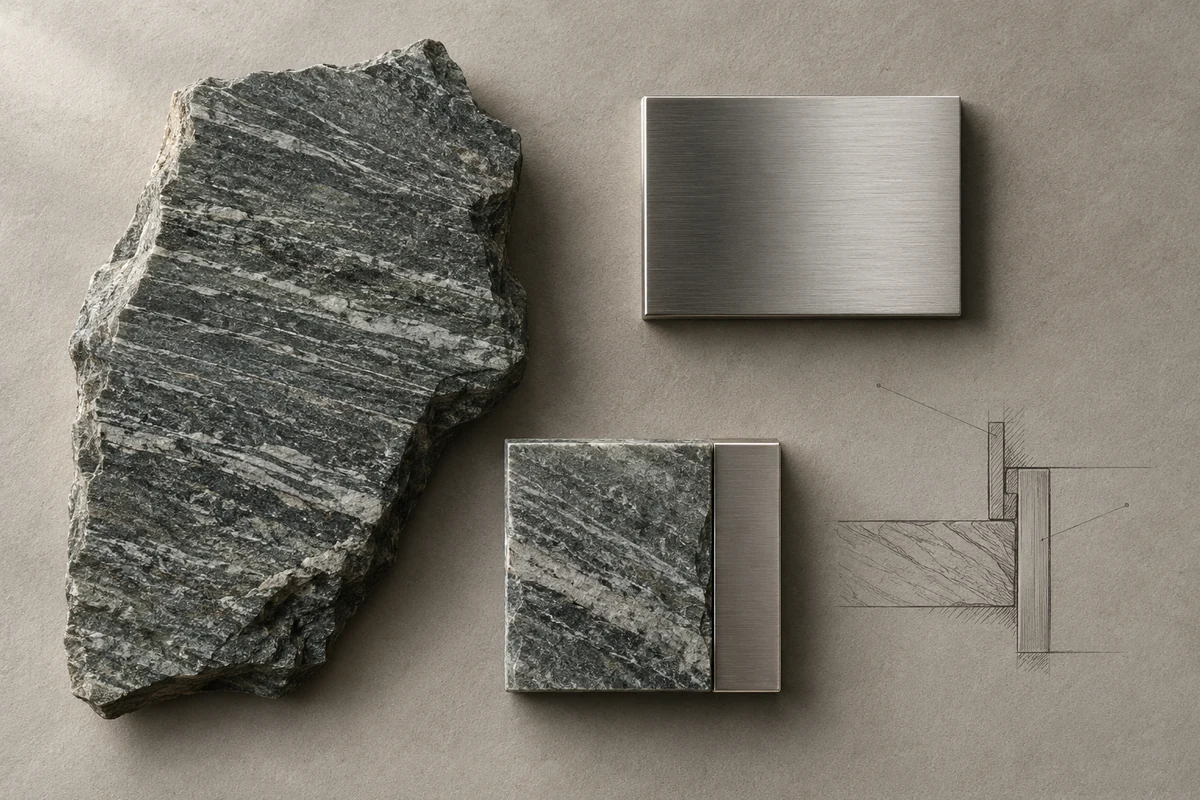
Image note
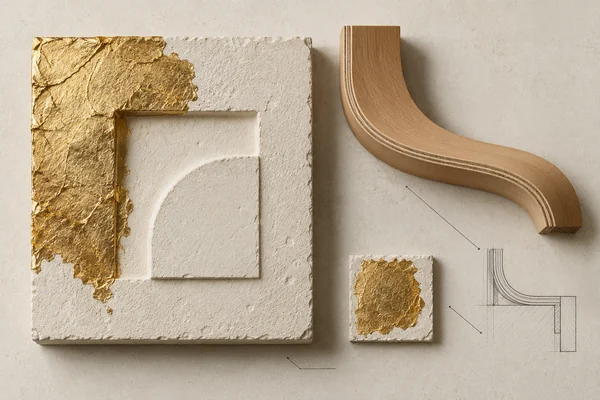
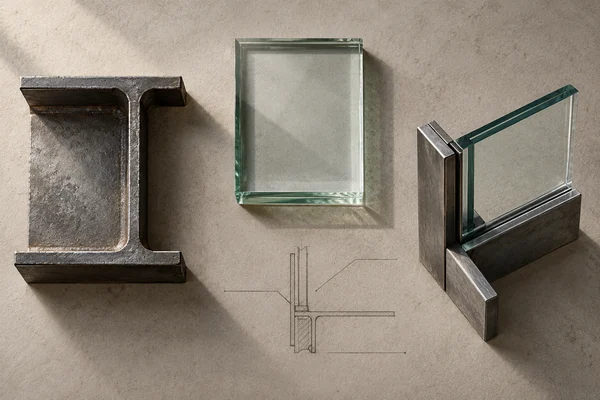
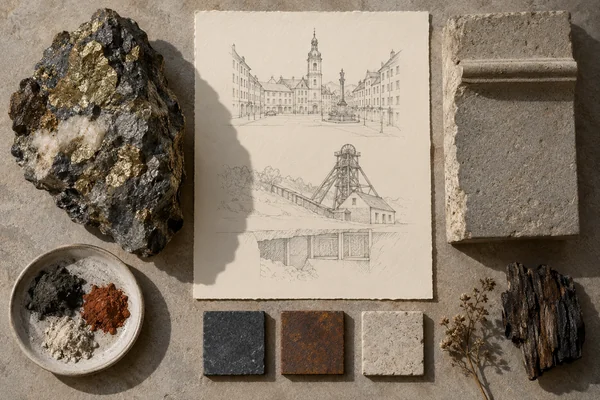
An interpretation of valser quartzite stone & brushed stainless steel. The architecture and section drawing are imagined studies, rather than records of a particular building or construction detail.
Publication credit: The Chromologium.
Image credits and reuseThe colour strip is the entry’s study palette. Artwork sources and image credits and reuse terms are recorded in the archive.
Artwork recordInternational Typographic Style & Zumthorian Phenomenology
The precision of a surface.
Read the edges, repeated intervals and reflected highlights before the whole composition.
Material & Chromatic Spectrum
Calibrated OkLCH color science mapped from historical mineral pigments, architectural substrates, and intaglio inks.
Swiss Crimson
#DA291C
Colour values & paper / ink comparison
oklch(0.52 0.23 28) · primary
The colour stays fixed as its surroundings change.
From Physical Lineage to Digital Space
“Structure without excess; grid without rigidity; the material itself is the message.”
Swiss design gave birth to two seemingly opposite summits of world culture: the strict mathematical grid of the International Typographic Style (Josef Müller-Brockmann) and the profound sensory phenomenology of Peter Zumthor’s Therme Vals. Together, they form the absolute gold standard for modern interface architecture: mathematically flawless layout grids energized by deep sensory materiality.
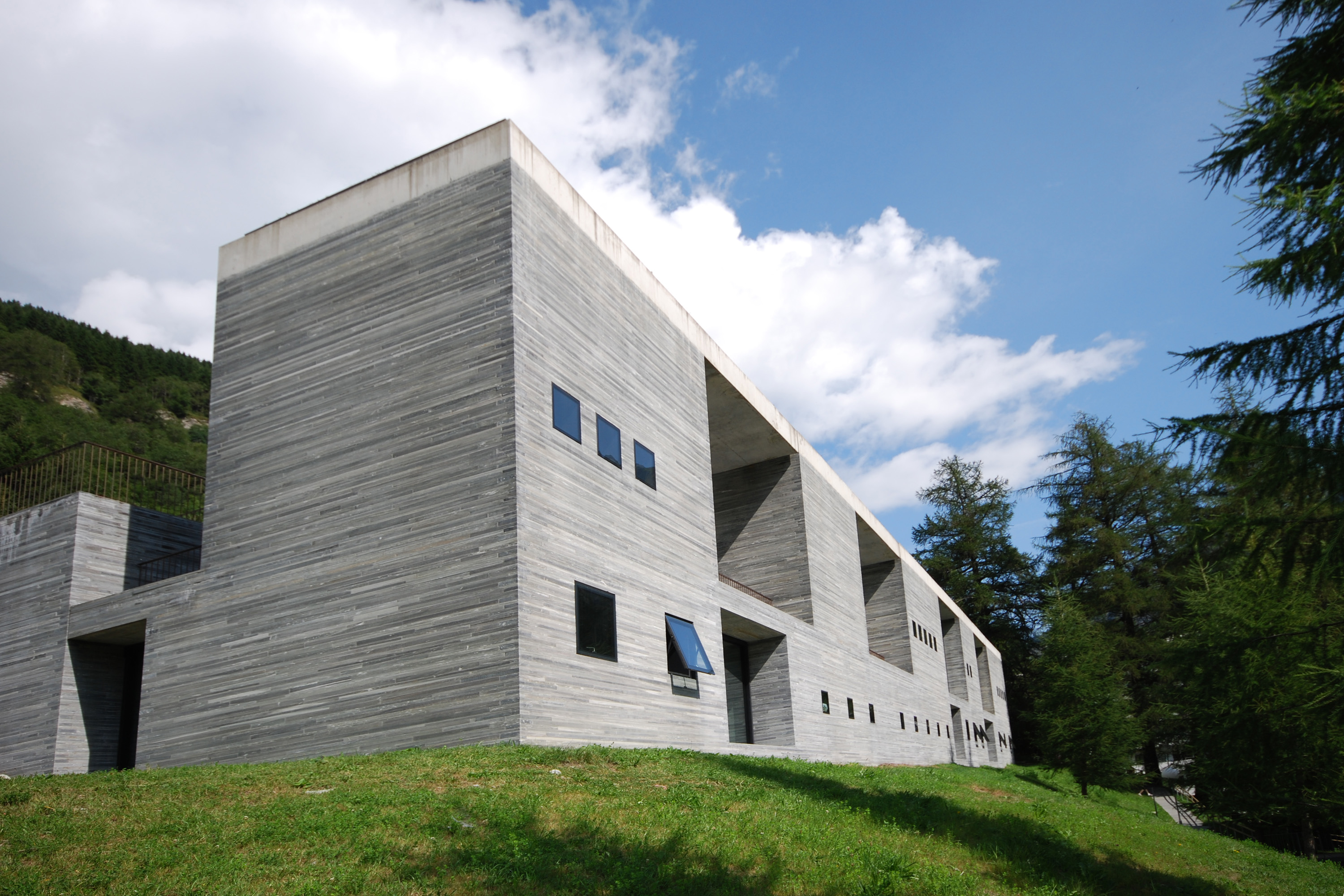
Therme Vals
A sensory temple carved from 60,000 quartzite stone slabs — water, shadow, acoustic echoes, and raw geological texture operating as the primary spatial materials.
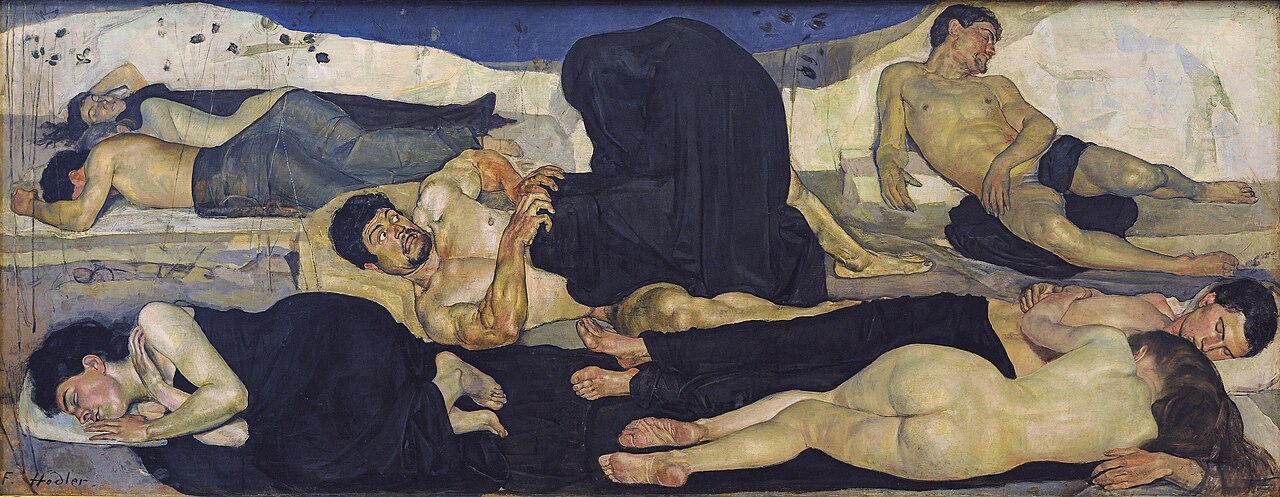
The Night (Die Nacht)
The primary compositional study embodying Switzerland's national color philosophy, surface chemistry, and aesthetic tension.
Experiment with this palette
Dynamic Component Diorama
Real-time rendering of interactive UI primitives styled with Switzerland's sovereign design tokens.
International Typographic Style & Zumthorian Phenomenology
Tactile surface responding with 0.1 optical friction and critically damped (crisp) kinetics.
Explore the global map
Switzerland in the Global Material Cartography
Spatial provenance, trade route vectors, solar diurnal phase, and localized craft beacons across Switzerland.
Regional craft hubs & cities
Regional Craft Hubs & Historical Cities
Granular material lineages, landmark architecture, and specialized regional craft centers across Switzerland.
The primary urban design center showcasing Switzerland's definitive spatial landmarks and historical International Typographic Style & Zumthorian Phenomenology craft traditions.
Regional artisan workshops preserving ancestral material extraction, pigment chemistry, and tactile fabrication techniques.
Modern architectural studios translating traditional tactile properties into scalable digital user interfaces and physical environments.
Material specifications & sound
Sensory Specifications & Surface Friction
CULTURAL ACOUSTIC LINEAGE & PROVENANCE
Spanning the natural acoustic harmonics of the 3.5-meter spruce Alphorn across mountain valleys and Sainte-Croix's tuned tempered-steel music box combs (Reuge), Swiss acoustics celebrate natural intervals and micro-machined precision.
PSYCHOACOUSTIC & COGNITIVE PROFILE
523 Hz (C5) crystalline precision ping, denoting Swiss horological reliability and pristine alpine clarity.
DIGITAL UI TRANSLATION SPEC
Synthesized live via the browser's Web Audio API with exponential gain decay and fifth-harmonic overtone dispersion to provide tactile, non-speech micro-interaction feedback.
Connected Systems & Lexicon Axioms
“Switzerland: Design Provenance & Material Spectrum.” The Chromologium — Design Atlas, 2026. chromologium.com/atlas/switzerland
Primary references
Return to the source.
A closer look
Questions about this study
What material idea connects this study of Switzerland?
International Typographic Style & Zumthorian Phenomenology: Structure without excess; grid without rigidity; the material itself is the message. Read the edges, repeated intervals and reflected highlights before the whole composition.
Which building can I use as a reference?
Therme Vals (1996). A sensory temple carved from 60,000 quartzite stone slabs — water, shadow, acoustic echoes, and raw geological texture operating as the primary spatial materials. Read the heritage record.
How can I work with these colours?
Select a swatch in the palette to copy its HEX value, then expand the paper and ink comparison to see how the surrounding ground changes its appearance. The optional experiment lets you try the palette on interface elements.
Continue by material