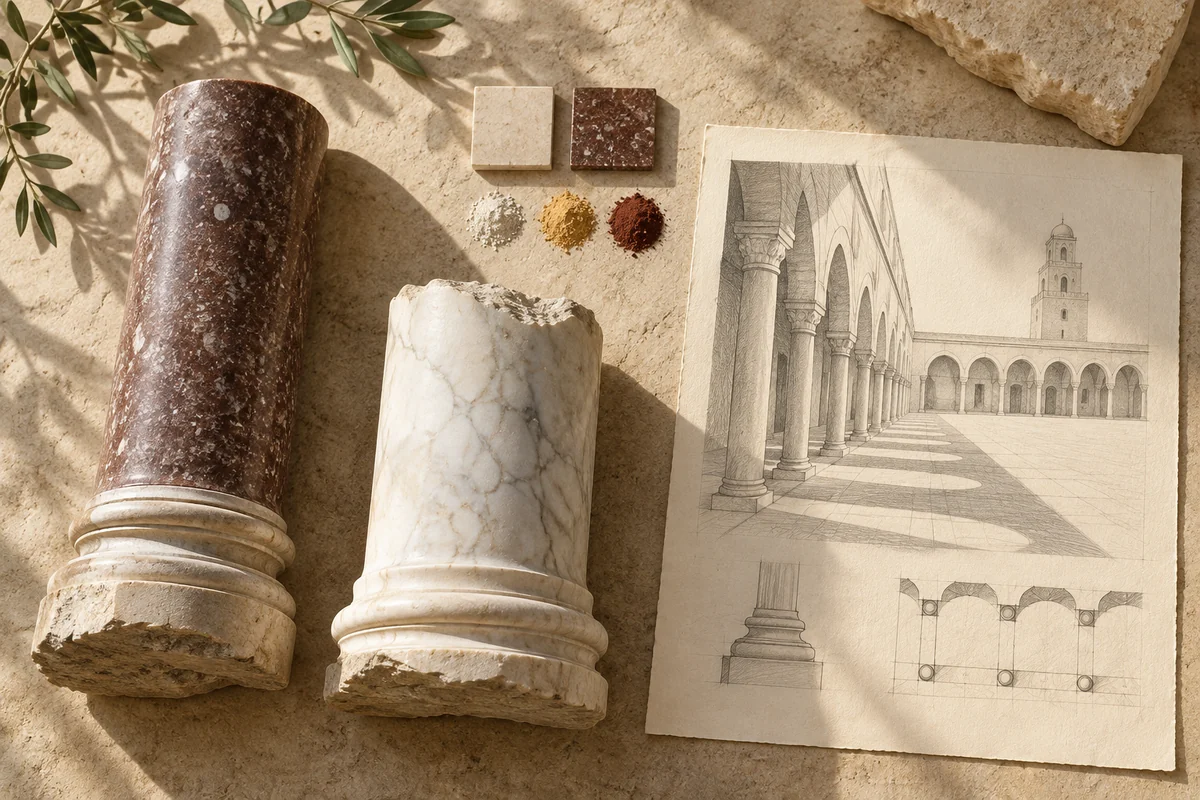
Image note
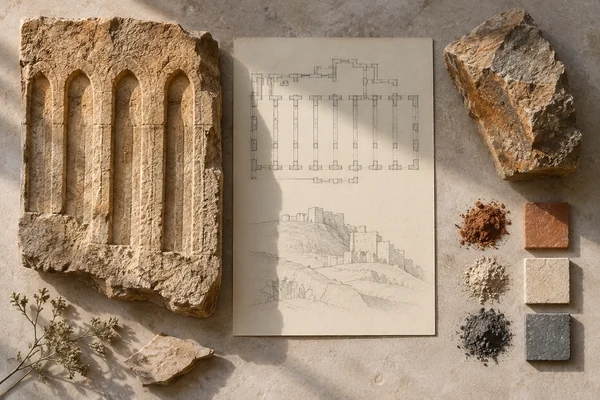
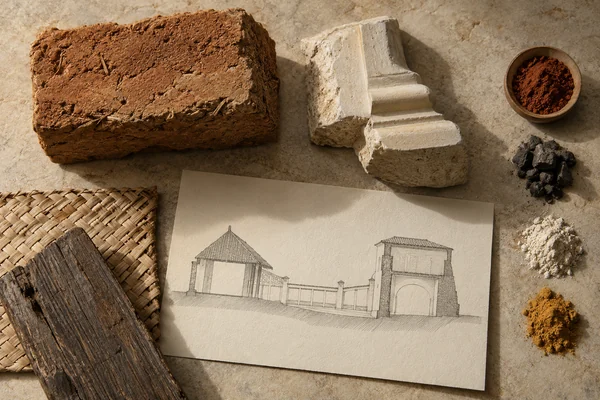
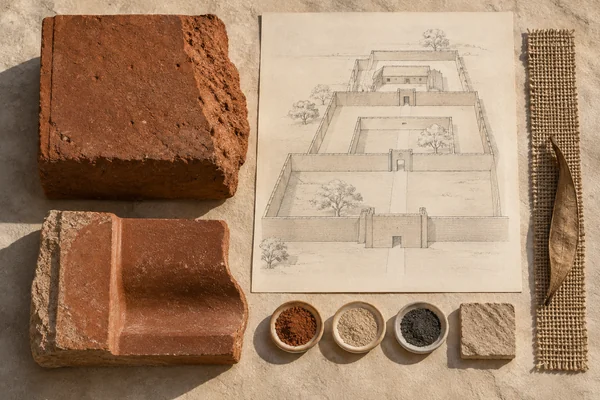
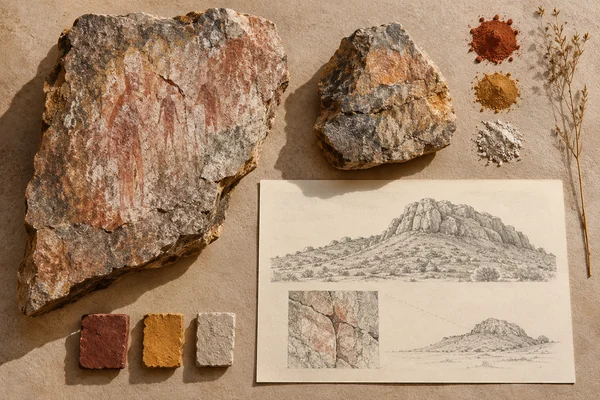
Three original interpretations of stone columns & mosque courtyards, informed by Kairouan. These images explore material and spatial ideas; they are not documentary views or measured reconstructions of the reference. The palette is drawn from the material portrait.
Publication credit: The Chromologium.
Image credits and reuseThe colour strip is the entry’s study palette. Artwork sources and image credits and reuse terms are recorded in the archive.
Artwork recordThree views of one material idea.
Kairouan’s architectural heritage includes the Great Mosque and its columns of marble and porphyry. Repetition, courtyard space and changes in material distinguish parts of the religious ensemble.
Read the material study01 / Reading the material
Light measured by repeated columns
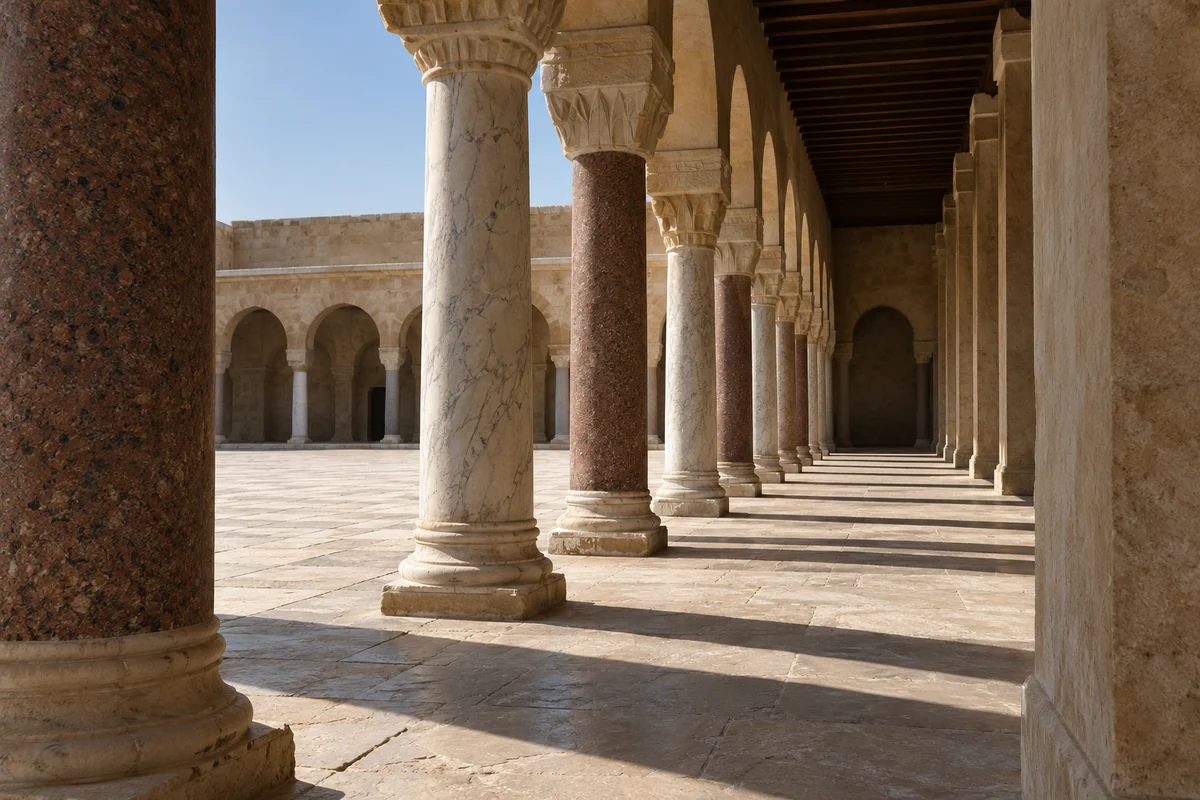
Kairouan’s colonnades and courtyard offer a strong comparison between repeated vertical elements and an open field. A column marks an interval, but the sequence also creates changing bands of light and shadow. Marble and porphyry introduce material differences within that order.
02 / From surface to space
Read the whole.
Then the edge.
Move along the colonnade rather than looking at it only from the centre of the court. Overlap increases and decreases as the viewpoint changes, making the same repeated elements read as a screen or as separate objects. The open court remains the larger spatial reference.
Compare the rhythm of a colonnade with the open courtyard beside it. How does a repeated vertical element turn light into a spatial measure?
03 / Colour in context
A palette you can work with.
Five tones drawn from the material portrait. Select a colour, compare it on paper and ink, or copy its value into your own study.
Surface
#98795a
Colour values & paper / ink comparison
oklch(0.598 0.059 66.310) · primary
The colour stays fixed as its surroundings change.
Try the bench exercise
04 / At the bench
Make the observation tangible.
Arrange a short line of plain columns beside an open plane and observe it obliquely. Vary spacing before material colour. Let the exercise explore rhythm and light while the source carries the religious and historical context.
Keep a view of the whole beside a close detail. Note the material, lighting and the one variable you changed.
Source & orientation
Keep the reference close.
UNESCO World Heritage Centre. (n.d.). Kairouan. Retrieved October 10, 2026.
The material readings and bench exercise are editorial studies of this particular reference. The artwork explores its material ideas; the linked source documents the place.
Artwork & cartographic records
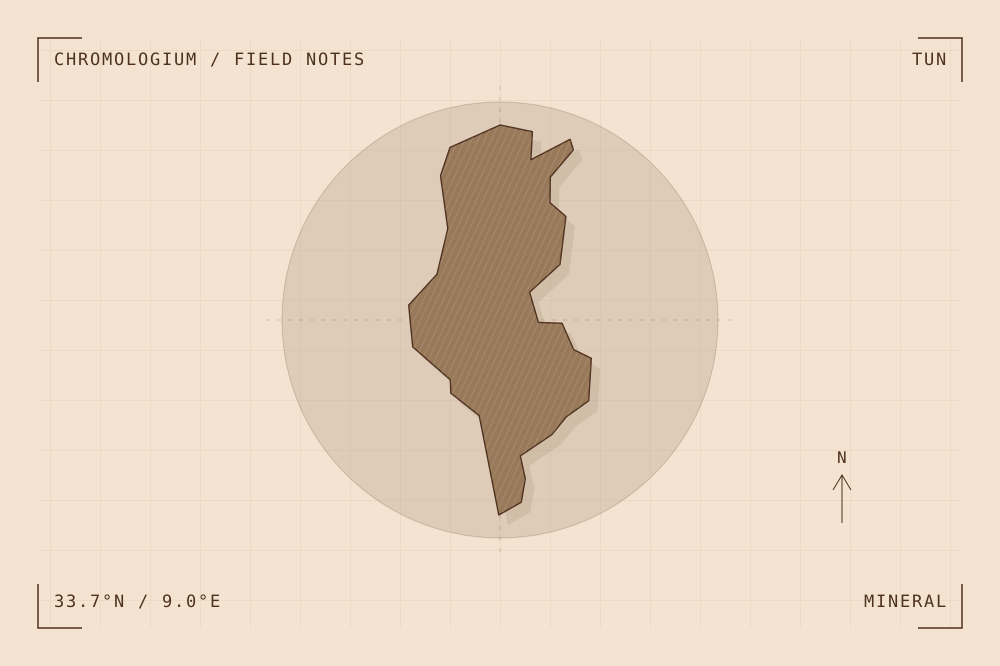
Artwork record · Geographic plate record. Map geometry: Natural Earth, public domain. The archive follows its map’s place names, including territories and disputed areas.
A closer look
Questions about this study
What does this study of Tunisia focus on?
Kairouan’s architectural heritage includes the Great Mosque and its columns of marble and porphyry. Repetition, courtyard space and changes in material distinguish parts of the religious ensemble.
Where can I find the original reference?
Kairouan, published by UNESCO World Heritage Centre. The artwork explores the reference’s material ideas; the linked source documents the place.
What could I try at the bench?
Arrange a short line of plain columns beside an open plane and observe it obliquely. Vary spacing before material colour. Let the exercise explore rhythm and light while the source carries the religious and historical context.
Continue by material