TTO / Metal & reflection
Trinidad and Tobago
Shaped steel & tuned surfaces
Develop a system from this study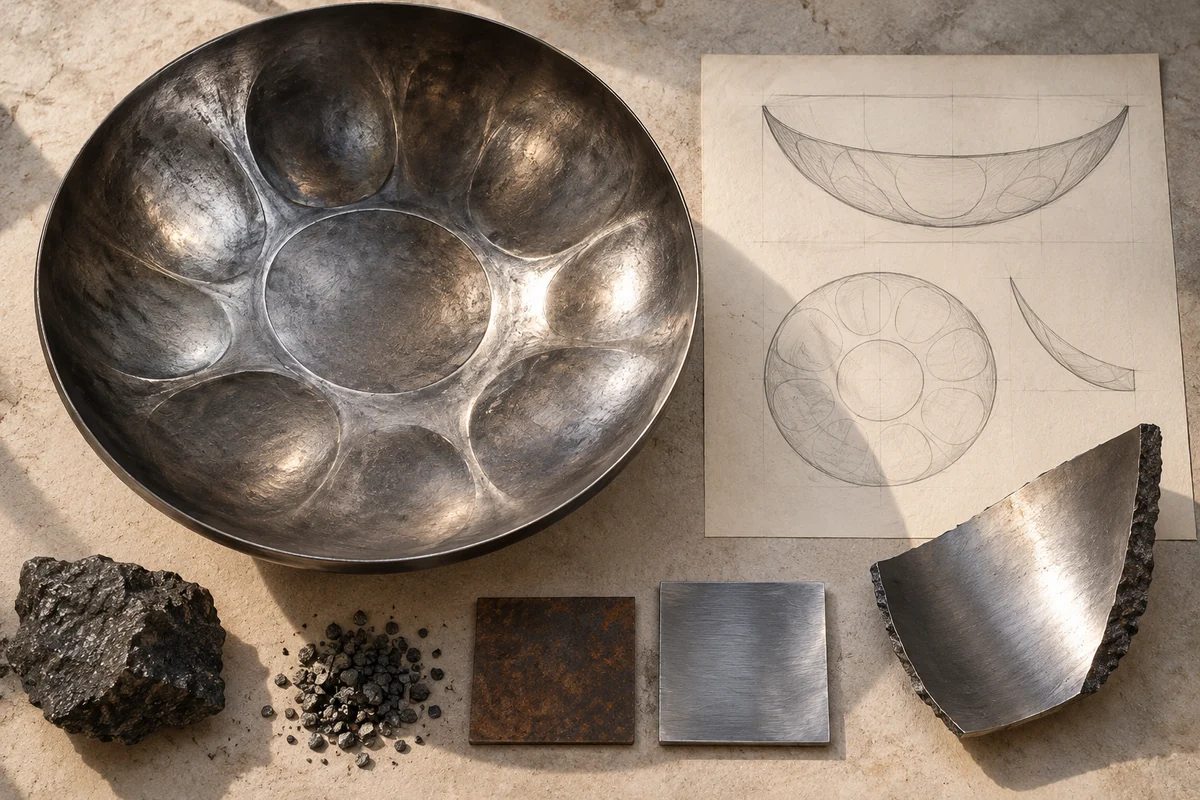
Image note
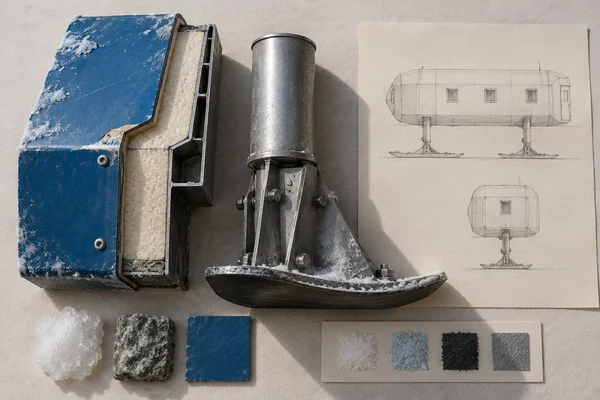
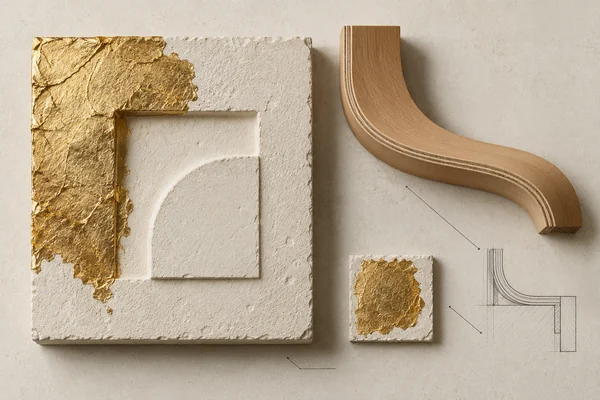
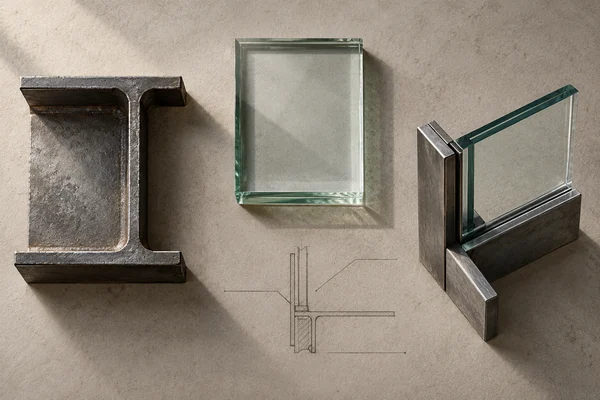
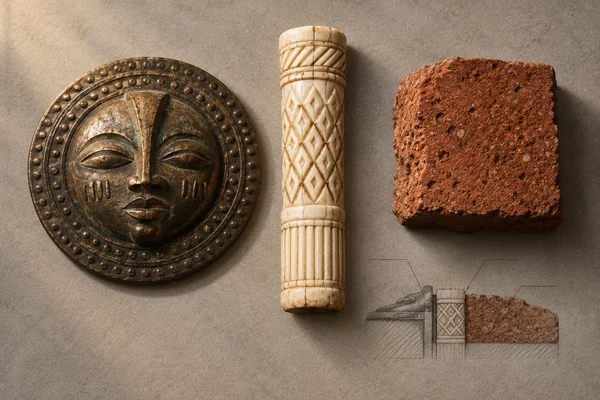
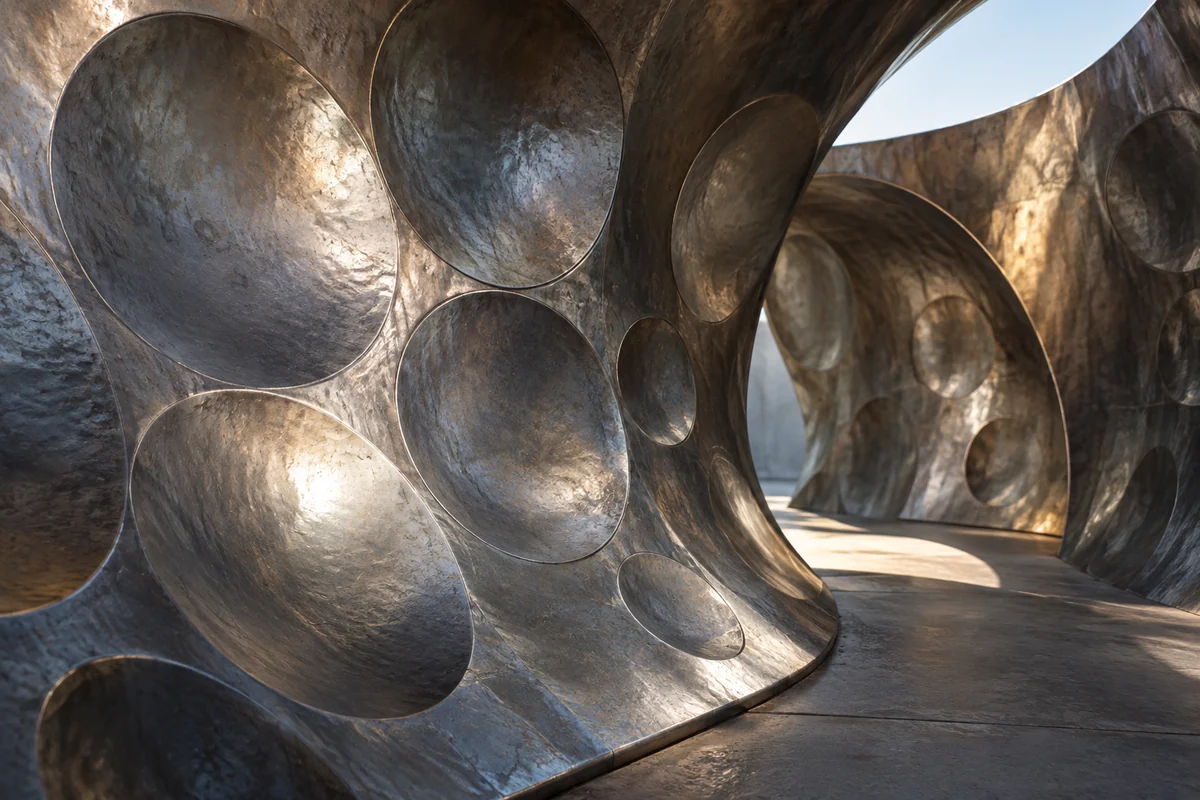
Three original interpretations of shaped steel & tuned surfaces, informed by Steelband. These images explore material and spatial ideas; they are not documentary views or measured reconstructions of the reference. The palette is drawn from the material portrait.
Publication credit: The Chromologium.
Image credits and reuseThe colour strip is the entry’s study palette. Artwork sources and image credits and reuse terms are recorded in the archive.
Artwork recordThree views of one material idea.
Trinidad and Tobago’s steelpan tradition turns shaped steel into a tuned musical instrument. The National Library’s account connects the instrument’s development with communities, performance and changing methods of making.
Read the material study01 / Reading the material
A surface organized for sound
The steelpan turns a shaped metal surface into a tuned instrument. Its overall bowl and smaller worked areas operate at different scales: one establishes the enclosing form, while the other organizes the surface more finely. These areas are not simply ornamental divisions.
02 / From surface to space
Read the whole.
Then the edge.
Compare a broad reflection across the bowl with the smaller changes in curvature within it. Light makes the geometry visible, but it does not establish a note’s frequency or tuning. The tradition also belongs to communities, performance and evolving making practices.
Compare the overall bowl with the smaller tuned areas within it. Consider how differences in shape organize a surface for sound rather than decoration.
03 / Colour in context
A palette you can work with.
Five tones drawn from the material portrait. Select a colour, compare it on paper and ink, or copy its value into your own study.
Surface
#604f40
Colour values & paper / ink comparison
oklch(0.441 0.033 63.239) · primary
The colour stays fixed as its surroundings change.
Try the bench exercise
04 / At the bench
Make the observation tangible.
Study an original shallow metal-like bowl with a few clearly differentiated surface zones. Record how reflected light changes across them. Use documented musical information for sound claims rather than assigning pitches from appearance.
Keep a view of the whole beside a close detail. Note the material, lighting and the one variable you changed.
Source & orientation
Keep the reference close.
National Library and Information System Authority of Trinidad and Tobago. (n.d.). Steelband. Retrieved October 10, 2026.
The material readings and bench exercise are editorial studies of this particular reference. The artwork explores its material ideas; the linked source documents the place.
Artwork & cartographic records
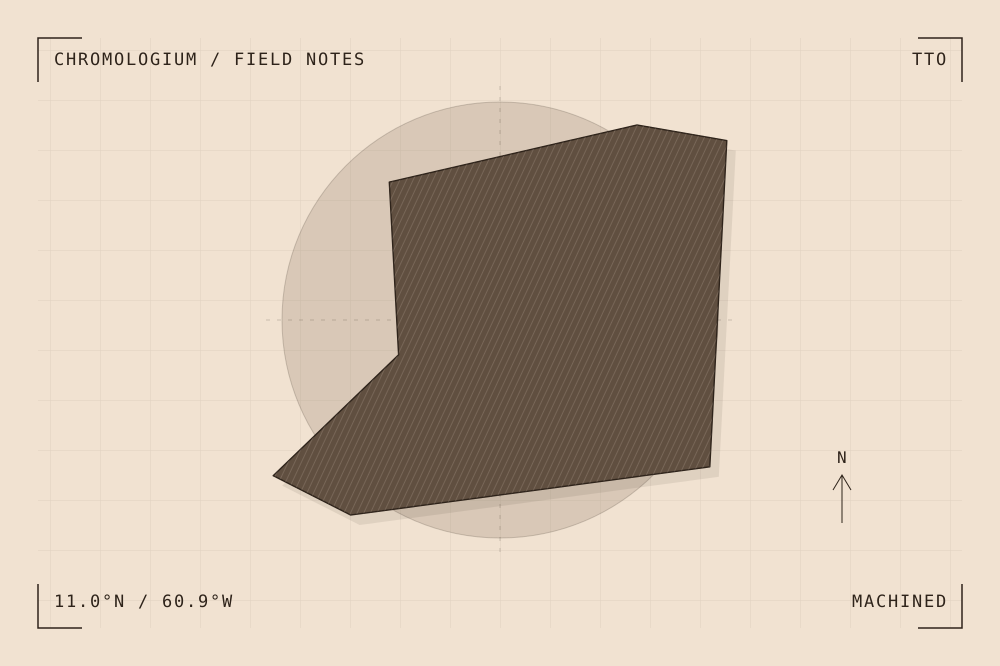
Artwork record · Geographic plate record. Map geometry: Natural Earth, public domain. The archive follows its map’s place names, including territories and disputed areas.
A closer look
Questions about this study
What does this study of Trinidad and Tobago focus on?
Trinidad and Tobago’s steelpan tradition turns shaped steel into a tuned musical instrument. The National Library’s account connects the instrument’s development with communities, performance and changing methods of making.
Where can I find the original reference?
Steelband, published by National Library and Information System Authority of Trinidad and Tobago. The artwork explores the reference’s material ideas; the linked source documents the place.
What could I try at the bench?
Study an original shallow metal-like bowl with a few clearly differentiated surface zones. Record how reflected light changes across them. Use documented musical information for sound claims rather than assigning pitches from appearance.
Continue by material