Image note
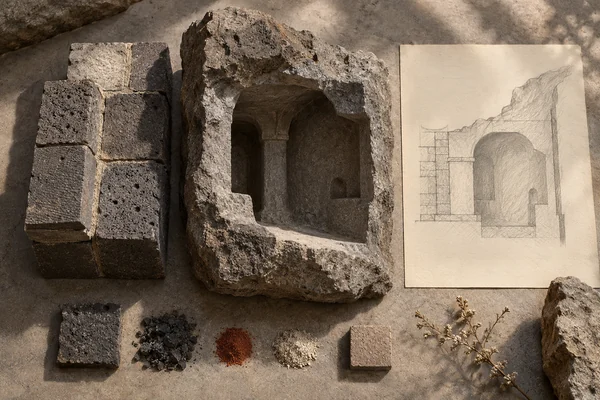
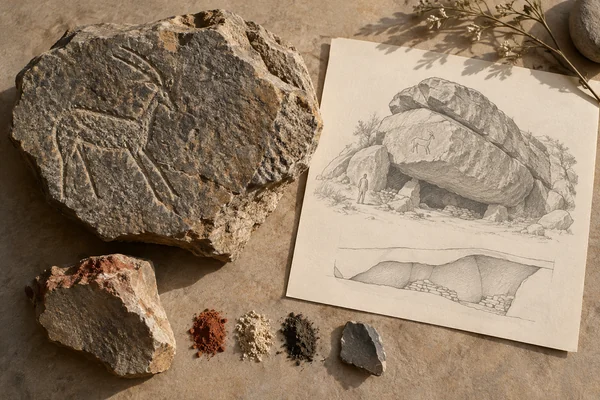
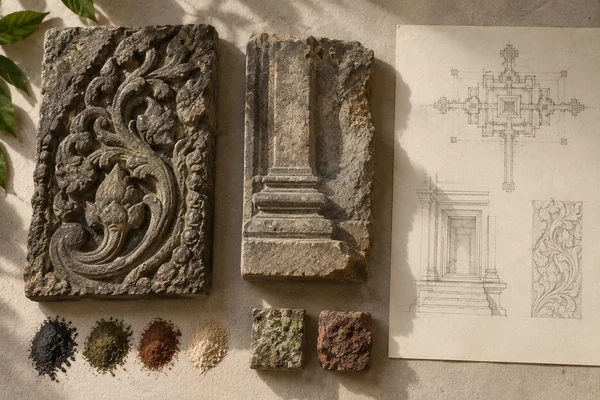
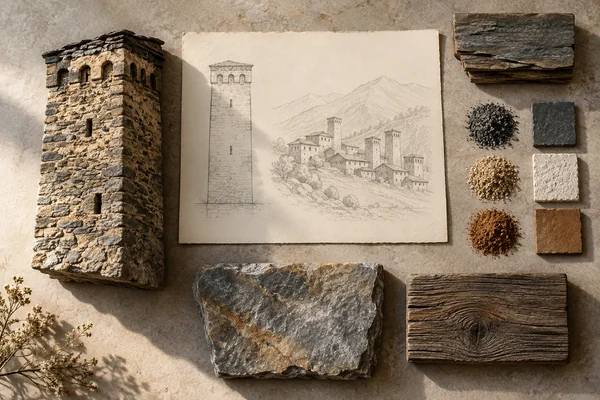
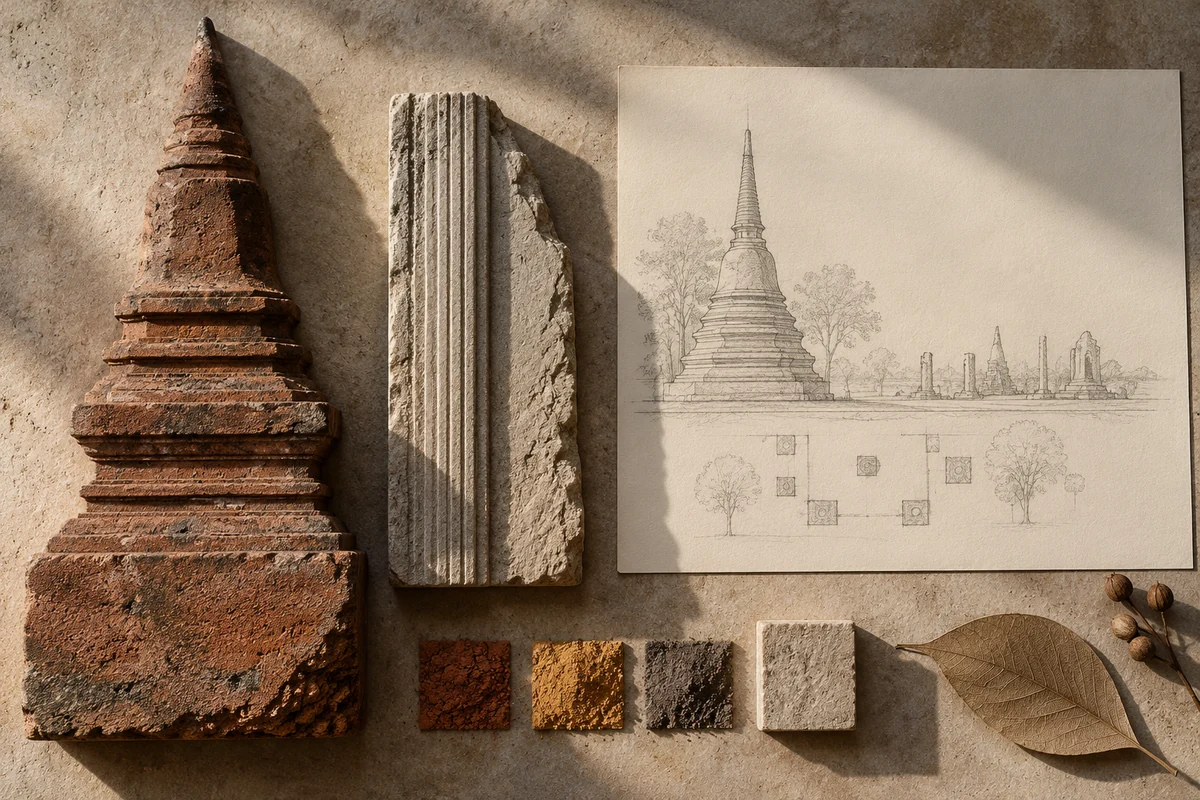
Three original interpretations of monument groups & open precincts, informed by Historic Town of Sukhothai and Associated Historic Towns. These images explore material and spatial ideas; they are not documentary views or measured reconstructions of the reference. The palette is drawn from the material portrait.
Publication credit: The Chromologium.
Image credits and reuseThe colour strip is the entry’s study palette. Artwork sources and image credits and reuse terms are recorded in the archive.
Artwork recordThree views of one material idea.
Sukhothai and its associated towns preserve monuments from an early period of Thai architecture. Their forms reflect the development of a local architectural language through multiple cultural influences.
Read the material study01 / Reading the material
The interval around the monument
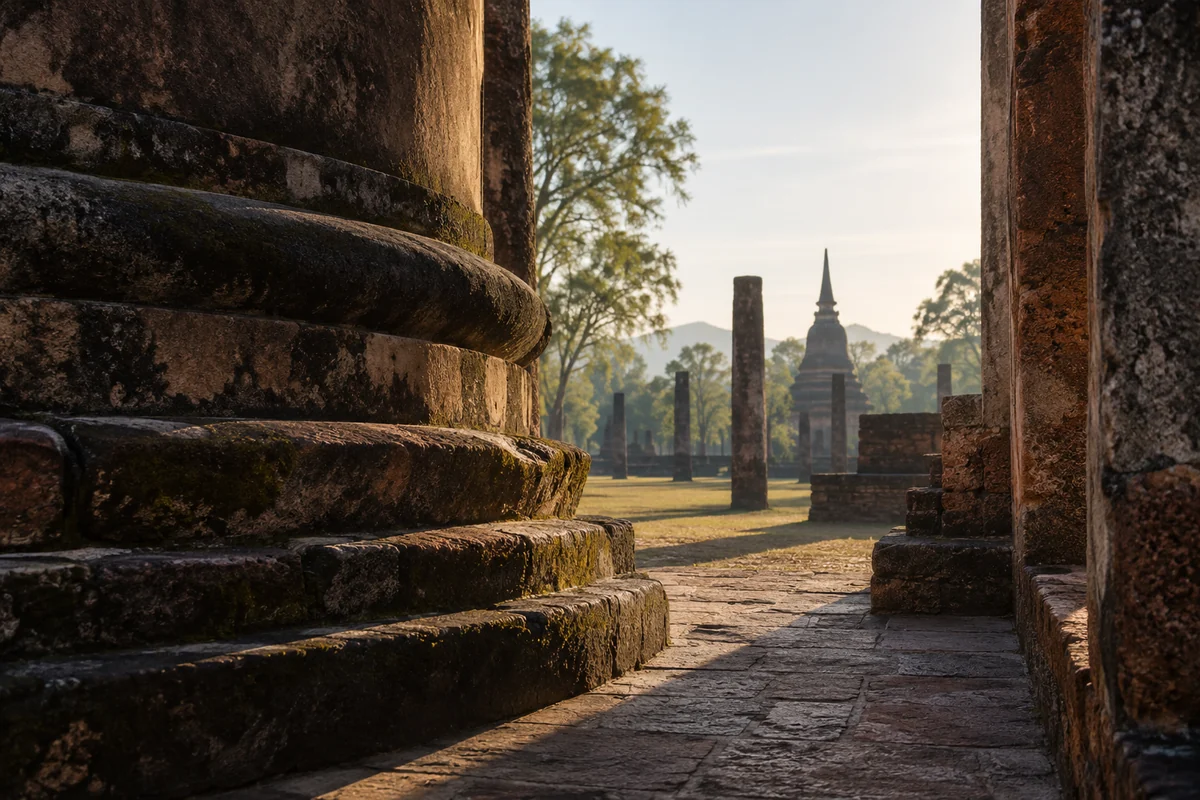
Sukhothai’s precincts suggest that the spaces between monuments can carry as much compositional weight as the forms themselves. A profile becomes clear because of the ground and sky around it. Adding detail everywhere would weaken that hierarchy.
02 / From surface to space
Read the whole.
Then the edge.
Move from one monument’s outline to the broader spacing of the ensemble. The close view reveals articulation; the wider one explains interval and approach. Multiple influences belong to the development of the architectural language, rather than being interchangeable decorative ingredients.
Compare the profile of an individual monument with the spacing of the wider precinct. Let the empty intervals carry as much weight as the built forms.
03 / Colour in context
A palette you can work with.
Five tones drawn from the material portrait. Select a colour, compare it on paper and ink, or copy its value into your own study.
Surface
#4b3119
Colour values & paper / ink comparison
oklch(0.338 0.053 62.171) · primary
The colour stays fixed as its surroundings change.
Try the bench exercise
04 / At the bench
Make the observation tangible.
Compose a small set of original profiles within a generous open field. Change spacing before changing shape. Explore the balance of solid and void while keeping sacred forms and specific historical influences in their documented contexts.
Keep a view of the whole beside a close detail. Note the material, lighting and the one variable you changed.
Source & orientation
Keep the reference close.
UNESCO World Heritage Centre. (n.d.). Historic Town of Sukhothai and Associated Historic Towns. Retrieved October 10, 2026.
The material readings and bench exercise are editorial studies of this particular reference. The artwork explores its material ideas; the linked source documents the place.
Artwork & cartographic records
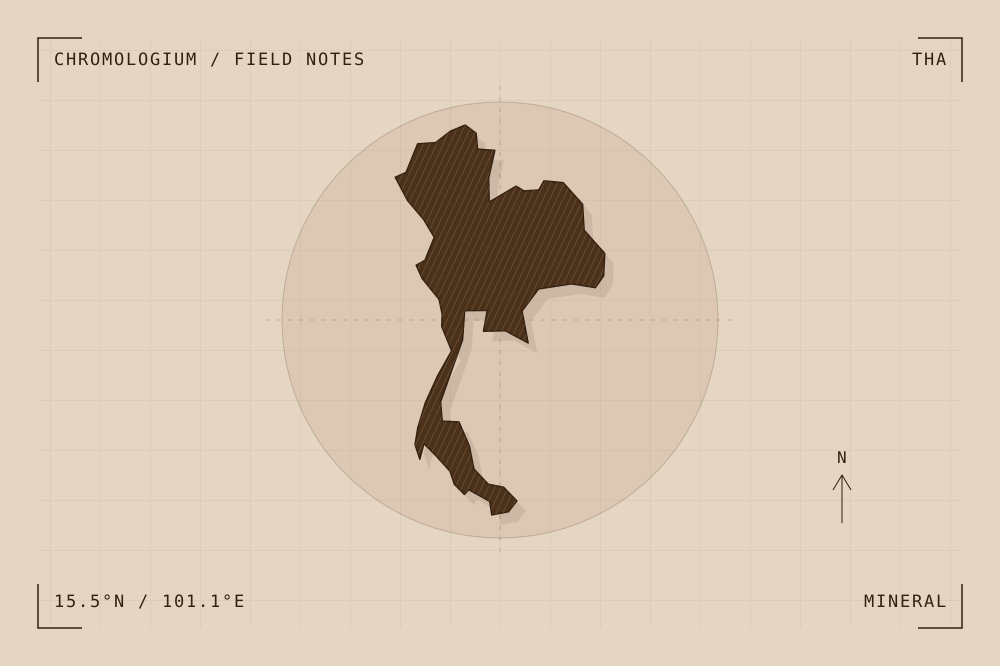
Artwork record · Geographic plate record. Map geometry: Natural Earth, public domain. The archive follows its map’s place names, including territories and disputed areas.
A closer look
Questions about this study
What does this study of Thailand focus on?
Sukhothai and its associated towns preserve monuments from an early period of Thai architecture. Their forms reflect the development of a local architectural language through multiple cultural influences.
Where can I find the original reference?
Historic Town of Sukhothai and Associated Historic Towns, published by UNESCO World Heritage Centre. The artwork explores the reference’s material ideas; the linked source documents the place.
What could I try at the bench?
Compose a small set of original profiles within a generous open field. Change spacing before changing shape. Explore the balance of solid and void while keeping sacred forms and specific historical influences in their documented contexts.
Continue by material