Image note
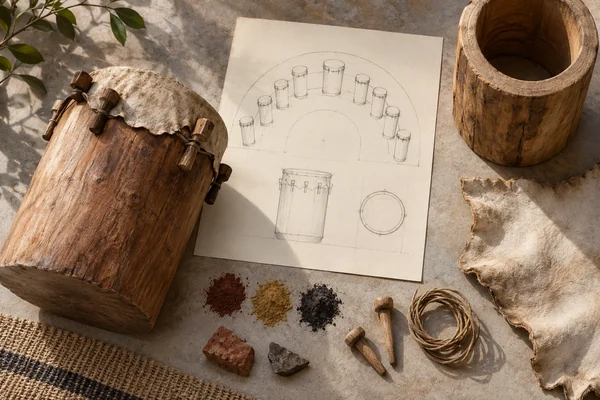
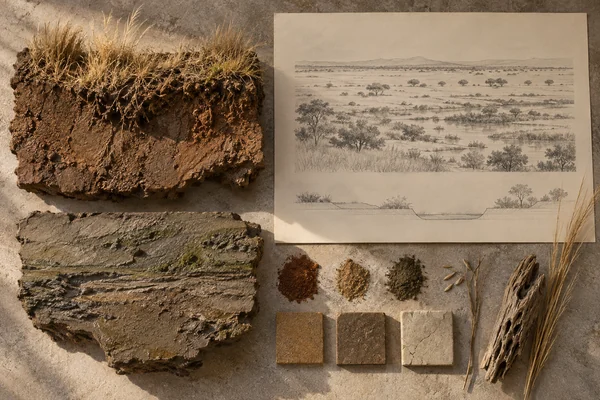
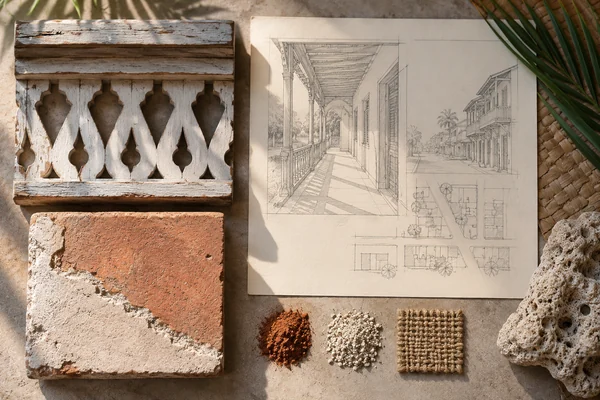
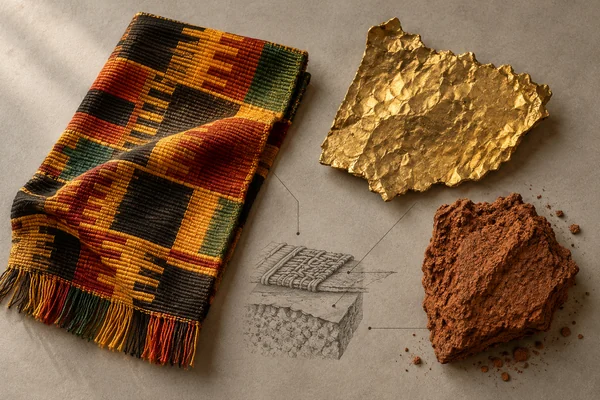
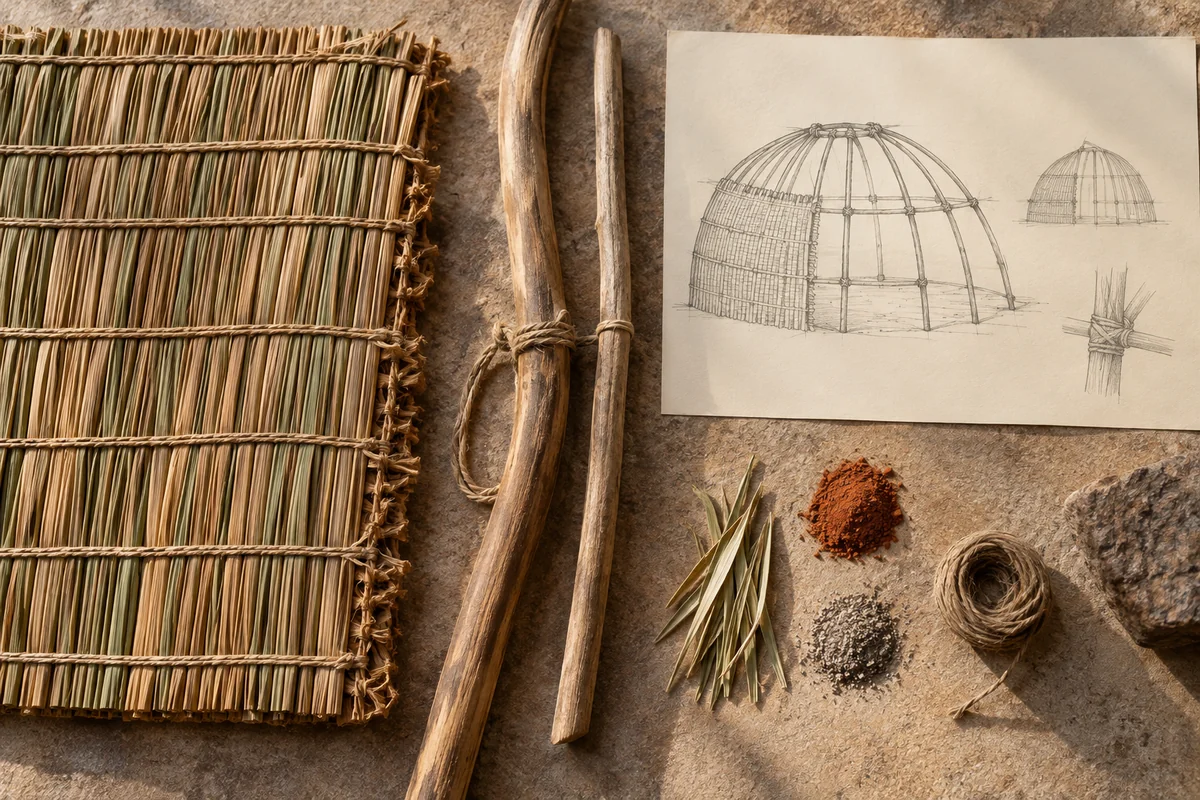
Three original interpretations of portable rush-mat dwellings, informed by Richtersveld Cultural and Botanical Landscape. These images explore material and spatial ideas; they are not documentary views or measured reconstructions of the reference. The palette is drawn from the material portrait.
Publication credit: The Chromologium.
Image credits and reuseThe colour strip is the entry’s study palette. Artwork sources and image credits and reuse terms are recorded in the archive.
Artwork recordThree views of one material idea.
In the Richtersveld, Nama pastoralists maintain portable rush-mat houses within a seasonally used landscape. The dwelling’s material logic depends on movement, shared land and the ability to assemble an enclosure.
Read the material study01 / Reading the material
An enclosure that can move
Richtersveld rush-mat houses connect surface, frame and portability. The repeating mat is not simply a texture applied to a permanent object; it participates in an enclosure that can be assembled and taken apart. Movement is therefore part of the material logic.
02 / From surface to space
Read the whole.
Then the edge.
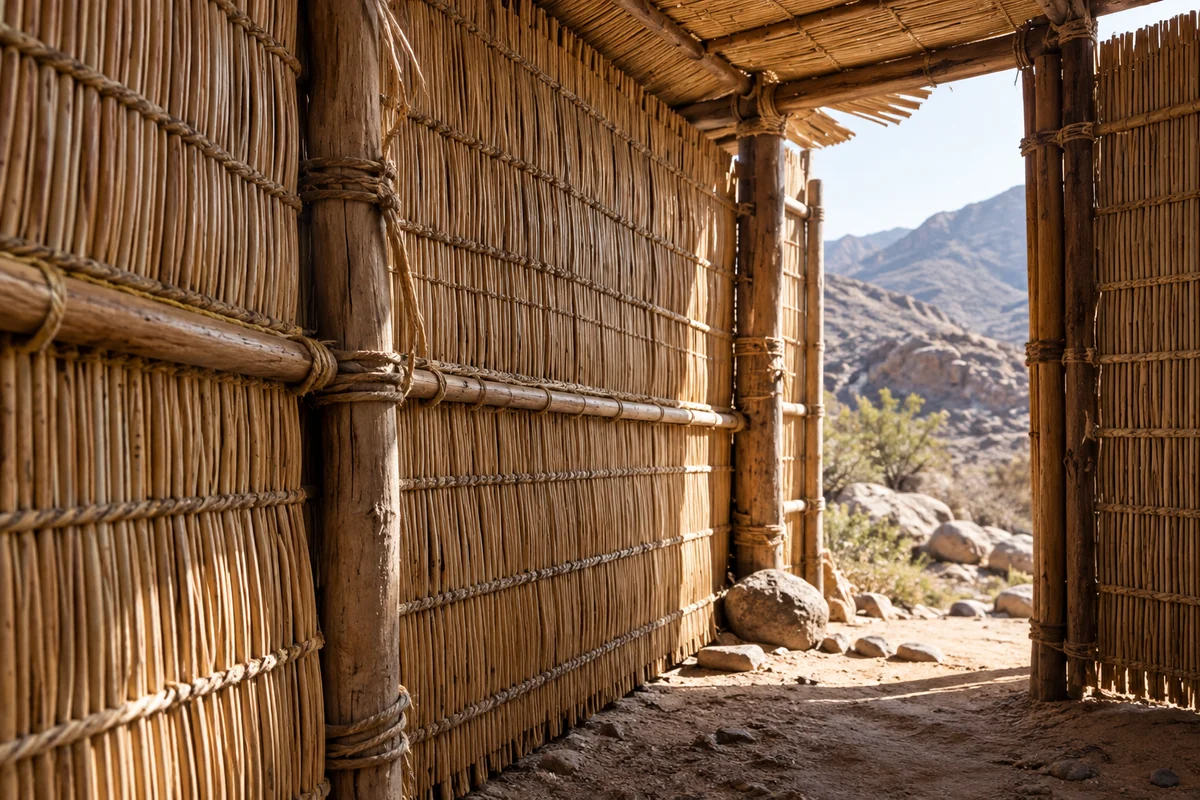
Compare the curved enclosing surface with the lighter supporting framework. A joint or edge becomes especially important where parts must meet without losing their separateness. Read the dwelling within seasonal pastoral use and shared landscape relationships.
Compare the repeating mat surface with the supporting frame. What details allow a house to be taken apart and carried?
03 / Colour in context
A palette you can work with.
Five tones drawn from the material portrait. Select a colour, compare it on paper and ink, or copy its value into your own study.
Surface
#9d764f
Colour values & paper / ink comparison
oklch(0.595 0.073 65.645) · primary
The colour stays fixed as its surroundings change.
Try the bench exercise
04 / At the bench
Make the observation tangible.
Build a small original model with a removable woven-paper skin over a simple frame. Show the assembled and separated states together. Study reversibility without presenting the model as a replica of a Nama dwelling.
Keep a view of the whole beside a close detail. Note the material, lighting and the one variable you changed.
Source & orientation
Keep the reference close.
UNESCO World Heritage Centre. (n.d.). Richtersveld Cultural and Botanical Landscape. Retrieved October 10, 2026.
The material readings and bench exercise are editorial studies of this particular reference. The artwork explores its material ideas; the linked source documents the place.
Artwork & cartographic records
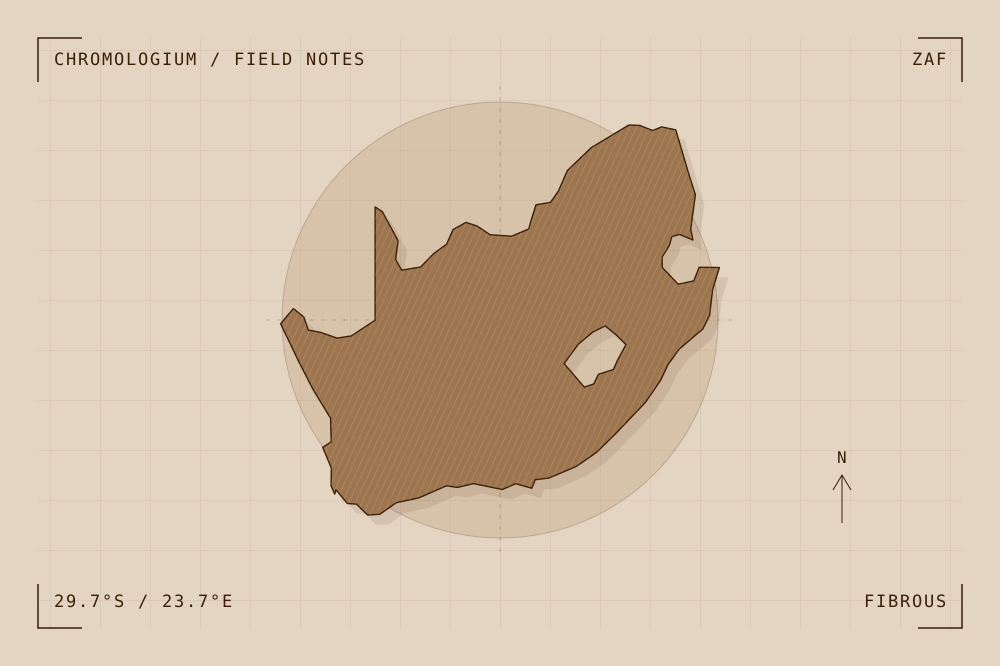
Artwork record · Geographic plate record. Map geometry: Natural Earth, public domain. The archive follows its map’s place names, including territories and disputed areas.
A closer look
Questions about this study
What does this study of South Africa focus on?
In the Richtersveld, Nama pastoralists maintain portable rush-mat houses within a seasonally used landscape. The dwelling’s material logic depends on movement, shared land and the ability to assemble an enclosure.
Where can I find the original reference?
Richtersveld Cultural and Botanical Landscape, published by UNESCO World Heritage Centre. The artwork explores the reference’s material ideas; the linked source documents the place.
What could I try at the bench?
Build a small original model with a removable woven-paper skin over a simple frame. Show the assembled and separated states together. Study reversibility without presenting the model as a replica of a Nama dwelling.
Continue by material